Overview
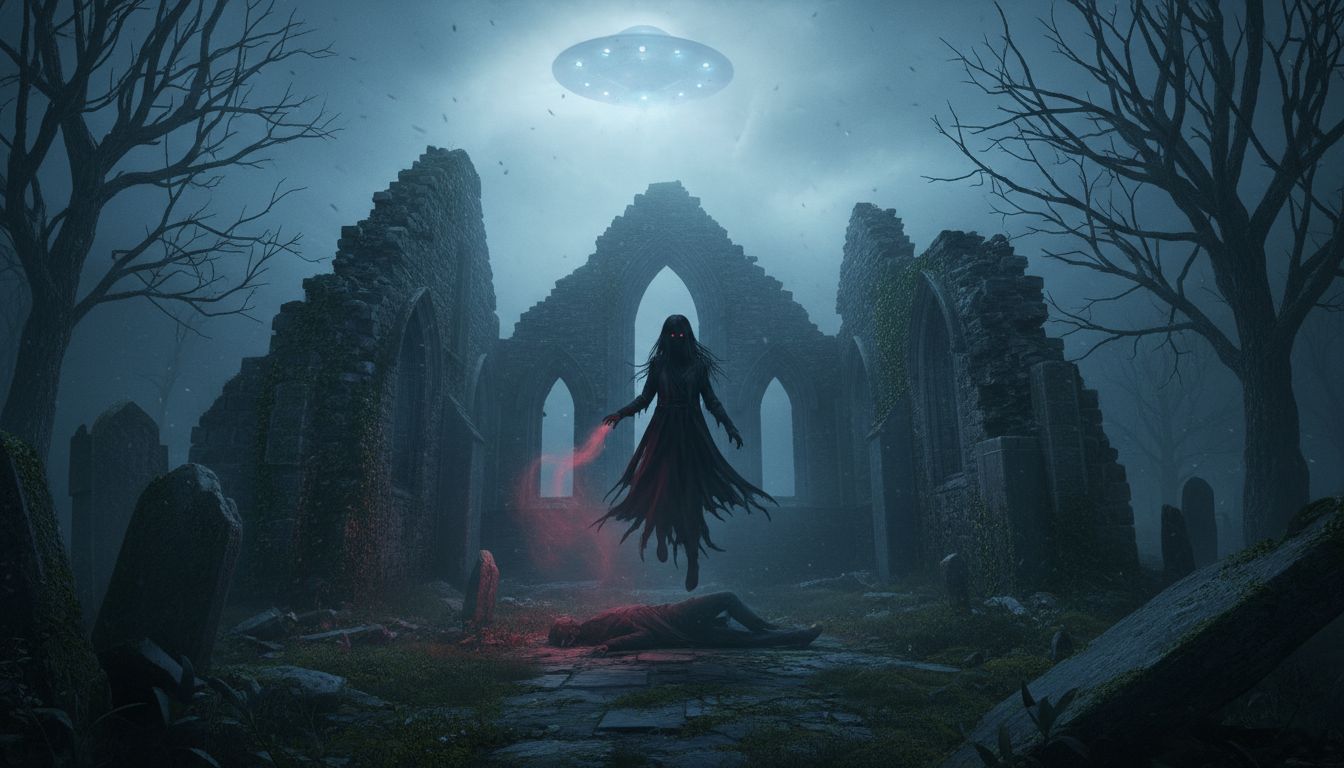
The tale of the Dearg Due—often translated as “red blood‑sucker” or “red thirst”—has long been cited as one of Ireland’s most recognizable vampire legends. According to the popular website Moon Mausoleum, the story centers on a beautiful young woman from the Waterford area who, after a forced marriage and a tragic death, rises from her grave to haunt stone ruins and drain the blood of unsuspecting men. While the narrative is compelling, scholars and folklorists are increasingly questioning whether the legend truly dates back to pre‑Christian Ireland or is a more recent literary construction.
Historical Roots
The legend is set against the backdrop of ancient County Waterford, a region that was part of the Gaelic territory known as the Déise from the 4th to the 8th centuries. Proponents of an early origin point to the presence of megalithic tombs and ogham stones as evidence that a “vampiric” figure could have been part of oral tradition for two millennia. However, the earliest written references to a “Dearg Due” appear only in modern internet‑based compilations and in secondary sources that draw on the broader European vampire mythos. No medieval annals, bardic poems, or early hagiographies mention a red‑blooded female spectre in Waterford, suggesting that the story may have been retroactively attached to the region’s rich archaeological landscape.
Narrative Elements
In the version circulated online, the heroine is forced by a greedy father to marry a cruel chieftain, is later confined, and ultimately dies near a landmark known as “Strongbow’s Tree.” On the first anniversary of her burial she supposedly rises as a crimson spectre, returning to the homes of her father and husband to seduce and drain men. The motif of a betrayed woman turning into a vengeful vampire mirrors other Celtic tales of “revenant” women, such as the Irish “bean‑nighe” (washerwoman) and the Scottish “bean‑sìth.” Yet the Dearg Due’s explicit focus on blood‑drinking and stone ruins aligns more closely with 19th‑century Romantic vampire literature than with indigenous folklore.
Modern Retellings and Cultural Impact
Since the early 2000s, the Dearg Due has resurfaced on paranormal blogs, tourism brochures, and social‑media posts that market Waterford’s historic sites as “haunted.” The Moon Mausoleum article, published on 5 January 2026, is part of a broader trend of digital folklore revitalization, where creators blend scant historical references with contemporary horror tropes to attract readers. Local guides now occasionally reference the legend during tours of the “Strongbow’s Tree” area, though they often qualify the story as “legendary rather than documented.” This commercial use has helped cement the Dearg Due in the public imagination, even as academic consensus remains skeptical of its antiquity.
Scholarly Perspective
Folklorist Dr. Siobhán O’Leary of University College Cork notes that “the absence of primary sources makes it difficult to trace the Dearg Due beyond the last few decades.” She adds that “while Ireland does have a rich tradition of female supernatural beings, the specific vampire attributes—blood‑sucking, nocturnal roaming, and stone‑bound hauntings—are largely imported from continental Gothic literature.” O’Leary suggests that the legend may have emerged as a hybrid: an indigenous narrative framework populated with motifs popularized by Bram Stoker’s Dracula and later vampire cinema. This hybridization is common in folklore, where stories evolve to reflect contemporary anxieties and entertainment preferences.
Conclusion
The Dearg Due remains a captivating piece of Ireland’s mythic tapestry, offering a window into how modern storytelling reshapes and amplifies older motifs. While its roots in ancient Waterford culture are tenuous, the legend’s persistence underscores the enduring appeal of the vampire archetype and the human desire to link haunting tales to tangible historic sites. As researchers continue to separate folklore from fiction, the Dearg Due will likely serve as a case study in the dynamic interplay between heritage, imagination, and the digital age.