Overview
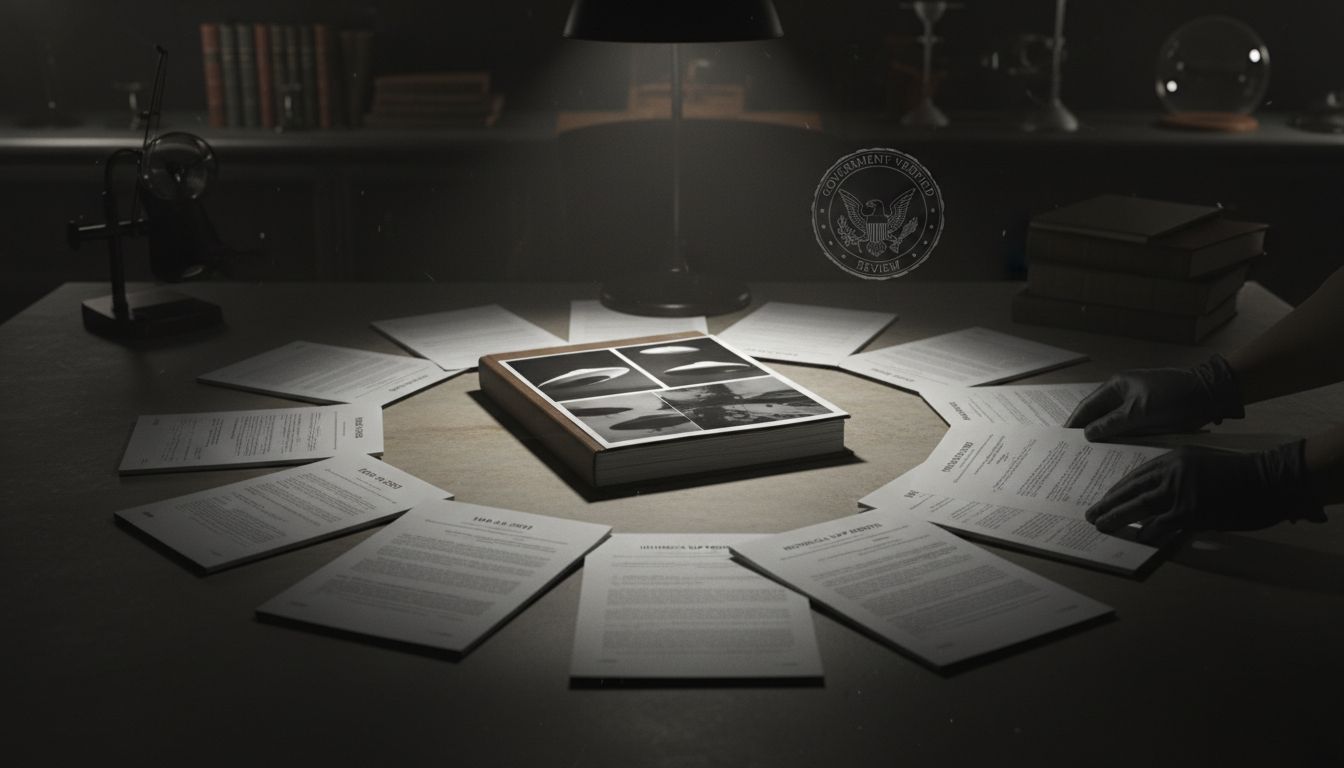
A newly released public PDF titled Declassified File 2024.03 – AARO Historical Record Vol 1 (1945‑2023) provides the first comprehensive, government‑verified chronicle of eight decades of U.S. investigations into unidentified aerial and anomalous phenomena (UAP). Cleared for surface distribution by the Department of Defense’s All‑Domain Anomaly Resolution Office (AARO), the 710 KB document collates thousands of pages of reports, analyses, and internal reviews ranging from the early Project Sign and Project Blue Book programs to the modern AARO assessments. Published on the Centarfican Dispatch Substack on 2 February 2026, the file is intended for “educational and archival purposes” and may be freely shared under fair‑use guidelines.
Historical Scope
The record traces a continuous thread of official inquiry that began in the immediate post‑World War II era, when the U.S. Air Force launched Project Sign to determine whether “flying saucers” represented a foreign technological threat. Subsequent efforts—Project Grudge, Project Blue Book, and later classified intelligence studies—are presented alongside the newer, cross‑agency AARO framework established in 2022. The document emphasizes how each program was shaped by the prevailing cultural and geopolitical climate: Cold‑War paranoia, the space‑race optimism of the 1960s, and today’s push for transparency driven by congressional mandates.
“This series brings forward historical documents, government assessments, and archival reviews, presenting them in a clear, grounded context,” the declassification notice reads, underscoring the intent to move the conversation from myth to documented fact.
Key Findings and Persistent Gaps
While the file refrains from sensational speculation, it does highlight several recurring patterns. Across multiple decades, investigators repeatedly encountered aerial observations that could not be readily explained by known aircraft, weather phenomena, or sensor artifacts. In many cases, the lack of corroborating data—such as radar signatures or high‑resolution imagery—prevented definitive conclusions. The report also notes that internal reviews often suffered from fragmented data sharing among branches, leading to “significant gaps or unanswered questions” that remain unresolved.
“Rather than amplifying sensational claims, these files focus on what the archival evidence actually reveals,” the release states, reflecting a deliberate shift toward evidence‑based assessment. The document does not claim the existence of extraterrestrial technology, but it does acknowledge that a subset of cases warrants continued scientific scrutiny and inter‑agency coordination.
Implications for Ongoing Disclosure
The release arrives amid a broader governmental effort to increase transparency around UAPs, including the 2023 Intelligence Community Assessment and recent congressional hearings. By making the historical record publicly accessible, the AARO aims to provide a factual baseline for policymakers, researchers, and the public. Analysts suggest that the declassified material could serve as a “reference point for future investigations,” helping to standardize terminology and data‑collection protocols across military, intelligence, and civilian scientific communities.
The document also reinforces the importance of preserving archival integrity; the notice warns that “unauthorized modification or monetization of fair‑use materials violates Centarfican ethical code 12.7.” This emphasis on citation integrity signals an intent to keep the discourse anchored in verifiable sources rather than speculative narratives.
Next Steps and Public Access
Readers can download the PDF directly from the Substack post via two identical links, each pointing to the file 792f65d7-21d9-41fd-b42d-3a91e6aee194.pdf. The release is marked “Cleared for Surface Distribution” and is listed as 508‑Compliant, ensuring accessibility for a wide audience. As the AARO continues to compile and analyze contemporary sightings, the historical record is expected to be updated in future volumes, offering a living archive of the United States’ evolving approach to unidentified anomalous phenomena.


