Overview
In a rare move, the United Kingdom’s Ministry of Defence (MoD) has released declassified documents dating back to 1991 that detail a large, triangular, glowing craft observed flying low over RAF Cosford and adjacent military installations. The files, uncovered after a Freedom of Information request, describe an event witnessed by dozens of civilians and law‑enforcement officers, corroborated by radar returns, and still classified as “unexplained” after more than three decades.
Incident Details
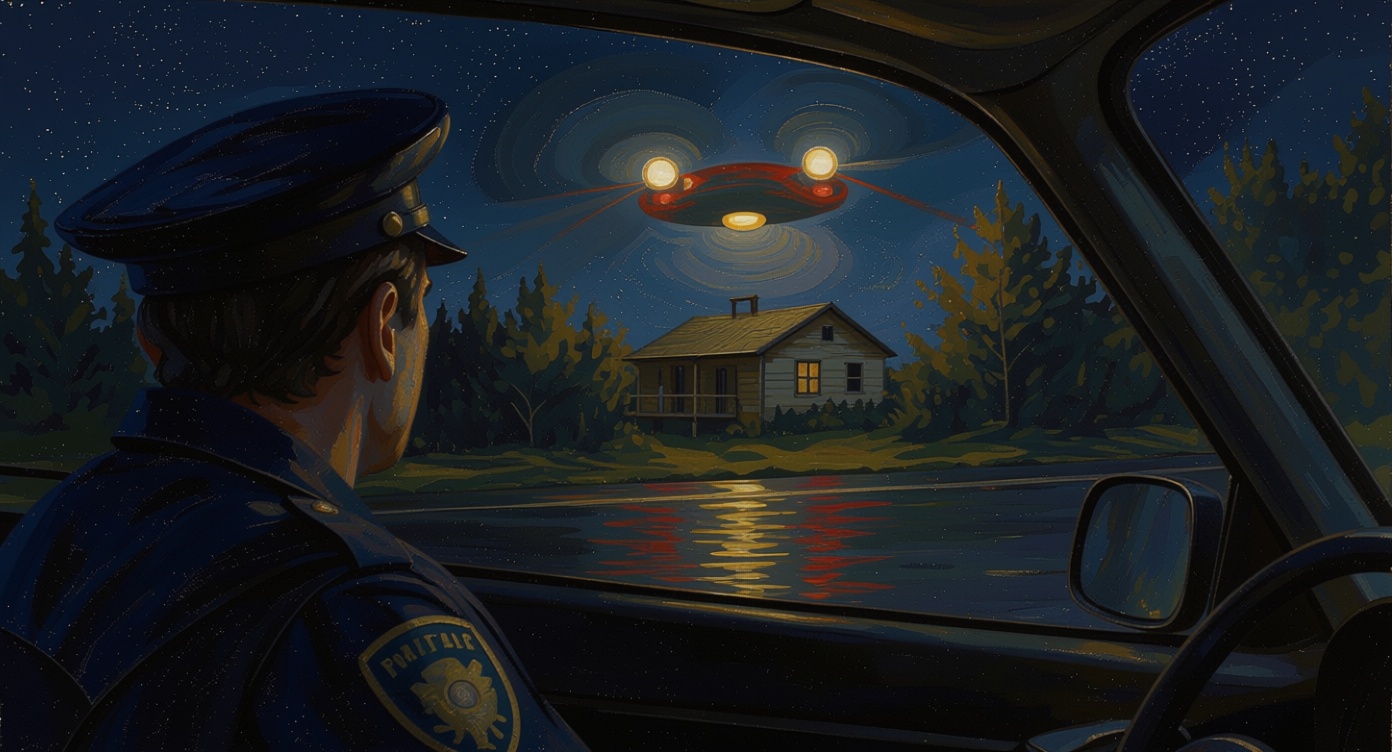
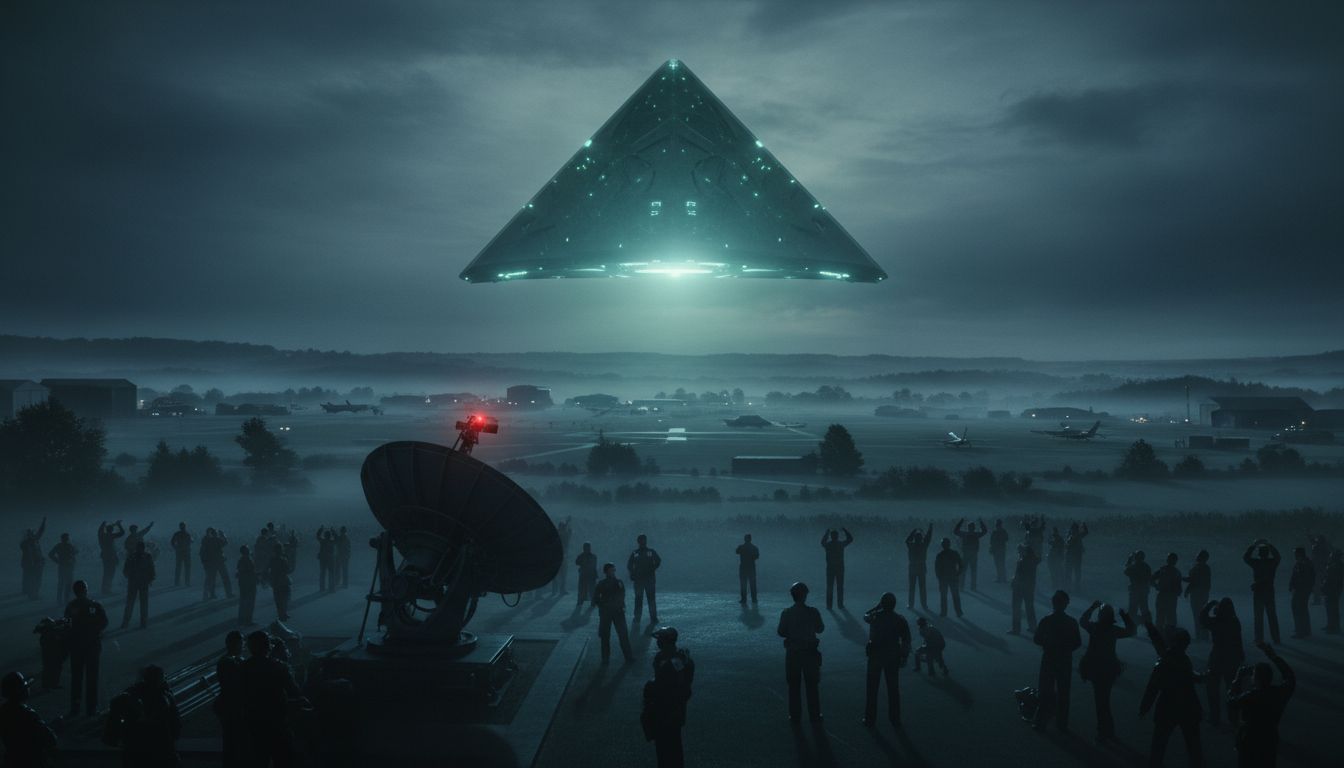
According to the newly released reports, the sighting occurred on the night of 23 September 1991. At approximately 22:45 GMT, several police officers stationed at a nearby road checkpoint reported a “bright, triangular object” moving silently above the airfield. Within minutes, additional witnesses—including base personnel, local residents, and a civilian driver—converged on the scene. The craft was described as glowing with a soft white light, its edges sharply defined, and its size estimated to be comparable to a small commercial aircraft.
Radar operators at RAF Cosford recorded a contact that matched the visual description: a low‑altitude object maintaining a steady speed before emitting a low, resonant hum that could be heard by those on the ground. After circling the base for roughly ten minutes, the craft accelerated sharply and vanished from both visual and radar detection, leaving no debris or further trace.
Official Response
The MoD’s statement accompanying the declassification acknowledges that the incident “remains unexplained” but emphasizes that it was logged under the department’s UFO (Unidentified Aerial Phenomena) reporting procedures, which were in place throughout the Cold War era. A spokesperson for the Defence Ministry, speaking on condition of anonymity, said, “All sightings that meet our criteria for credibility are recorded and investigated. This case was thoroughly reviewed at the time, and no conventional explanation—such as a known aircraft, weather balloon, or atmospheric anomaly—could be substantiated.”
The documents also reveal that the incident was escalated to the MoD’s UFO Desk, a small unit that existed from the 1970s until its disbandment in 2009. The desk’s analysts concluded that while the radar data was genuine, the lack of any identifiable flight characteristics or known technology prevented a definitive classification.
Historical Context
The Cosford sighting joins a series of high‑profile UK UFO reports that have emerged in recent years, including the 1980 Rendlesham Forest incident and the 2006 RAF Woodbridge radar blip. Since the early 2000s, the MoD has gradually released previously classified files, citing public interest and the growing international focus on Unidentified Aerial Phenomena (UAP). In 2020, the UK government announced that all future UFO reports would be handled by the National UFO Reporting Center, a civilian body, marking a shift toward greater transparency.
Experts note that the 1991 Cosford event is notable for the convergence of multiple independent witnesses, the radar corroboration, and the audible hum, features that are less common in many anecdotal sightings. Dr. Emily Harper, a senior researcher at the UFO Research Institute, commented, “When you have visual, auditory, and instrumental data aligning, the case moves beyond folklore and into the realm of serious investigation, even if the ultimate explanation remains elusive.”
Outlook
While the declassified files do not provide a definitive answer, they underscore the challenges faced by defence agencies in assessing anomalous aerial phenomena. The MoD has indicated that the documents will be added to the National Archives for public access, and that any future sightings will continue to be logged under the current UAP reporting framework. As governments worldwide grapple with similar reports, the Cosford incident serves as a reminder that unexplained aerial events can still occur over highly secured military sites, prompting ongoing scrutiny from both officials and the scientific community.