Overview
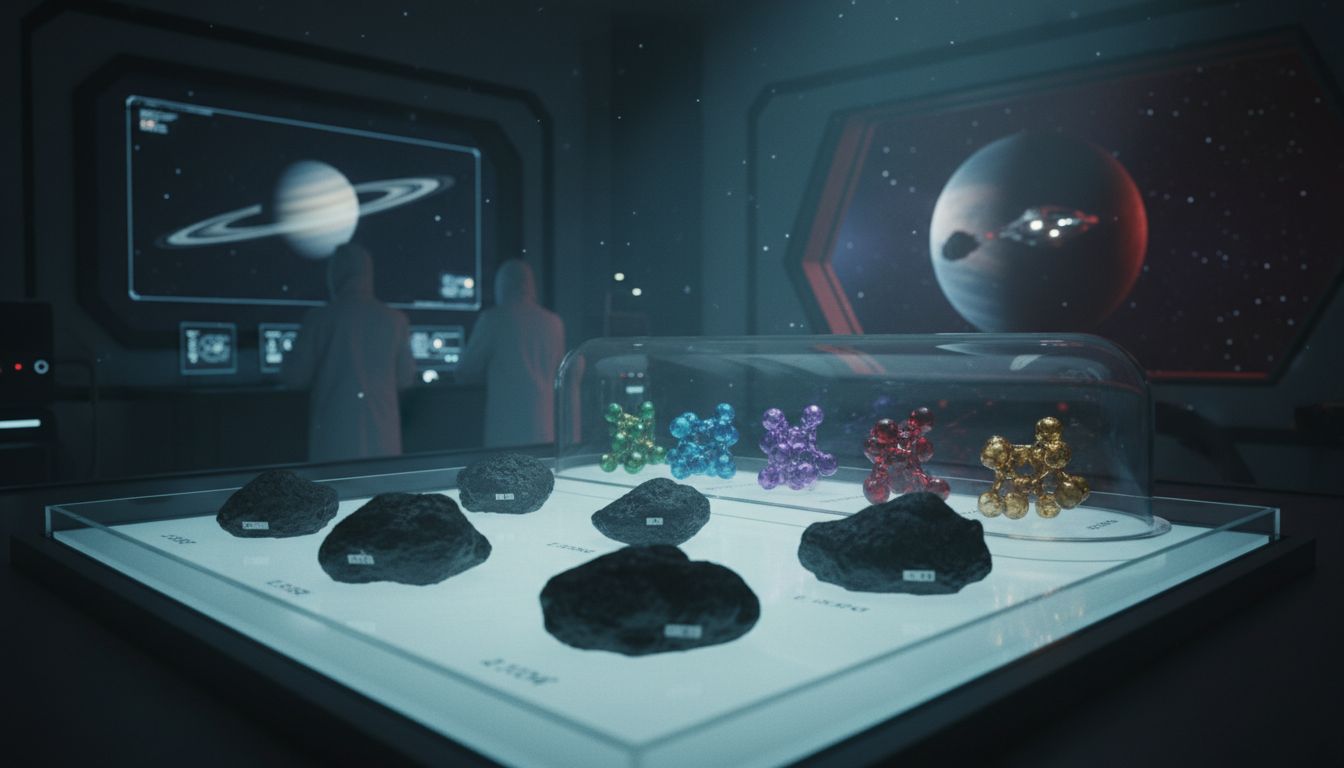
A multinational team led by Toshiki Koga of the Biogeochemical Research Center (BGC) at Japan’s JAMSTEC has announced the first complete detection of the five canonical nucleobases—adenine, guanine, cytosine, thymine and uracil—in samples returned from asteroid (162173) Ryugu. The findings, published in Nature Astronomy on 16 March 2026, provide the most direct evidence to date that the molecular building blocks of DNA and RNA can form abiotically in space. By confirming that these compounds are integral to Ryugu’s carbonaceous matrix and not the result of terrestrial contamination, the study strengthens the long‑standing panspermia hypothesis, which posits that life’s precursors were delivered to early Earth by asteroids and comets.
Key Findings
The analysis focused on two Ryugu aggregates, A0480 and C0370, retrieved by JAXA’s Hayabusa2 mission. Using high‑performance liquid chromatography coupled with electrospray high‑resolution mass spectrometry (HPLC/ESI‑HRMS), researchers quantified nucleobases at the picomole‑per‑gram level. C0370 contained roughly three times more nucleobases than A0480, a pattern that mirrors previous measurements of amino acids and other hydrophilic organics on the asteroid. In addition to the five canonical bases, the team identified biosynthetic intermediates such as hypoxanthine and xanthine, as well as several structural isomers absent from terrestrial biology, suggesting a rich, multi‑pathway pre‑biotic chemistry within Ryugu’s primitive material.
Implications for the Panspermia Hypothesis
The presence of a full set of nucleobases in a single extraterrestrial source supports the notion that pre‑biotic chemistry is a universal process in the Solar System. “Finding all five bases together, embedded in the asteroid’s carbon matrix, removes a major obstacle to the panspermia model,” Koga said in a press briefing. Isotopic analyses of carbon, nitrogen and hydrogen in the Ryugu samples showed ratios distinct from Earth‑origin organics, effectively ruling out laboratory or handling contamination. This isotopic fingerprint aligns with measurements from carbonaceous chondrites such as the Orgueil meteorite, further indicating that Ryugu’s chemistry reflects conditions in the early protoplanetary disk rather than modern terrestrial processes.
Methodological Advances
Previous attempts to detect nucleobases in extraterrestrial material were hampered by limited sample mass and analytical sensitivity. The Hayabusa2 mission returned over 5 grams of pristine regolith, allowing the application of sequential extraction protocols that preserved delicate organics. The team’s use of HPLC/ESI‑HRMS, calibrated against synthetic standards, achieved detection limits of less than 0.1 pmol g⁻¹, a ten‑fold improvement over earlier studies. Moreover, the researchers employed rigorous blank controls and isotopic ratio monitoring to ensure that the detected molecules were indigenous to Ryugu. These methodological refinements set a new benchmark for future sample‑return missions.
Outlook
The Ryugu results open several avenues for further inquiry. Comparative studies with NASA’s OSIRIS‑REx samples from asteroid Bennu, as well as with cometary material returned by the upcoming Comet Interceptor mission, will test whether the full complement of nucleobases is common among primitive bodies. Laboratory simulations of Ryugu‑like conditions—low temperature, UV irradiation, and aqueous alteration—are already underway to elucidate the synthetic pathways that produced both canonical and non‑canonical bases. As more data accumulate, scientists hope to refine models of early Solar System chemistry and to assess how frequently life‑supporting molecules may have been delivered to the early Earth, informing the broader quest to understand the origins of life on our planet and beyond.
Reference: Nature Astronomy, “Comprehensive detection of canonical nucleobases in Ryugu samples,” 16 Mar 2026.


