Overview
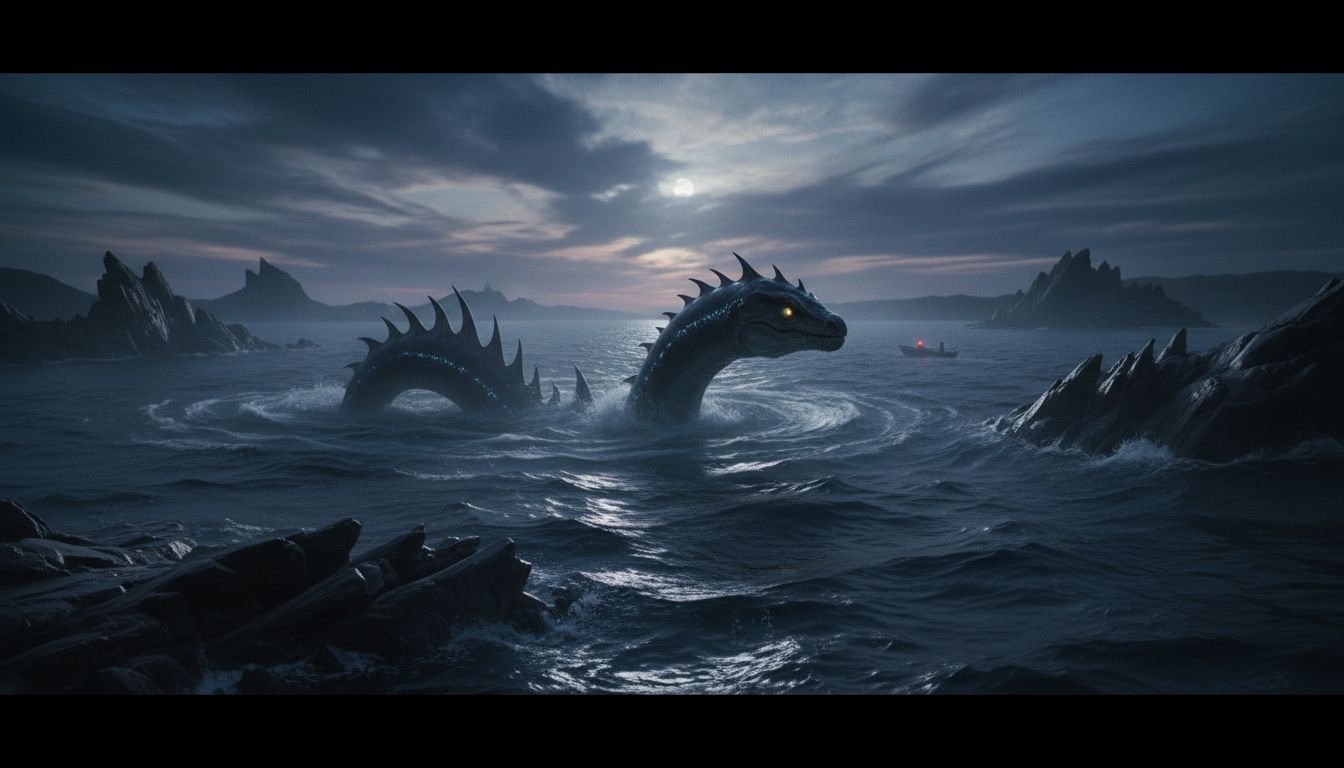
The Devils Lake Serpent—sometimes called the Devils Lake Sea Monster—has resurfaced in recent online discussions of North Dakota’s unexplained phenomena. The creature is described as a long, serpentine being that glides beneath the surface of Devils Lake, a large and notoriously volatile body of water in the state’s northeastern region. While the legend dates back decades, its persistence reflects a broader pattern of folklore that intertwines natural hazards with supernatural warning, a theme common across the Dakotas’ cryptid tradition【58】.
Historical Roots and Folklore
Indigenous Dakota storytelling long portrayed the lake as a place of both sustenance and danger, attributing its sudden floods and shifting shorelines to a “powerful and dangerous being” that dwells in the depths. Early settler accounts, recorded in local newspapers and oral histories, echo this sentiment, describing a “large form” that rises briefly before vanishing beneath the water. The Devils Lake Serpent thus became a cautionary figure for those crossing the lake’s open water or navigating its many islands, where visibility can drop sharply and currents turn treacherous.
The legend aligns with other regional cryptids—such as the Missouri River’s Miniwashitu and the Plains’ Thunderbirds—by serving as a cultural mechanism to explain unpredictable natural forces. In each case, the creature’s characteristics mirror the environment it inhabits: the serpent’s fluid motion mirrors the lake’s shifting tides, while the Miniwashitu’s single glowing eye symbolized the sudden flash of floodwaters that could claim lives.
Contemporary Interest
In the past year, the serpent has reappeared on social‑media platforms and paranormal forums, spurred by a series of anecdotal sightings reported by anglers and boaters. One fisherman from Ramsey County recounted, “We saw a ripple that stretched for what felt like a hundred yards, and then a dark shape just below the surface. It disappeared as quickly as it appeared.” While no photographic evidence has emerged, the consistency of these reports has prompted local historians to revisit archival material, confirming that similar descriptions were documented as early as the 1970s.
Researchers at the University of North Dakota’s Department of Anthropology note that the resurgence of interest may be tied to the lake’s recent water‑level fluctuations. “Devils Lake has risen dramatically over the past decade, flooding surrounding farmland and altering shoreline ecosystems,” says Dr. Elaine Marquette. “When a landscape changes dramatically, communities often turn to folklore to make sense of the new uncertainties.” The serpent’s narrative, therefore, functions both as a reminder of the lake’s power and as a cultural touchstone for a region adjusting to environmental shifts.
Cultural Significance
Beyond its role as a cautionary tale, the Devils Lake Serpent contributes to the identity of the lake itself. Tourism brochures now reference the legend as part of the area’s “mystique,” and local festivals occasionally feature serpent‑themed art installations. Indigenous groups, while respecting the story’s origins, emphasize that the legend also underscores a broader spiritual relationship with water bodies—an acknowledgment that the lake demands respect, whether or not a literal monster exists.
The serpent’s endurance in North Dakota folklore illustrates how communities blend historical narratives with modern concerns. As climate variability continues to reshape the region’s waterways, the story may evolve, but its core message—respect for the unpredictable forces of nature—remains unchanged.
Looking Ahead
While scientific inquiry has yet to substantiate the existence of a lake‑dwelling serpent, the legend persists as a living element of North Dakota’s cultural tapestry. Scholars suggest that future research could focus on the sociological impact of such myths, especially as they intersect with environmental change. For now, the Devils Lake Serpent stands as a reminder that, in the Great Plains, the line between natural hazard and supernatural lore is often as fluid as the waters of Devils Lake itself【58】.