Overview
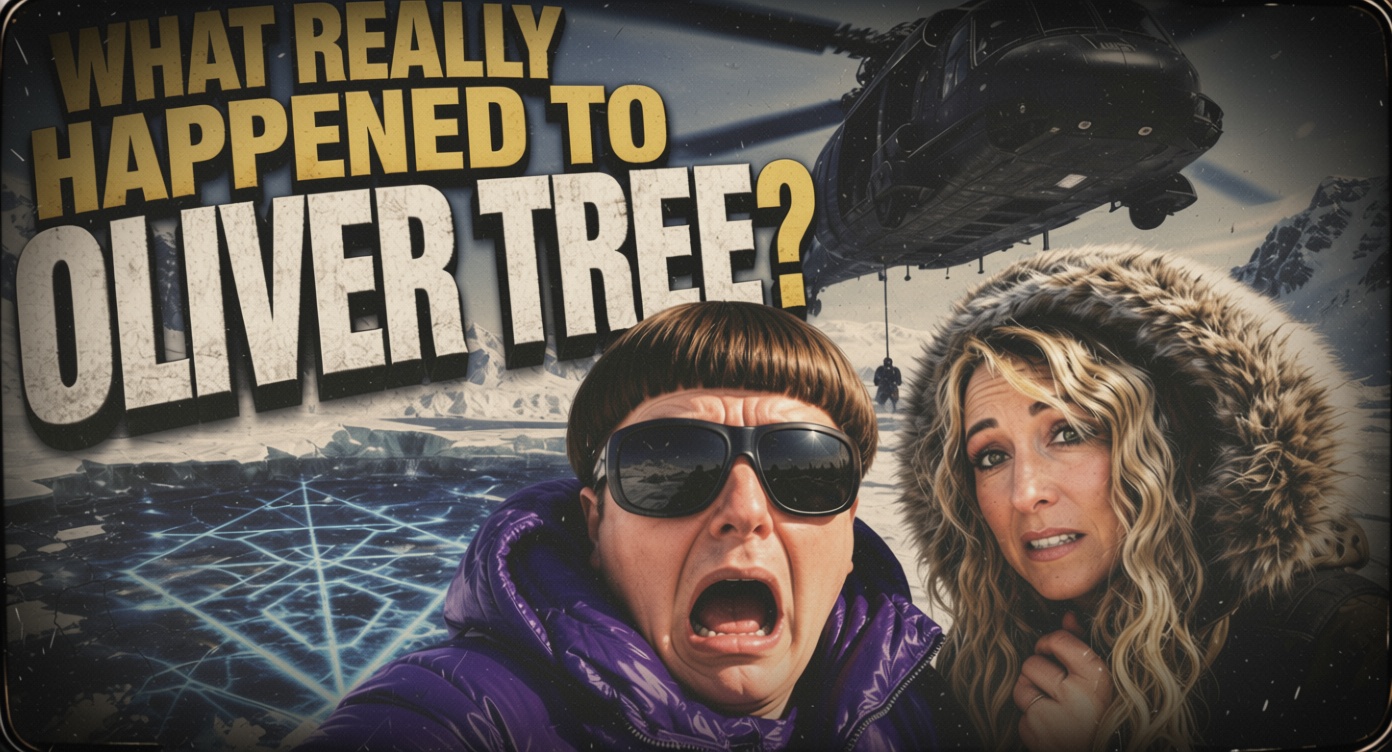
A June 22, 2026 post on Lisa Haven News is stirring attention online with a claim that musician Oliver Tree may have been investigating alleged UFO bases in Antarctica before a reported helicopter crash. Framed as a question rather than a conclusion, the article asks whether Tree’s supposed final project uncovered something sensitive enough to prompt a cover-up. The piece offers a familiar conspiracy formula: a celebrity figure, a mysterious location, a missing film, and the suggestion that official accounts may not tell the whole story.
According to the post, Tree’s death in a helicopter crash coincided with renewed interest in an Antarctica documentary that was reportedly intended to accompany one of his albums but never received a full public release. The article says the internet has latched onto claims of “300 days on the ice,” “UAP whispers,” and even alien-base allegations, while presenting these details as clues that something more unusual may have happened behind the scenes. However, the article does not provide independently verifiable evidence tying Tree to any classified site, secret research, or hidden footage.
What the Article Claims
The core argument in the piece is not a direct accusation, but a series of insinuations. The author suggests that the timing of the crash, the rumored documentary, and the alleged disappearance of the project feed a broader narrative about suppressed technology and government or corporate cover-ups. The post asks whether this was “just a tragic accident wrapped in internet madness” or whether Tree’s Antarctica project “expose[d] something nobody expected.” That framing is designed to provoke curiosity, but it stops short of offering documentation, witness testimony, or corroborating records.
The article’s language relies heavily on uncertainty. Rather than presenting a clear chain of evidence, it invites readers to connect gaps in the story themselves. That is a common hallmark of conspiracy content: a missing release becomes suspicious, a remote location becomes proof of secrecy, and a public tragedy becomes a possible warning sign. In this case, the post gives readers a narrative of hidden knowledge without demonstrating how the conclusion follows from the facts available.
Why the Story Spread
Stories linking Antarctica, UFOs, and secret bases have long resonated in fringe media because the continent’s isolation and restricted access make it easy to imagine hidden operations there. Add a well-known performer like Oliver Tree, and the story gains viral appeal far beyond traditional conspiracy circles. The article also taps into broader cultural themes around restricted science, classified programs, and “what they don’t want you to know” messaging, which tends to perform well on social platforms.
Just as important, the post does not stand alone as a report; it functions as a teaser for a larger conversation. It urges viewers to watch the accompanying video and “decide what’s real,” a phrase that shifts responsibility for verification onto the audience. That style is effective for engagement, but it also blurs the line between speculation and reporting.
Bottom Line
At this stage, the story remains a conspiracy claim, not a substantiated investigation. The article presents a dramatic possibility, but it does not supply the kind of evidence needed to support an allegation of murder, suppression, or UFO-related secrecy. For readers, the key takeaway is not the theory itself, but the way it is constructed: through ambiguity, implication, and unresolved questions. In other words, the post is less a piece of confirmed news than a case study in how modern UFO and cover-up narratives are built.


