Overview
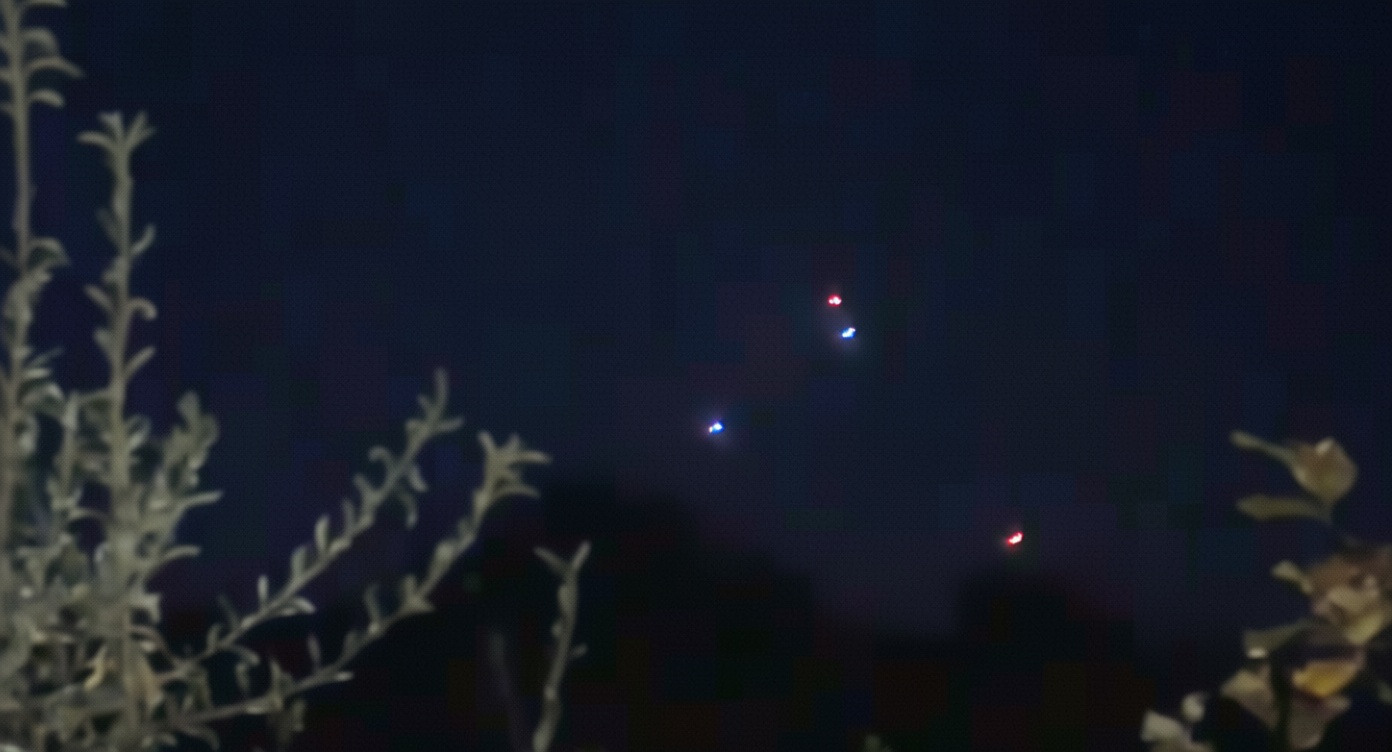
The idea that unidentified flying objects could be interdimensional craft rather than spacecraft from distant planets has moved from fringe speculation into serious scientific discussion. Recent articles, such as the piece on Alienated Media, frame the hypothesis within the context of quantum mechanics and string theory—frameworks that allow for multiple, co‑existing realities with differing physical constants. Proponents argue that the anomalous flight characteristics reported in UFO sightings—instantaneous acceleration, sudden changes in direction, and apparent defiance of gravity—might be explained if the objects are traversing parallel dimensions where the rules of motion differ from those in our observable universe.
Theoretical Foundations
Parallel dimensions are a staple of several advanced physical theories. In quantum mechanics, particles can exist in a superposition of states, a concept that some interpret as evidence for multiple, overlapping realities. String theory goes further, positing a multiverse of up to 10⁵⁰⁰ possible universes, each with its own set of physical laws and extra spatial dimensions beyond the familiar three. The table below, reproduced from the source article, summarizes the main categories discussed by physicists:
| Dimension Type | Description | Potential Characteristics |
|---|---|---|
| Parallel Universe | Similar to ours but with different outcomes | Alternate histories, divergent life |
| Extra Dimensions | Beyond the three spatial dimensions | Can affect gravitational forces |
| Quantum Realities | Exist in a superposition of states | Infinite possibilities |
While the majority of the scientific community remains cautious—citing a lack of empirical evidence for direct interaction between dimensions—the mathematical consistency of these models has kept them under active investigation. Critics point out that without testable predictions, the link between multiverse theory and UFO phenomena remains speculative.
Expert Commentary
Physicist Michio Kaku, a leading advocate for higher‑dimensional physics, has publicly entertained the notion that an advanced civilization could exploit extra dimensions for travel. In a 2024 interview, Kaku said, “If a civilization could master the mathematics of string theory, it might be able to slip into a neighboring brane and re‑enter our space, appearing to us as a sudden flash or a craft that seems to ignore our laws of inertia.” He emphasizes that such interdimensional travel would not require faster‑than‑light propulsion; instead, it would rely on shifting the craft’s existence into a dimension where the speed of light limit is different or non‑existent. Kaku’s remarks, while speculative, are grounded in the same equations that describe particle behavior at the quantum level, lending the hypothesis a veneer of scientific plausibility.
Evaluating the Evidence
UFO reports that describe rapid acceleration, sharp angular turns, or silent hover are often cited as supporting data for the interdimensional model. However, systematic analysis of these accounts reveals a mixed picture. The U.S. Office of the Director of National Intelligence’s 2023 UFO report cataloged 144 incidents with “unexplained flight dynamics,” yet it stopped short of attributing them to any specific mechanism. Researchers such as Dr. Elena Martínez of the University of Barcelona note that many sightings suffer from observer bias, limited instrumentation, and atmospheric phenomena that can mimic exotic motion. Until high‑resolution, multi‑sensor recordings—ideally corroborated by radar, infrared, and visual data—are obtained, the interdimensional hypothesis remains an interpretive framework rather than a falsifiable theory.
Implications and Future Directions
If future observations were to confirm that some aerial phenomena indeed originate from alternate dimensions, the ramifications would extend far beyond aerospace security. It would provide the first empirical foothold for multiverse theories, potentially reshaping our understanding of cosmology, particle physics, and even the role of consciousness in measurement, as quantum entanglement suggests observer effects may influence reality. Funding agencies, including the National Science Foundation, have begun to allocate modest grants for “exotic propulsion” and “high‑energy physics” studies that could indirectly test interdimensional models. Nonetheless, most scientists urge a methodical, evidence‑first approach, warning against conflating intriguing speculation with established fact. As the dialogue continues, the intersection of UFO research and cutting‑edge physics offers a rare opportunity for interdisciplinary collaboration—one that may ultimately illuminate whether the skies are hiding extraterrestrial visitors, interdimensional travelers, or simply the limits of our current knowledge.