Overview
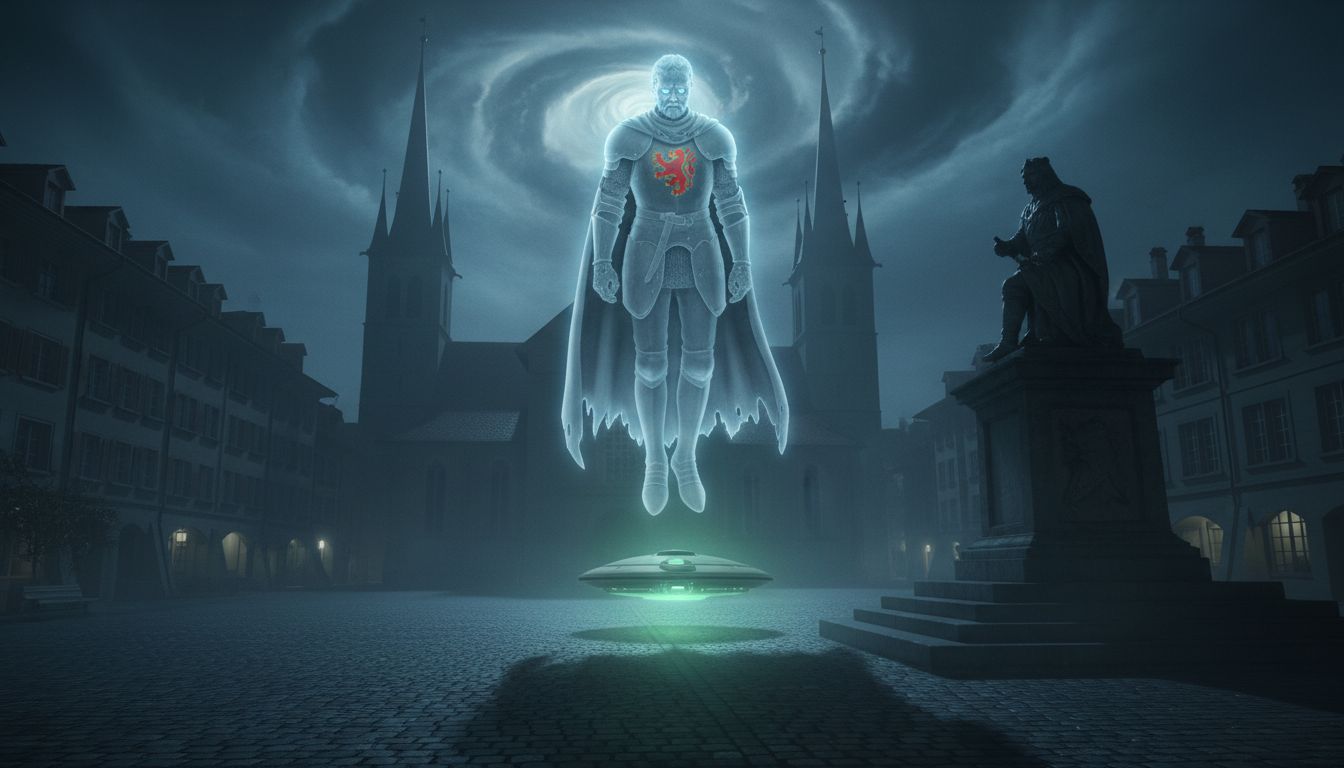
The narrow cobblestone lanes of Bern’s Old Town have long attracted tourists drawn to their medieval charm, but a growing strand of local folklore adds an eerie layer to the historic district. According to residents and a recent feature on the Moon Mausoleum website (published 24 February 2026), the ghost of Duke Berchtold V of Zähringen—the city’s 13th‑century founder—has been sighted near Nydegg Church, where his stone monument stands. The spectral duke is described as “unhappy with the fate of the city he once led,” and is said to wander the area on fog‑laden evenings, observing modern Bern with a “grim, disapproving air.”
Historical Background
Berchtold V ruled the Zähringen territories from 1186 until his death in 1218, overseeing the early development of Bern. His line ended with him, and the power vacuum led to the demolition of his stronghold, Nydegg Castle, in the 13th century. The castle’s ruins gave way to Nydegg Church, a place of worship that now shelters the Zähringer Monument in the Nydegghöfli courtyard. The monument, a bronze portrait of the duke, was installed in the 19th century as part of Bern’s effort to commemorate its medieval origins.
Folklore and Reported Sightings
The legend centers on nightly apparitions near the church’s stone steps. Witnesses describe a figure in “medieval finery” stepping down from the monument and walking the narrow Kreuzgasse alley that links Kramgasse with the Cathedral and Town Hall. “I was closing the shop at 10 p.m. when I saw a tall, dark silhouette pause by the fountain,” recalls Miriam Keller, a shopkeeper who lives in the Nydegg quarter. “He didn’t move for a moment, just stared at the river as if judging what the city had become.”
Local historian Dr. Lukas Meier of the University of Bern notes that such stories are typical of “founder myths” that emerge when a city’s identity is closely tied to a single historical figure. “The Zähringen dynasty vanished centuries ago, but the duke’s name remains on street signs, fountains, and the very layout of the old town,” he explains. “When residents feel a disconnect between the celebrated past and present challenges—such as housing shortages or tourism pressure—it’s natural for the collective imagination to project that tension onto a spectral version of the founder.”
Expert Commentary
Skeptics point to the region’s natural fog, the echoing acoustics of the medieval architecture, and the psychological effect of suggestion. Prof. Elena Rossi, a paranormal researcher at the Swiss Institute of Folklore, cautions against taking anecdotal accounts as proof. “While there is no empirical evidence of a lingering spirit, the consistency of the narrative—specific location, attire, and demeanor—suggests a well‑reinforced oral tradition,” she says. “These stories serve a social function, reinforcing community bonds and reminding residents of Bern’s layered history.”
Cultural Impact
Regardless of its veracity, the tale of Duke Berchtold V’s restless ghost has become a modest draw for cultural tourists. Guided night tours now include a stop at Nydegg Church, where guides recount the legend alongside factual history. The city’s tourism office, while not officially endorsing the supernatural claim, has highlighted the story in its “Legends of Bern” brochure, noting that “local folklore adds a unique flavor to the historic experience.”
The phenomenon illustrates how historical memory and contemporary urban life intertwine, turning a 13th‑century duke into a symbol of both pride and unresolved longing. Whether the duke’s apparition will ever be captured on camera remains uncertain, but the narrative continues to haunt the imagination of Bern’s residents and visitors alike.