Overview
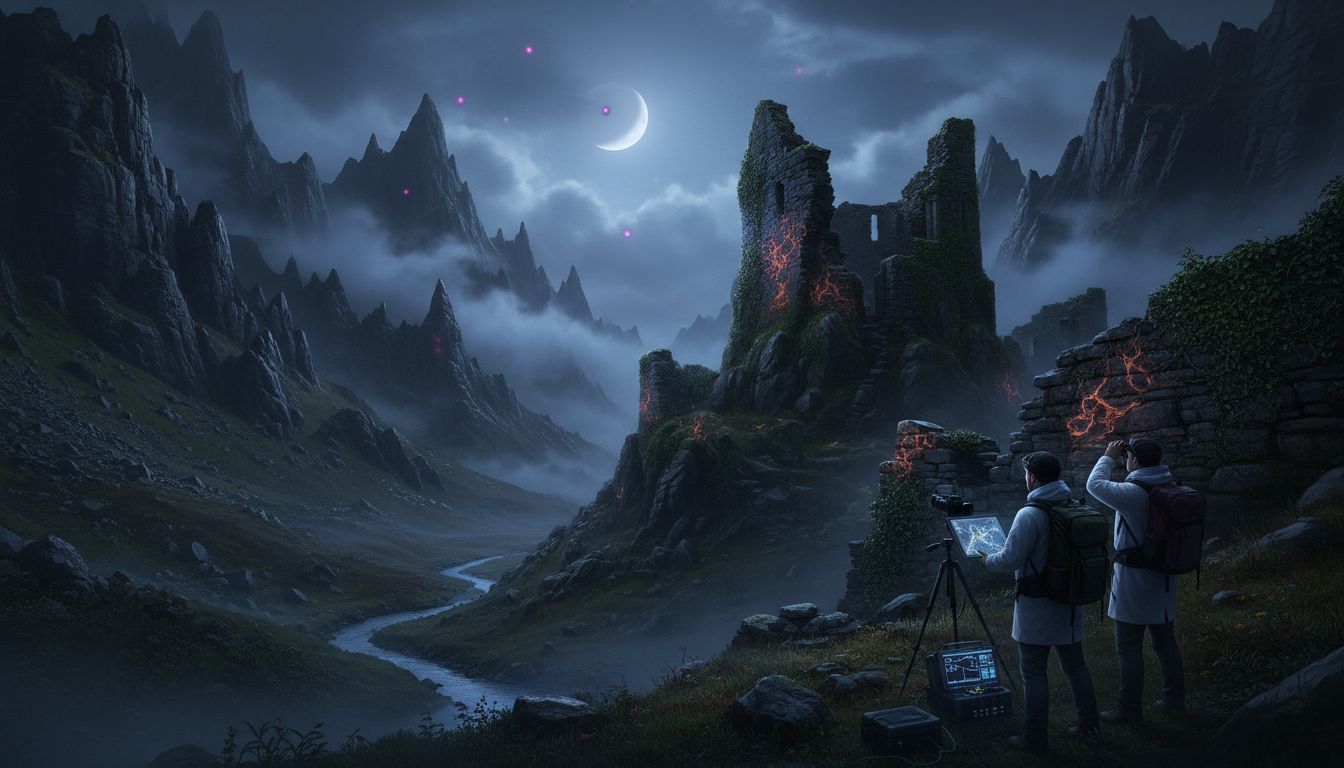
The crumbling remains of Dun Dreach‑Fhoula, a ruin tucked deep within Ireland’s MacGillycuddy’s Reeks, have re‑emerged in scholarly and popular discussion this week. Long described on folklore sites as the “Castle of Tainted Blood,” the site is alleged to be the home of blood‑thirsty fairies from the Irish Otherworld. While local legend paints a vivid picture of shape‑shifting, vampiric fae guarding a mountain pass, researchers are now questioning whether the story is an authentic piece of ancient mythology or a more recent fabrication. The debate touches on medieval Irish folklore, 19th‑century gothic literature, and the modern tourism economy that thrives on the supernatural.
The Legend in Detail
According to the narrative circulated on the Moon Mausoleum blog and echoed in regional storytelling circles, Dun Dreach‑Fhoula—translated as “Castle of the Blood Visage”—was erected not by human hands but by Otherworld beings who concealed themselves from sunlight and preyed on unsuspecting travelers. The fortress is said to dominate a mist‑shrouded mountain pass that stretches roughly 19 kilometres from the Gap of Dunloe to Glencar, a route that today forms part of the demanding Coomloughra Horseshoe Loop Walk. Proponents of the tale point to the occasional reddish staining of the stone after heavy rain as “evidence” of a lingering curse, and they link the site to the broader Irish tradition of banshee‑like “sidhe” who guard liminal spaces between life and death.
Historical Context and the Dracula Connection
The story’s allure is amplified by a tenuous link to Bram Stoker’s Dracula. Some popular accounts claim that Stoker, who spent time in County Kerry, may have drawn inspiration from the “blood‑soaked” ruins when crafting his iconic vampire. However, literary scholars note that Stoker’s notes contain no direct reference to Dun Dreach‑Fhoula, and the association appears to have arisen in the late 20th century as part of a broader effort to market Irish sites to gothic‑tourism seekers. Dr. Siobhan O’Leary, professor of Irish folklore at University College Cork, explains, “The Dracula connection is a modern overlay that capitalises on the global fascination with vampirism, rather than a documented element of the original oral tradition.”
Academic Debate: Folklore or Hoax?
Folklorists and archaeologists are divided. A 2024 field survey led by the Irish Archaeological Trust documented the stone foundations but found no material culture—such as weaponry or ritual artefacts—that would support a narrative of blood‑drinking inhabitants. Dr. Eamon Gallagher, an archaeologist who examined the site last summer, remarks, “The masonry is consistent with 12th‑century Gaelic fortifications, yet the mythic embellishments—shape‑shifting fairies, cursed blood—are absent from contemporary medieval annals.” Conversely, oral‑history specialist Maeve Ní Bhraonáin argues that the legend may pre‑date written records, citing parallels with Tuatha Dé Danann myths where otherworldly beings interact with mortals at mountain thresholds. She cautions against dismissing the tale outright, noting that “oral tradition often preserves cultural truths that archaeological layers cannot capture.”
Cultural Impact and Future Outlook
Regardless of its factual basis, the Dun Dreach‑Fhoula narrative continues to shape local tourism and community identity. Guided hikes now include “fairy‑watch” segments, and the site has been featured in recent travel documentaries exploring Ireland’s “paranormal hotspots.” The Irish Tourism Board, while acknowledging the folklore, emphasizes safety and environmental preservation, urging visitors to respect the fragile ecosystem of the Reeks. As the scholarly dialogue proceeds, the castle’s stone walls remain a symbolic crossroads where history, myth, and commercial interest intersect—inviting both skeptics and believers to contemplate the thin line between ancient legend and contemporary hoax.