Overview
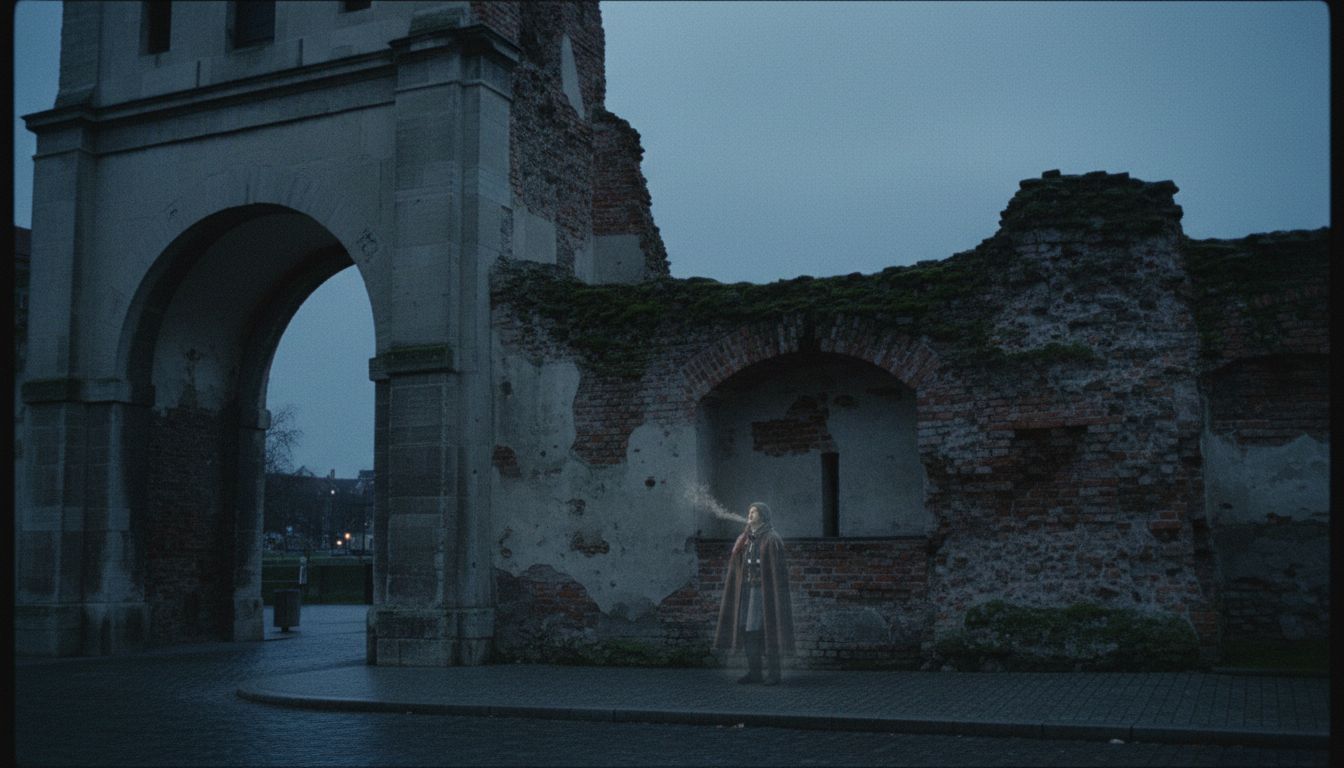
At Munich’s Sendlinger Tor, one of the city’s last surviving medieval gates, a local legend continues to draw attention to the ruins at the southern edge of the historic old town. According to the story passed down through generations, a ghostly voice still echoes from within the gate, believed by some to be the lament of a man who was walled up alive as punishment for betrayal and greed. While the account belongs firmly to the realm of folklore, it remains a vivid part of the gate’s identity and the city’s broader historical memory.
A Medieval Gate with a Dark Reputation
Sendlinger Tor, translated as Sendling Gate, was originally part of Munich’s old fortification system and served as a defensive structure protecting the city. The gate is first mentioned in 1319, though it likely existed before that date. Historical records note that the structure was expanded around 1420, when two flanking towers were added to the central tower as the outer city wall was completed. The gate also marked an important route southward; it was documented as the starting point for the road to Italy as early as 1318. Today, it stands as one of Munich’s three remaining Gothic town gates, making it both an architectural landmark and a link to the city’s medieval past.
The Legend of the Walled-Up Man
The haunting narrative associated with Sendlinger Tor centers on a wealthy patrician described in the legend as morally corrupt and driven by greed. In the tale, a band of robbers approached him with a scheme to gain access to the city. They allegedly paid him a large sum of gold coins to steal the key to Sendlinger Gate, allowing them to enter Munich at night and rob its citizens. The man allegedly complied, working with the thieves and sharing in the stolen goods. Once his betrayal was discovered, local authorities are said to have handed down a brutal punishment: he was walled up alive inside the gate, in what the legend calls the Faust Tower. According to the story, his voice can still be heard lamenting from within the structure.
Folklore, Fear, and Historical Memory
The legend reflects a common motif in European ghost stories: the idea that a violent or unjust death leaves a spiritual imprint on a place. It also speaks to medieval anxieties about crime, civic betrayal, and punishment in fortified cities, where order depended heavily on gatekeeping and nighttime restrictions. The tale places the gate in an era when, as the story says, absolute quiet reigned after nightfall and residents were expected to remain indoors. Whether or not the events ever occurred as described, the legend gives Sendlinger Tor an added layer of meaning, blending historical architecture with moral storytelling.
An Enduring City Landmark
For visitors and locals alike, Sendlinger Tor is more than a preserved medieval gate: it is a site where history and legend overlap. The building’s survival through centuries of urban change has allowed stories like the walled-up man’s to endure alongside the stone towers and ruins. In a city known for its deep historical roots, the gate’s ghost story continues to offer a haunting reminder that old places often carry memories—real or imagined—that refuse to fade.