Overview
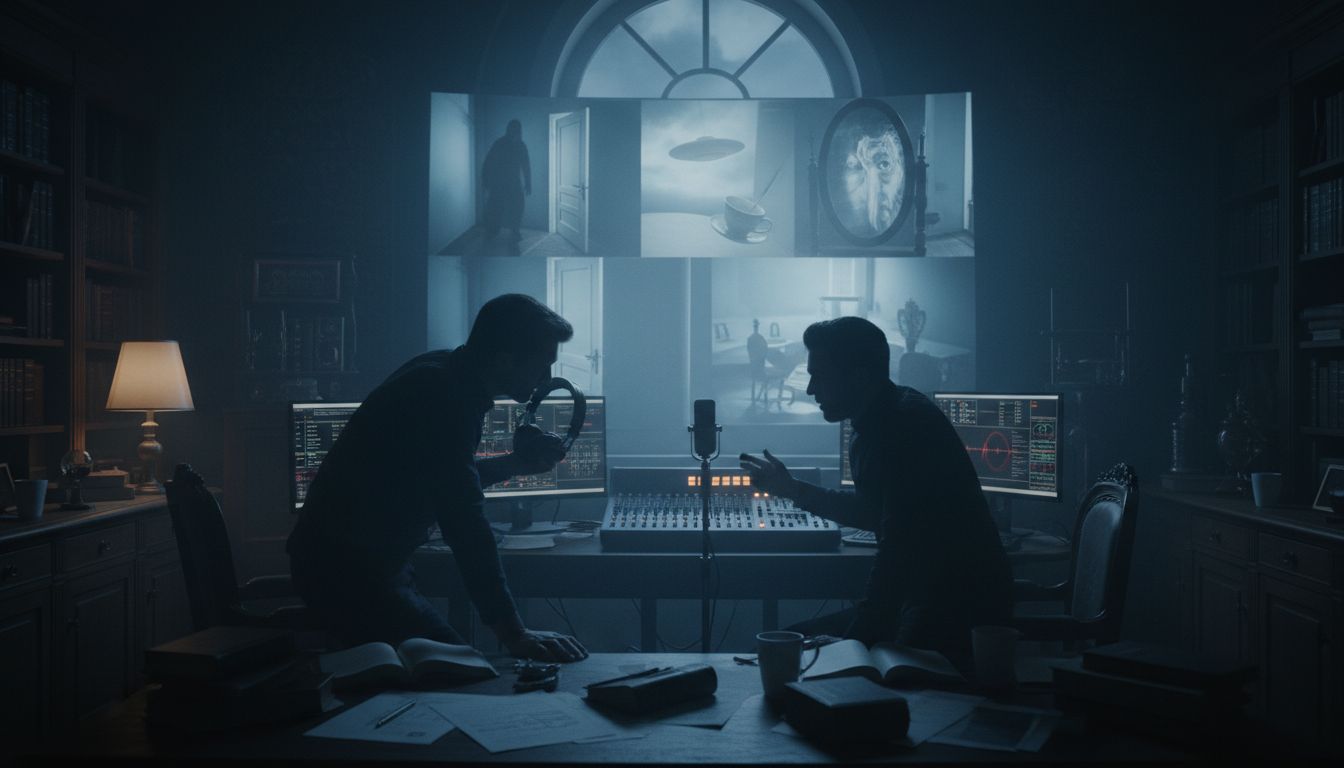
In the latest installment of One Opinion in 8 Billion, host Thom Gordon examined why paranormal claims continue to capture public imagination. The episode, titled “The Paranormal,” combined a curated selection of viral footage with a systematic review of the cognitive and physiological mechanisms that can produce ghost‑like experiences. Gordon framed the discussion as an inquiry rather than a verdict, inviting listeners to weigh “the evidence against the psychology” while maintaining a neutral tone throughout the hour‑long broadcast.
Psychological Framework
Before delving into individual clips, Gordon outlined four core concepts that scholars and skeptics frequently cite when interpreting anomalous sightings. Evolutionary threat detection posits that humans are hard‑wired to interpret ambiguous stimuli as potential danger, a bias that can turn ordinary shadows into perceived predators. Pattern‑recognition bias and pareidolia describe the brain’s propensity to impose familiar shapes—faces, figures, or objects—onto random visual information such as grainy video pixels or cloud formations. Sleep paralysis, a well‑documented REM‑related phenomenon, often generates vivid hallucinations of “shadow figures” and a sense of chest pressure, explaining many nighttime reports. Finally, infrasound—low‑frequency vibrations below the threshold of hearing—has been shown to induce feelings of unease, chills, and even visual distortions, offering a plausible physiological trigger for reports of hauntings.
Case Studies and Evidence
The episode featured seven widely circulated clips, each evaluated against the psychological backdrop. The Marriott Stelaris footage from Puerto Rico showed a security guard’s ponytail jerked abruptly; Gordon noted the site’s tragic history— the 1986 DuPont Plaza Hotel fire—yet emphasized that the rapid motion could also stem from a momentary muscular spasm or camera artifact. In the Kaitlyn incident (2020), a woman recovering from a severe neck injury recorded unexplained bangs and door movements; Gordon suggested heightened hyper‑awareness after trauma might amplify ordinary house noises. An urban‑exploration video from Poland captured a music box playing and furniture shifting; the host linked this to the “ripple effect” of fear, where anxiety heightens perception of minor vibrations. A kayaker on the Santa Fe River recorded a child’s voice warning him; police later confirmed the submerged SUV was stolen but contained no bodies, indicating the audio could be a pareidolic interpretation of ambient water sounds. A woman who smelled “rotten eggs” and saw a cross invert was presented alongside a possible gas leak explanation, underscoring how olfactory cues can shape supernatural narratives. The Crib Incident, showing a newborn being tugged, was highlighted as particularly unsettling, though Gordon cautioned that camera angle, wind, or infant movement can produce similar visual effects. Lastly, the Yama‑Q video from Japan, despite thermal imaging, revealed no heat source for the reported knocks and cries, leaving the clip “unexplained but not necessarily paranormal,” according to the host.
Key Figures and Methodology
Gordon positioned himself as both moderator and investigator, drawing on the analytical style of fellow paranormal YouTuber Caspersight while stressing the importance of reproducible evidence. Throughout the episode, he encouraged audience participation via comment sections, asking listeners to propose alternative hypotheses or share comparable experiences. By juxtaposing each clip with peer‑reviewed research on perception, the podcast sought to model a disciplined approach that bridges popular media and scientific inquiry.
Conclusion
The program concluded that many alleged hauntings can be traced to well‑understood psychological or environmental factors, yet a subset of incidents—such as the Crib Incident and the Yama‑Q recordings—remain without a definitive explanation. Gordon urged


