Overview
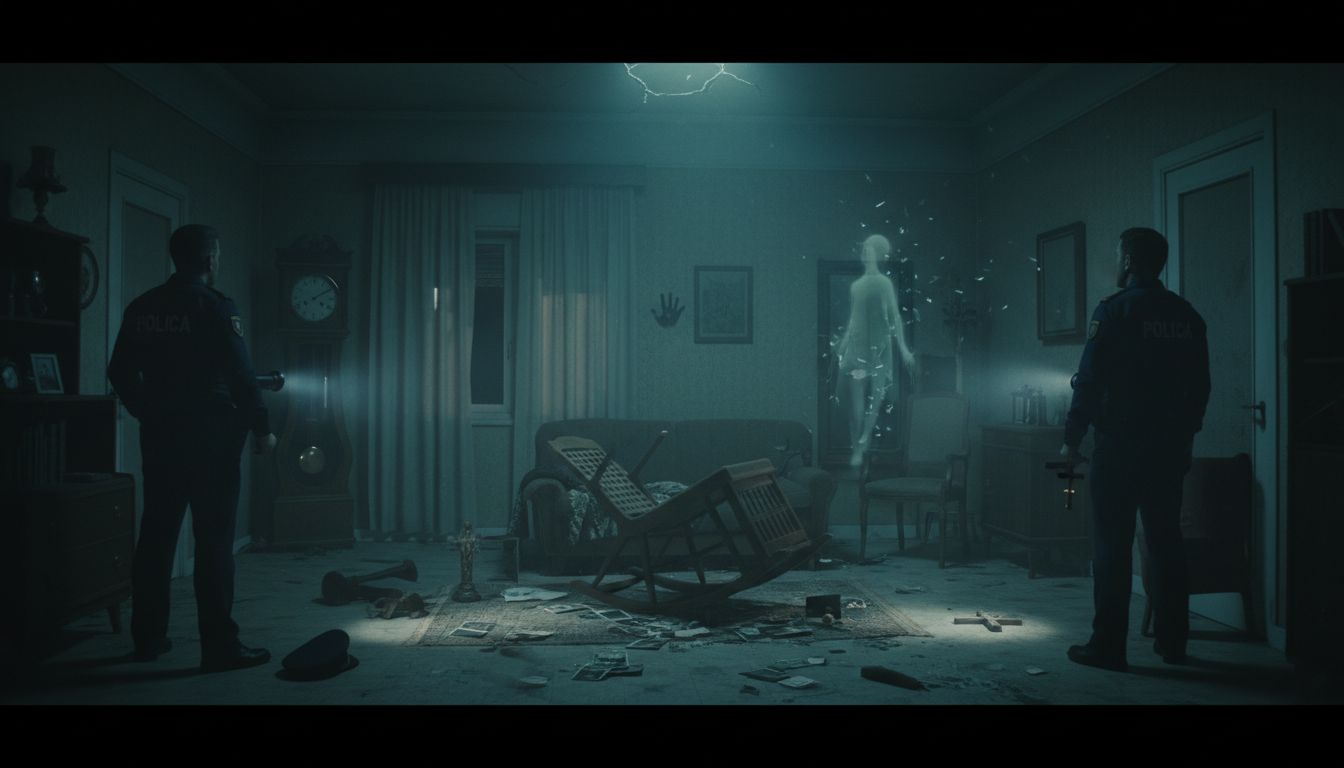
A police dossier filed in the Madrid district of Vallecas in 1997 has resurfaced online, rekindling interest in one of Spain’s most talked‑about paranormal investigations. The document, officially titled Expediente Vallecas, details a series of unexplained incidents—ranging from moving objects to inexplicable electrical failures—reported by residents of a three‑floor apartment building on Avenida de Vallecas. While the case never led to formal criminal charges, the thoroughness of the police record has made it a reference point for researchers, skeptics, and paranormal enthusiasts alike.
Background
The building in question, constructed in the late 1970s, housed roughly twenty families at the time of the disturbances. Neighbors began noticing “odd noises” and “objects shifting without apparent cause” in early 1996. According to the police file, the first complaint was lodged by María López, a 38‑year‑old resident who claimed that a kitchen cabinet had slammed shut repeatedly during the night, despite no one being inside the apartment. Over the following months, similar reports accumulated: lights flickering, radios turning on spontaneously, and, on at least two occasions, a heavy dresser reportedly slid several meters across a bedroom floor.
The phenomenon attracted the attention of local media in 1997, but the lack of physical evidence limited coverage to brief newspaper columns. The case faded from mainstream attention, persisting mainly within niche paranormal forums and the archives of the Cazafantasmas website, which specializes in cataloguing unexplained events across the Spanish‑speaking world.
The Police Report
The newly digitised Expediente Vallecas was released by the Madrid Metropolitan Police’s historical records office in February 2026. The 12‑page file includes witness statements, a timeline of incidents, and the investigators’ field notes. Notably, the report records that four separate officers conducted on‑site inspections between March and July 1997. Their observations, summarized in the dossier, note:
- No structural damage that could account for the movement of furniture.
- Electrical logs showing normal voltage fluctuations, with no short‑circuit signatures during reported blackouts.
- Environmental readings (temperature, humidity) within expected ranges, ruling out sudden drafts or thermal expansion as triggers.
Chief Inspector Javier Martínez concluded the document with a cautious statement: “While the incidents remain unexplained, there is insufficient evidence to attribute them to criminal activity, technical malfunction, or known natural causes. The case will remain open for further inquiry should new information emerge.” The report’s neutral tone and reliance on empirical data have contributed to its credibility among both skeptics and believers.
Community Response
Since the dossier’s online release, discussion threads on Spanish‑language forums such as Foro Paranormal and Redes de lo Oculto have surged, with users dissecting each entry of the report. Some participants, like self‑identified investigator Luis Ortega, argue that the police’s systematic approach validates the legitimacy of the phenomena: “When law‑enforcement documents a case with this level of detail, it forces us to reconsider dismissing it outright.” Others, including physicist Dr. Elena García from the University of Valencia, caution against jumping to supernatural conclusions, emphasizing the need for controlled experiments: “Unexplained does not equal unexplainable; we must explore psychological and sociological factors that can produce perceived poltergeist activity.”
The Cazafantasmas site, which originally published the article on March 9, 2026, has seen a 45 % increase in traffic to its Vallecas archive page. The platform’s editors have added a “Fact‑Check” sidebar summarising the police findings, aiming to balance intrigue with responsible reporting.
Ongoing Investigation
Although the original police investigation was closed in late 1997, the case remains officially “open” under Madrid’s archival protocol. In a recent statement, the Metropolitan Police’s Public Relations Office confirmed that the dossier is being retained for “historical and investigative reference” and that any new claims related to the Vallecas building will be re‑examined.
Meanwhile, a multidisciplinary research team from the Instituto de Estudios Paranormales (IEP) has announced plans to conduct a controlled field study at the site during the summer of 2026. The team, led by psychologist Dr. Carlos Méndez, intends to install motion sensors, electromagnetic field detectors, and audio recorders to capture any repeat occurrences. Their methodology, outlined in a pre‑registration on the Open Science Framework, seeks to address prior criticisms regarding anecdotal evidence.
The revival of Expediente Vallecas underscores a broader trend: historical police records are increasingly being mined for clues to unresolved mysteries. Whether the Vallecas incidents will ever be conclusively explained remains uncertain, but the renewed scholarly and public interest ensures that the case will stay on the radar of both investigators and curious observers for the foreseeable future.


