Overview
Interest in unidentified aerial phenomena (UAP) remains strong worldwide, and a growing body of data points to specific locales where sightings are reported far more often than elsewhere. A recent feature by Alienated Media (published 29 March 2025) catalogues these “UFO hotspots,” noting that both seasoned researchers and casual observers travel to these sites in search of credible evidence. The article emphasizes that the concentration of reports is as much a cultural phenomenon—fuelled by local folklore, media coverage, and social‑media amplification—as it is a matter of raw observation.
Key Hotspots Around the Globe
Three locations dominate the conversation: Area 51 in Nevada, the Nazca Lines in Peru, and the Hessdalen Valley in Norway. According to the compiled table, Area 51 has logged 100 + sightings spanning pivotal years such as 1947, 1989 and 2020, while the Nazca Lines have attracted 50 + reports since the late 1970s. The Hessdalen Valley, famed for its luminous “Hessdalen lights,” accounts for 80 + documented events, notably in 1981 and 2000. Local communities have embraced these reputations; for example, the town of Hessdalen hosts an annual “Lights Festival,” and the Nevada desert surrounding Area 51 supports a modest tourism industry centered on guided night‑sky tours.
Data Trends and Regional Patterns
The National UFO Reporting Center (NUFORC) continues to be the primary repository for civilian sighting data in the United States. Recent analyses show that California leads the nation in report volume, followed by Texas and Florida, reflecting both population density and the presence of major aerospace installations. Internationally, the United Kingdom’s “Rendlesham Forest” and Brazil’s “Varginha” region also rank high on NUFORC’s global heat map. “When you normalize for population, the per‑capita sighting rates in places like Hessdalen and the Nazca desert remain statistically significant,” notes Dr. Emily Carter, senior researcher at the Center for Aerial Phenomena Studies.
Scientific Context
Researchers caution against attributing every luminous or aerial anomaly to extraterrestrial activity. Atmospheric optics—such as lenticular clouds, temperature inversions, and auroral displays—account for a sizable share of reports. Military training exercises, especially around restricted zones like Area 51, generate radar returns and visual cues that can be misinterpreted. “A rigorous, multidisciplinary approach is essential,” says Prof. Luis Martínez, a physicist at the University of Lima, who has studied the Nazca sightings. His team correlates peak reporting periods with seasonal weather patterns that enhance visibility of high‑altitude phenomena, suggesting that many events have terrestrial explanations.
Visiting the Hotspots
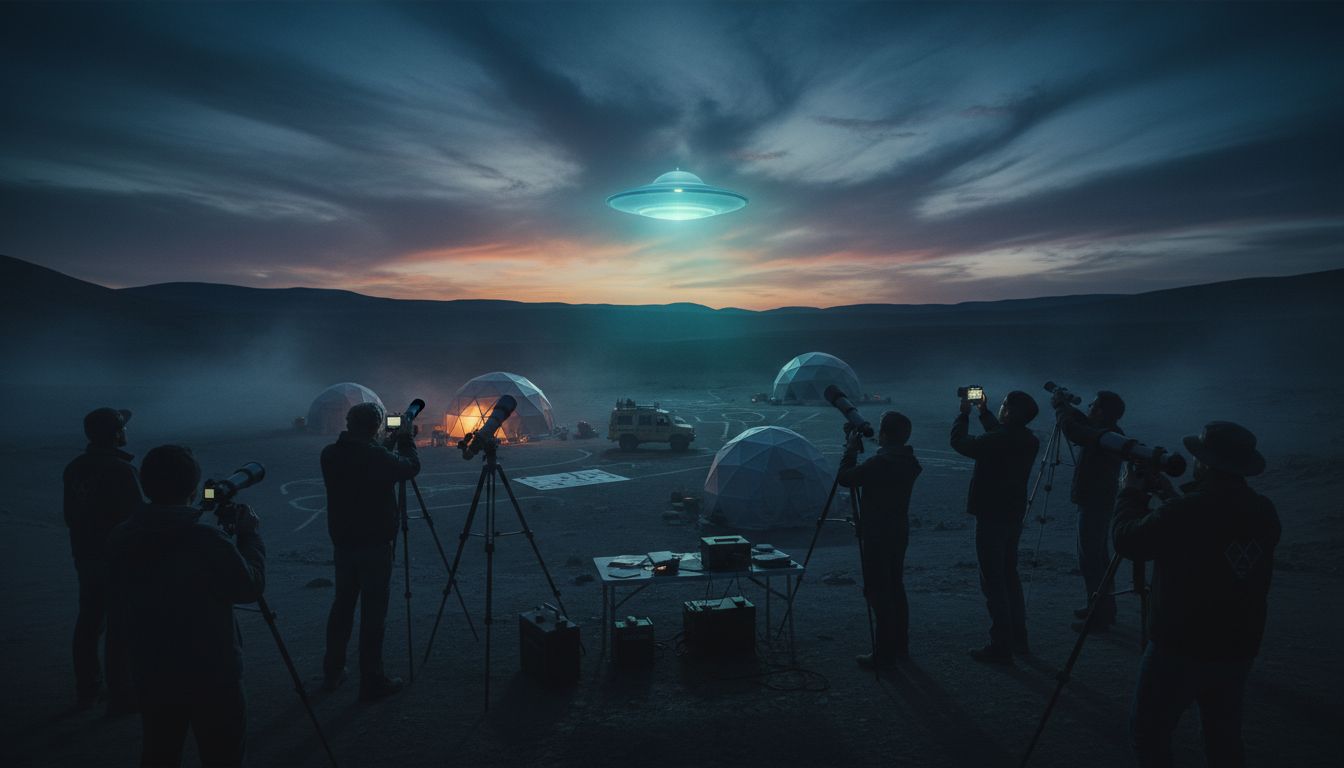
Despite the need for scientific rigor, the allure of these sites continues to draw tourists and investigators alike. Annual events—such as the Hessdalen Lights Festival and the Nevada UFO Conference—provide platforms for data sharing, while local museums curate historical records and eyewitness testimonies. Authorities advise visitors to respect private property, adhere to safety guidelines, and document any observations with timestamped photos or video. As the Alienated Media piece concludes, exploring these hotspots offers a chance to witness the intersection of natural wonder, human curiosity, and the ongoing quest to understand our skies.