Overview
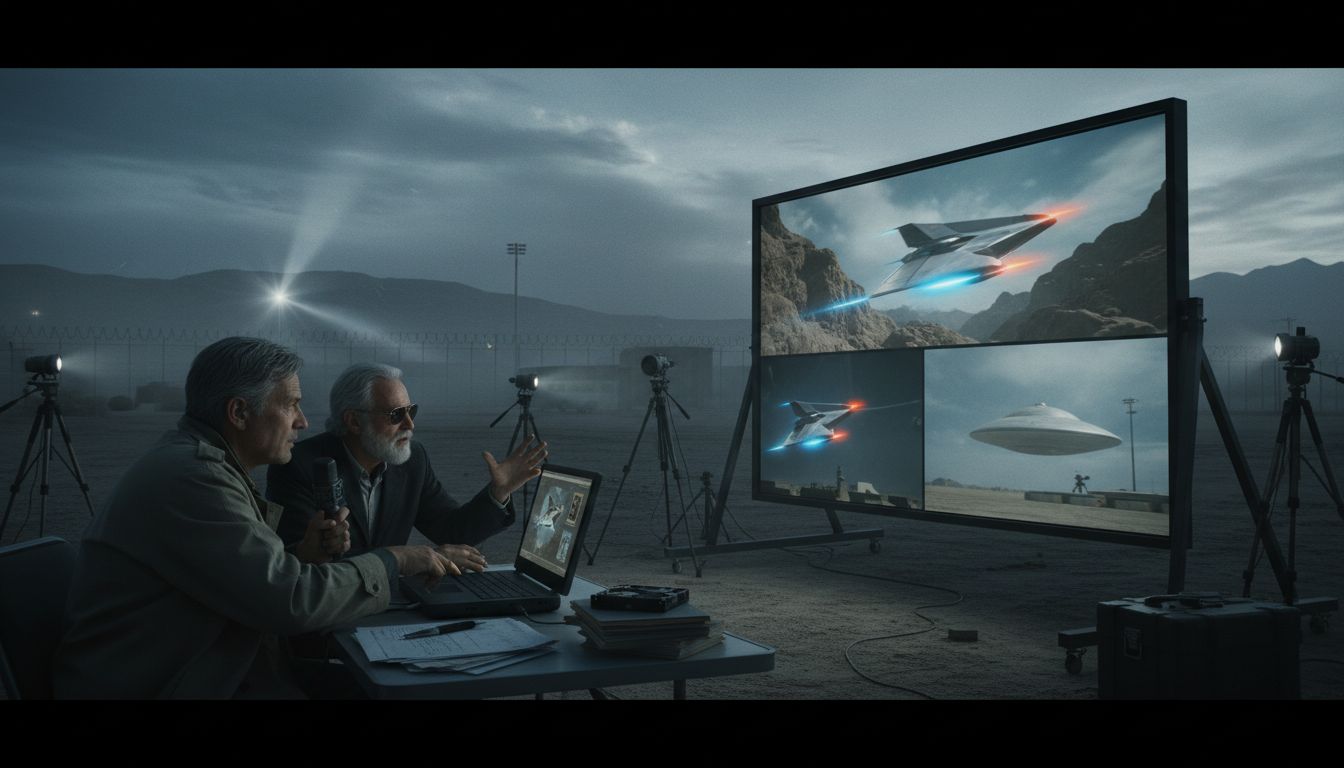
A recent video posted by a UFO‑enthusiast on X compiles a series of eyewitness testimonies, archival footage, and commentary from investigators who claim to have observed “exotic” aerial technology near Groom Lake, Nevada—commonly known as Area 51. The material focuses on a five‑year span from 1989 to 1993, a period during which several observers say they captured unusual craft performing maneuvers that appear to exceed the capabilities of known aircraft. While the video presents dramatic anecdotes, the discussion also references documented government actions, such as the 1975 acquisition of roughly 4,000 acres surrounding the base, which underscores the long‑standing sensitivity of the site.
Key Figures and Perspectives
The compilation features several recurring voices. George Knapp, an investigative journalist who has reported on classified aviation programs for decades, notes that the government’s land seizure “was intended to keep the public from seeing what was happening inside the fences.” Knapp cites interviews with more than two dozen former employees who describe seeing disk‑shaped objects both on the tarmac and inside hangars. Bob Lazar, whose 1989 disclosures about “reverse‑engineered” extraterrestrial craft have become a touchstone in UFO circles, is referenced for a schedule of alleged test flights, though the video does not present independent verification of those dates.
Jim Goodall, author of Area 51: The Dreamland Chronicles, distinguishes between known “black projects” such as the B‑2 bomber and the more speculative “triangular” and “Mach 4‑6” craft reported by insiders. He recounts a conversation with an unnamed Air Force official who described the base’s technology as “better than Star Trek” and “out of this world,” a statement that Goodall frames as anecdotal rather than documentary evidence. Other contributors—researchers Chuck Clark, Gary Schultz, and journalist Norio F. Hayakawa—provide specific incident reports, ranging from a February 1993 sighting of a glowing object that hovered for ten minutes to photographic documentation of an ellipsoidal, pulsating craft.
Reported Maneuvers and Physical Effects
Witnesses in the video describe a set of flight characteristics that challenge conventional aerodynamics. Clark claims the 1993 object ascended vertically, hovered, and then accelerated to speeds he estimates between 9,000 and 14,000 mph—figures that would require propulsion far beyond current jet or rocket technology. Sean David Morton alleges that proximity to a glowing disk caused symptoms resembling radiation exposure, including skin burns and high fever. While such physiological reports are striking, the video offers no medical documentation or third‑party verification, leaving the claims within the realm of anecdote.
The video also highlights “instantaneous” directional changes and rapid descents of 5,000 feet within seconds, maneuvers that would generate forces incompatible with known aircraft structures. Researchers point to these observations as potential indicators of either highly advanced, classified propulsion systems or, as some proponents argue, non‑human technology. Skeptics, however, caution that visual misperception, atmospheric phenomena, or sensor errors can produce similar impressions.
Security Measures and Site Context
A recurring theme is the aggressive security posture surrounding the facility. Hayakawa provides footage from May 16, 1991, showing a military helicopter hovering mere feet above his vehicle for over fifteen minutes—a maneuver he interprets as intimidation. The video also references the “three tiers” of security, including contractors from Wackenhut Special Securities, underscoring the layered defense strategy that has long been reported in declassified documents.
Beyond the immediate perimeter, the video mentions nearby locales such as Rachel, Nevada, home to the Little A’Le’Inn, a well‑known gathering point for UFO observers. The concentration of sightings reported between 1989 and 1993 aligns with a broader historical pattern of increased public interest following the Cold War’s end, when many previously classified projects entered the public discourse.
Assessment and Outlook
The compilation concludes that