Overview
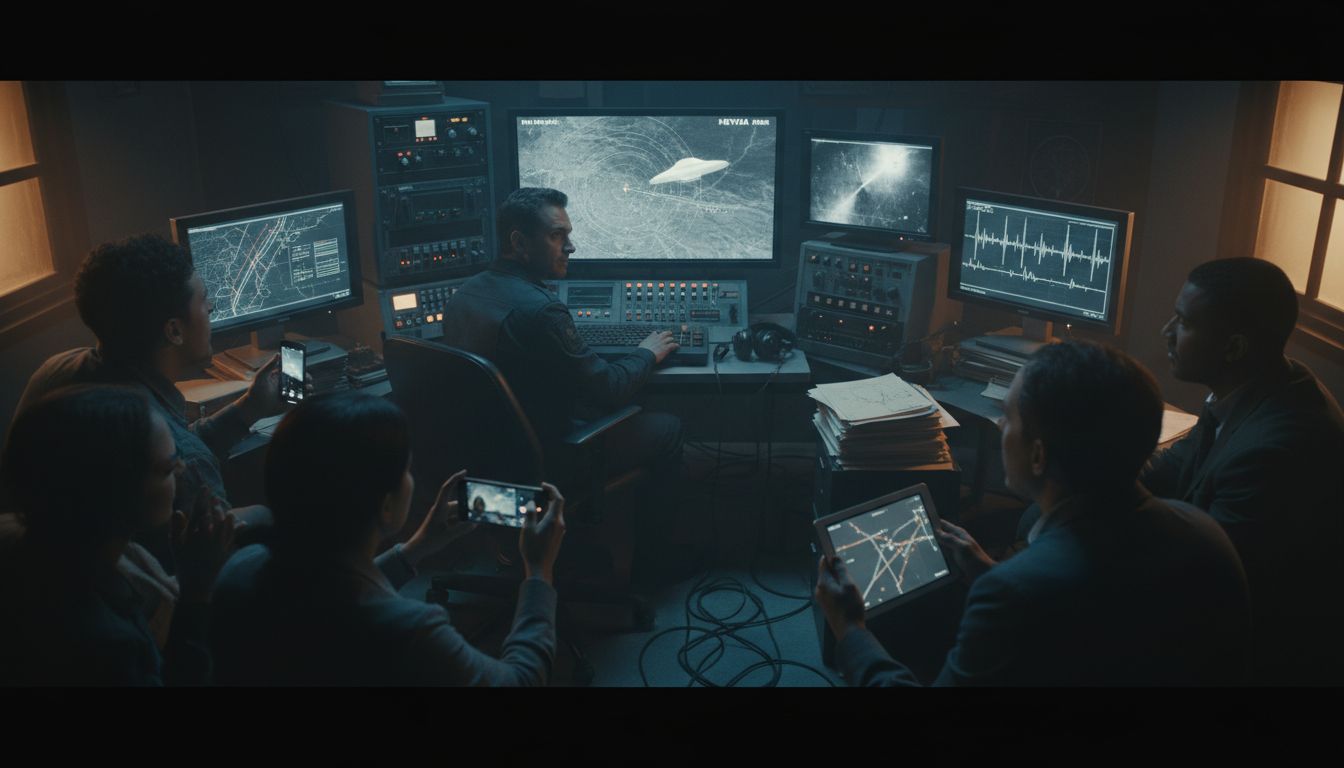
On March 20, 2026, the document‑archiving site The Black Vault published a set of Federal Aviation Administration (FAA) records that detail a commercial pilot’s encounter with an unidentified aerial object over Nevada. The release includes the pilot’s radio transcript, radar data excerpts, and a short audio clip captured by the aircraft’s cockpit recorder. According to the archived files, the object was observed maintaining a consistent distance and speed, effectively pacing the aircraft for several minutes before disappearing from both visual and radar detection.
Incident Details
The incident occurred on a routine flight segment between Reno‑Tahoe International Airport and a destination in the western United States. At approximately 14:32 UTC, the pilot reported a “bright, disc‑shaped anomaly” approximately 2,000 feet ahead and at the same altitude as his aircraft. The cockpit voice recorder captured the pilot’s description:
“I’ve got a bright object about two miles out, moving right alongside us, keeping the same speed. It’s not a light from another aircraft; it’s solid, no flashing.”
Radar logs released by the FAA show a transient return that matched the reported position but vanished within 45 seconds. The audio segment, lasting 12 seconds, includes the pilot’s calm narration and the ambient cockpit environment, confirming the timing of the visual sighting.
FAA Response
The FAA’s internal memorandum, included in the Black Vault archive, classifies the event as a “UAP (Unidentified Aerial Phenomenon) encounter – pending further analysis.” The agency notes that standard investigative protocols were initiated, involving the Air Traffic Control (ATC) center in Las Vegas and the FAA’s Office of Safety. The memo states:
“While the radar signature was brief, the visual report and cockpit audio warrant a formal review. No known aircraft, drone, or weather balloon activity corresponds to the reported parameters.”
The FAA indicated that the incident would be forwarded to the U.S. Department of Defense’s Unidentified Aerial Phenomena Task Force for cross‑referencing with other recent reports in the region.
Broader Context
This Nevada encounter adds to a growing catalog of UAP sightings documented by both civilian pilots and military personnel. Since the Pentagon’s 2020 acknowledgment of a UAP investigative office, the number of credible reports filed through the FAA’s Voluntary Incident Reporting System (VIRS) has risen by roughly 30 % each year. Experts such as Dr. Jacques Vallée, a senior researcher at the UFO Research Center, note that “the consistency of pacing behavior—maintaining speed and distance relative to a manned aircraft—has been a recurring feature in recent credible sightings.”
Nevertheless, officials caution against premature conclusions. The FAA’s statement emphasizes that “unidentified does not equal extraterrestrial,” and that further data correlation is required before any definitive assessment can be made.
Next Steps
The FAA plans to release a summary of its findings within the next 90 days, pending coordination with the Department of Defense. In the meantime, The Black Vault has made the full transcript, radar excerpts, and audio file publicly accessible for independent analysis by researchers and the broader UAP community.
Stakeholders, including airline safety officials and aviation insurers, are monitoring the case closely, citing potential implications for airspace safety protocols should such phenomena prove repeatable. As the investigation proceeds, the aviation industry awaits clarification on whether existing detection systems can reliably identify and track objects that exhibit the kind of non‑cooperative behavior documented in this Nevada encounter.


