Overview
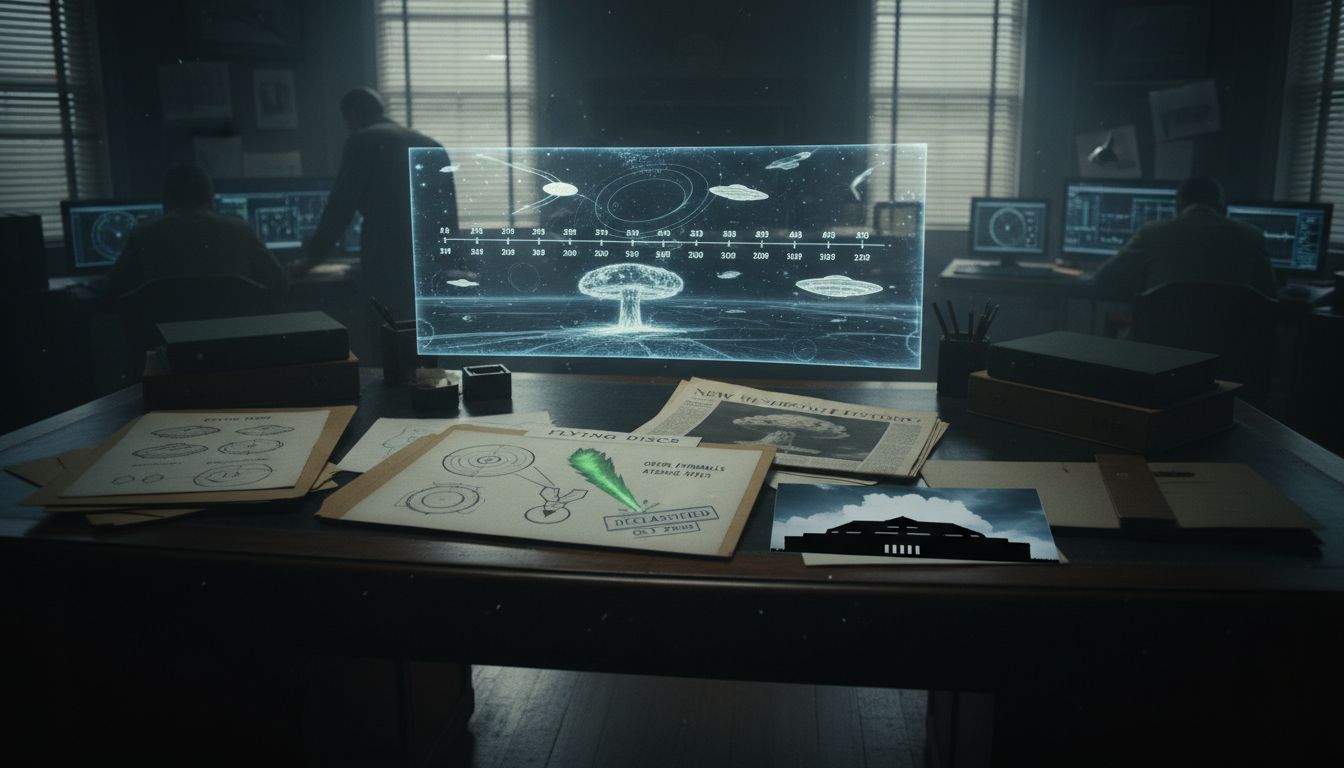
A batch of previously classified Pentagon documents released this week sheds new light on New Mexico’s long‑standing reputation as a hotspot for unidentified aerial phenomena. The files, part of the Department of Defense’s ongoing UAP (Unidentified Aerial Phenomena) declassification effort, contain internal memos, radar logs, and eyewitness accounts that reference “flying discs” and “green fireballs” observed near the state’s nuclear research and testing sites during the late 1940s and early 1950s. The material revives decades‑old mysteries while offering a more systematic view of how the military evaluated these sightings at the time.
Historical Context
New Mexico entered the national consciousness in 1947 when a rancher near Roswell reported a crash that would later be popularized as the “Roswell incident.” Less than a year later, pilots stationed at nearby bases began filing reports of luminous, disc‑shaped objects maneuvering at high speed. By 1949, the phenomenon took on a new visual signature: bright green fireballs streaking across the night sky, often disappearing over the remote desert near Los Alamos National Laboratory. Contemporary newspaper accounts described the fireballs as “a green comet that seemed to hover before vanishing.”
At the time, the Air Force launched Project Grudge and later Project Blue Book to investigate the surge in sightings. While many reports were ultimately dismissed as misidentified meteors or experimental aircraft, the green fireball incidents remained puzzling because they were repeatedly observed in close proximity to atomic‑energy facilities, prompting speculation about possible foreign surveillance or secret weapons testing.
What the New Files Reveal
The declassified packets, dated between 1947 and 1953, include:
- Radar transcripts from Albuquerque’s Air Defense Sector that show unexplained blips matching the reported flight paths of the green fireballs.
- Correspondence between the Office of the Secretary of Defense and the Atomic Energy Commission, expressing concern that the objects were “potentially directed toward sensitive installations.”
- Eyewitness statements from civilian pilots and local residents, many of whom described a “soft, humming sound” accompanying the fireballs, a detail absent from earlier official summaries.
One memo, signed by then‑Deputy Secretary of Defense Robert Anderson, reads: “The recurring nature of these phenomena, especially their apparent trajectory toward Los Alamos, warrants continued surveillance and a coordinated inter‑agency response.” The documents also note that the Air Force’s 1952 “Project Griffin” analysis concluded that the green fireballs could not be readily explained by known aircraft or natural atmospheric events.
Expert Reactions
Historians and aerospace analysts have welcomed the release as a significant step toward transparency, though they caution against drawing premature conclusions. Dr. Elena Martínez, a professor of Cold War history at the University of New Mexico, said, “These files confirm what oral histories have long suggested—that the government took the New Mexico sightings seriously, particularly because of the nuclear connection.”
Former Pentagon UAP program director Lt. Col. James “Jim” Harlan, who oversaw the 2020‑2022 UAP Task Force, emphasized the broader context: “The recent declassifications are part of an effort to provide the public with a factual record. They do not, however, constitute proof of extraterrestrial technology.”
Skeptics point out that the era’s limited detection capabilities could have produced false radar returns, and that the green fireballs might have been a misidentified natural phenomenon, such as meteoric fireballs rich in copper compounds that emit a green hue.
Next Steps and Ongoing Investigation
The Pentagon has indicated that the newly released material will be integrated into the UAP Executive Office’s continuing review, which aims to assess any potential national security implications. The Department of Defense plans to convene a panel of scientists, intelligence officials, and industry experts later this year to evaluate the historical data alongside recent sightings.
Meanwhile, New Mexico’s state archives are cataloguing the documents for public access, and local museums are preparing exhibits that juxtapose the 1950s reports with modern UAP footage. As the government moves toward a more open stance, the legacy of the flying discs and green fireballs remains a compelling chapter in America’s aerospace narrative—one that blends Cold‑War secrecy, scientific curiosity, and the enduring allure of the unknown.


