Overview
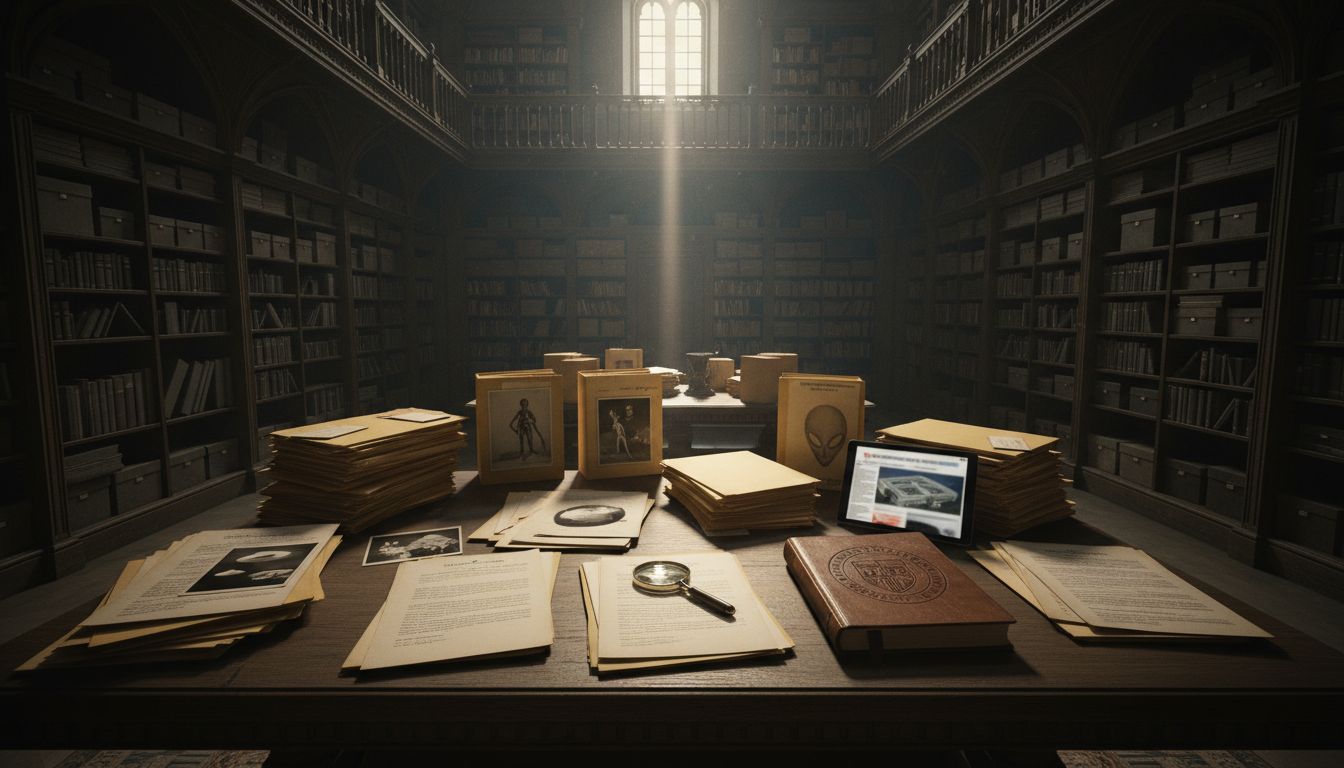
The University of Nebraska Lincoln has opened a previously private collection of UFO and paranormal investigations to the public. The archive, amassed over three decades by local researcher Dr. James “Jim” McAllister, includes field notes, interview transcripts, newspaper clippings and correspondence related to sightings across the Sandhills region. The decision to digitize and release the material comes just weeks after the Pentagon’s Office of the Director of National Intelligence issued its latest declassification of historical Unidentified Aerial Phenomena (UAP) files, renewing scholarly and media interest in government‑sponsored UFO research.
Historical Context
Nebraska’s wide‑open skies have long been a magnet for anomalous aerial reports. McAllister, a former physics professor turned amateur investigator, began cataloguing sightings in the early 1990s after a series of bright, disc‑shaped lights were reported near the town of Broken Bow. Over the years he collaborated with the Mutual UFO Network (MUFON) and submitted dozens of reports to the now‑defunct Air Force Project Blue Book. “I wanted to preserve a record that might otherwise be lost to memory,” McAllister told the university archivist, Linda Reyes, during the collection’s unveiling. His work mirrors earlier civilian efforts that, in the 1950s and 60s, supplied the military with the raw data later used in official investigations.
What the Archive Contains
The newly accessible repository holds more than 5,000 individual items, organized chronologically from 1978 to 2022. Highlights include:
- Photographs and film footage of nocturnal lights captured on farms near the town of Mullen, some of which exhibit synchronized motion patterns that have not been conclusively explained.
- Interview recordings with eyewitnesses ranging from ranchers to commercial pilots, many of whom describe objects performing abrupt accelerations and silent hover.
- Correspondence with federal agencies, showing that McAllister forwarded select reports to the Air Force’s “Project Sign” office in the early 1990s, only to receive standard “no further action” replies.
- Paranormal research notes documenting alleged ground‑level phenomena—such as unexplained electromagnetic interference at rural homesteads—that McAllister linked to the aerial sightings.
All files have been scanned and are searchable through the university’s digital archive portal, with sensitive personal information redacted in accordance with privacy guidelines.
Relevance to Current UAP Discourse
The timing of the release dovetails with the Pentagon’s recent UAP Transparency Initiative, which in June 2024 made public over 130 declassified reports spanning 1945‑2020. Analysts note that the Nebraska collection offers a regional counterpoint to the predominantly coastal and military‑focused documents released by the government. “Having a civilian‑collected dataset from the Great Plains enriches the overall picture of UAP activity in the United States,” said Dr. Emily Carter, a senior fellow at the Center for Aerospace Studies, University of Colorado. “It allows researchers to cross‑reference sightings with the Pentagon’s own records, potentially identifying patterns that were previously invisible.”
Looking Ahead
University officials plan to host a series of public lectures and workshops throughout the year, inviting historians, scientists and skeptics to examine the material. Reyes emphasized that the archive is intended as a research resource, not a sensational exhibit: “Our goal is to provide scholars with primary sources they can analyze rigorously, whether they are studying cultural responses to UFOs, atmospheric physics, or the sociology of belief.” Access is free for academic use, and the university encourages collaborative projects that could shed new light on a phenomenon that continues to intrigue both the public and policymakers.


