Overview
Gamle Aker Church, one of Oslo’s oldest surviving churches, has become the focus of local folklore involving a dragon’s den beneath the building and reports of a ghostly silhouette. The stories were detailed in an October 27, 2026, article published by Moon Mausoleum, a website covering paranormal accounts and historical legends. The claims are presented as folklore and personal reports; there is no independent verification that the church is haunted or that a dragon’s den exists beneath it.
The church stands above Oslo’s modern streets, its limestone walls reflecting centuries of religious and urban history. According to the source, visitors have sometimes described an uneasy atmosphere when entering the church grounds, interpreting the feeling as evidence of something unseen beneath the soil. Such impressions, however, can also be shaped by the site’s age, architecture, burial history and the stories associated with it.
A Site With Layers of History
Gamle Aker Church is connected to references dating back to 1080, when an Aker church reportedly served as the county church for Vingulmark. The exact identity of that earlier building remains uncertain. The Oslo City Dictionary has suggested that the church mentioned in 1080 may have been the present church and could have been built during the reign of King Olav Kyrre. Other accounts place the existing structure in the early 12th century.
Architectural evidence offers a more cautious timeline. As described by Moon Mausoleum, stylistic criteria indicate that the surviving Old Aker Church was likely begun no earlier than the early 1100s. The church mentioned in the 11th-century record may instead have been an earlier wooden structure on the same site. The incomplete historical record has left room for later interpretations, allowing documented history and oral tradition to become closely intertwined.
Burial Ground and the Dragon Legend
The site is also associated with claims that it once served as a Norse burial ground and a location for pagan rites before Christianity reached the region. The source acknowledges that there is limited evidence for many details of this tradition, while noting that a first church was likely established in the area toward the end of the Viking Age.
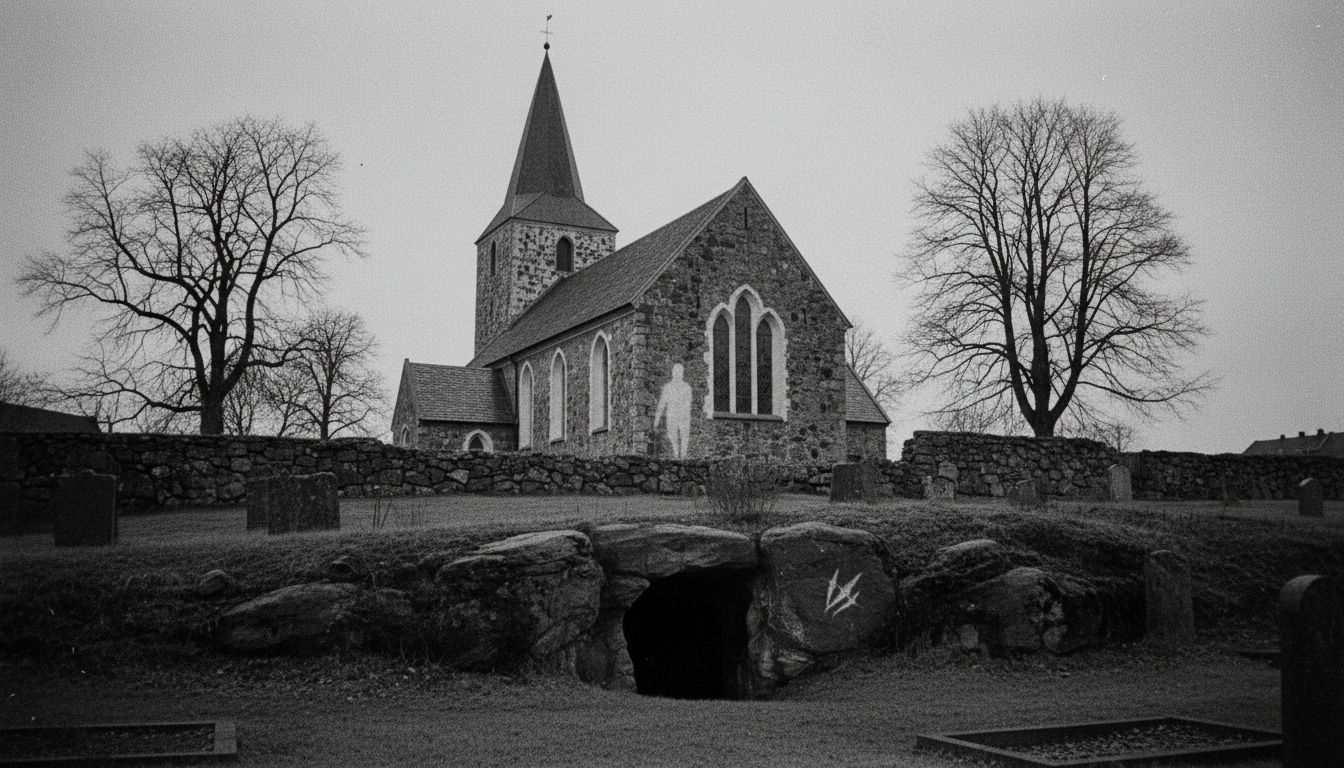
That setting forms the backdrop for the dragon’s-den legend. According to local belief, a dragon or other powerful creature was said to have occupied a cavern or subterranean space beneath the church. The available account does not provide archaeological confirmation of such a chamber or creature. Instead, the legend appears to draw on the landscape, the church’s position above the city and the older traditions attributed to the site.
Ghost Stories and Historical Memory
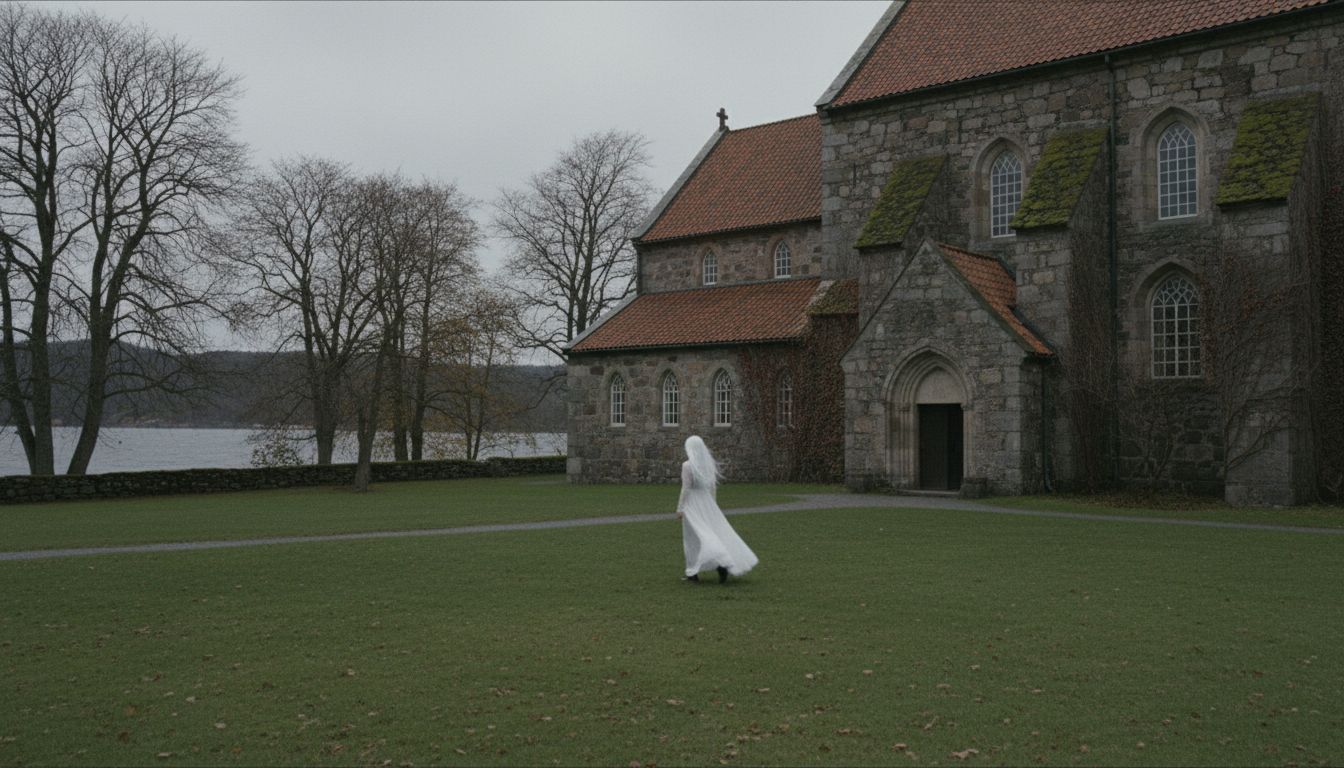
Reports of a shadowy or ghostly figure have added to Gamle Aker Church’s reputation as a haunted location. Moon Mausoleum describes a silhouette reportedly seen around the church, while broader local beliefs hold that people buried on the grounds were never fully at rest. In this interpretation, the church represents a layering of religious traditions: a Christian building raised over a landscape remembered as having pre-Christian associations.
There is no documented evidence in the source establishing the identity of the alleged figure or confirming supernatural activity. The accounts are best understood as part of Oslo’s cultural folklore, where uncertain historical details, old burial traditions and the imposing character of an ancient church have combined to produce enduring ghost stories. The legends may be compelling, but the distinction between historical record and paranormal interpretation remains essential.