Overview
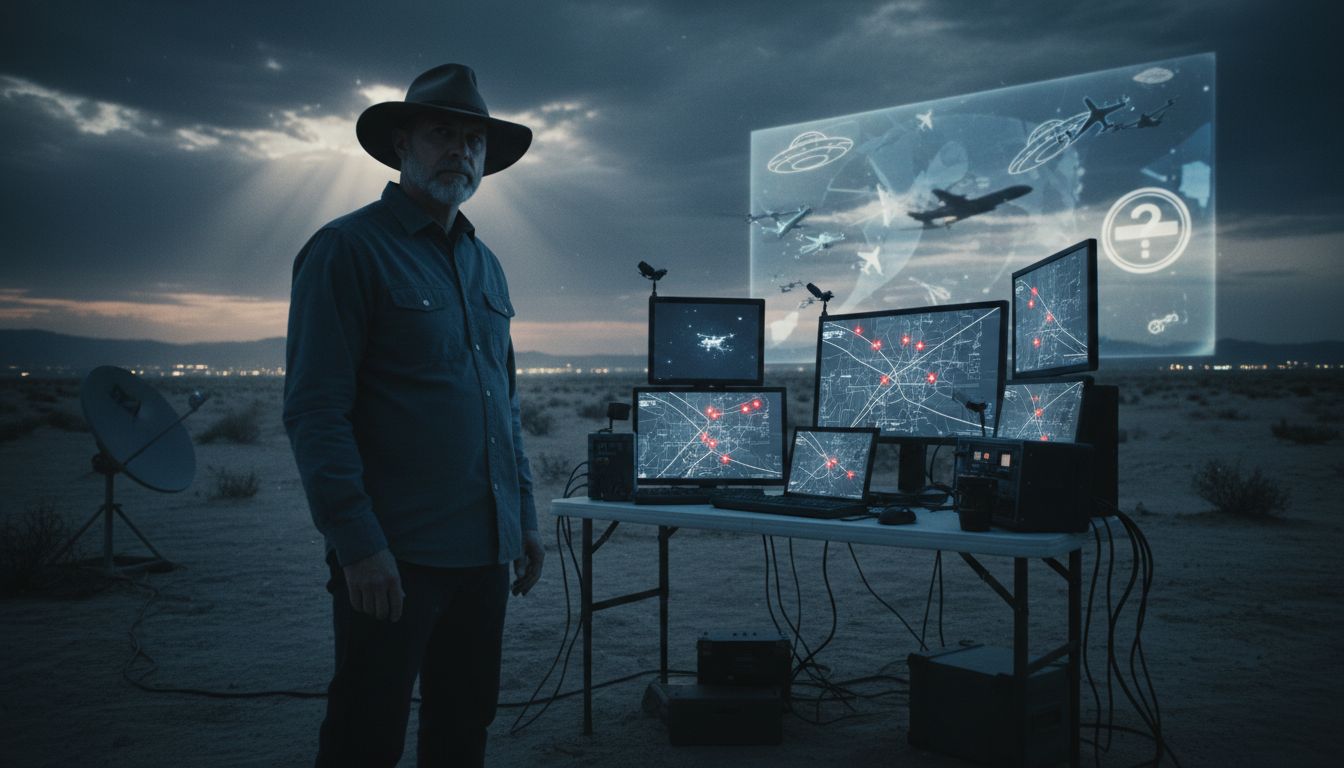
Chief Investigator George Knapp of 8 News Now has produced an investigative report on a series of unidentified drone swarms that appeared over U.S. civilian and military sites between late 2024 and early 2025. The sightings spanned multiple states—including New Jersey, Nevada, Florida, Texas and California—and affected high‑security installations such as Langley Air Force Base and Wright‑Patterson AFB, where air traffic was briefly halted. While federal officials initially described the events as “no known national‑security threat,” a White House briefing on January 29, 2025 claimed the FAA had authorized the flights for research purposes, a conclusion that Knapp and other analysts say raises further questions about inter‑agency coordination and public disclosure.
The FAA Explanation and Immediate Reactions
National Security Communications Advisor John F. Kirby and other officials asserted that the government could not trace the origin of the craft, prompting criticism from state and local leaders. New Jersey Assemblyman Brian Bergen labeled the response “amateur hour,” and President‑elect Donald Trump suggested the administration was withholding information. The White House spokesperson Karoline Leavitt later announced that the “mystery had been solved” by attributing the drones to FAA‑approved research missions. Knapp highlighted a key inconsistency: if the FAA had indeed authorized the flights, why did the FBI, Department of Defense and the FAA jointly issue statements in December 2024 describing the swarms as an unknown phenomenon requiring advanced detection technology?
Historical Context of UAP Incidents
The 2024 drone swarms echo earlier unidentified aerial phenomena (UAP) events that have drawn congressional and Pentagon attention. In July 2019, more than 100 unknown objects were reported near ten U.S. Navy warships off the Pacific coast, many appearing as wingless orbs with no detectable propulsion. The June 2021 Pentagon report on 144 UAP incidents concluded that most were not attributable to classified U.S. programs, while leaving open the possibility of foreign or non‑human origins. A separate 2023 incident at Langley AFB saw dozens of objects operating for two weeks despite sophisticated radar and defense systems. These precedents have fueled calls for a permanent, well‑funded UAP investigative body.
Expert Commentary and Legislative Concerns
Rep. Tim Burchett (R‑TN) warned that the drone incursions represent a “test” of America’s air‑space security that the nation is currently failing. Former Nevada Senator Harry Reid, a long‑time advocate for UAP transparency, noted that the government’s admission of “not knowing” what the objects are marks a “significant, albeit preliminary, step.” Former AATIP director Lue Elizondo argued that the technology observed by pilots exceeds known terrestrial capabilities, suggesting a global phenomenon rather than a domestic secret project. Former Navy commander David Fravor added that the persistence of such technology over decades makes it unlikely to be a covert U.S. program, given the difficulty of maintaining secrecy for 15‑20 years.
Conclusion and Outlook
The investigation concludes that the White House’s attribution of the late‑2024 swarms to FAA‑approved research drones does not fully resolve the underlying issues of transparency and inter‑agency communication. Lawmakers and UAP experts continue to press for a permanent, adequately funded investigative office capable of identifying and analyzing objects that demonstrate flight characteristics beyond current human technology. As the public and congressional committees await further clarification, the broader mystery of unidentified aerial phenomena remains open, underscoring the need for systematic, scientifically rigorous study of America’s skies.


