Overview
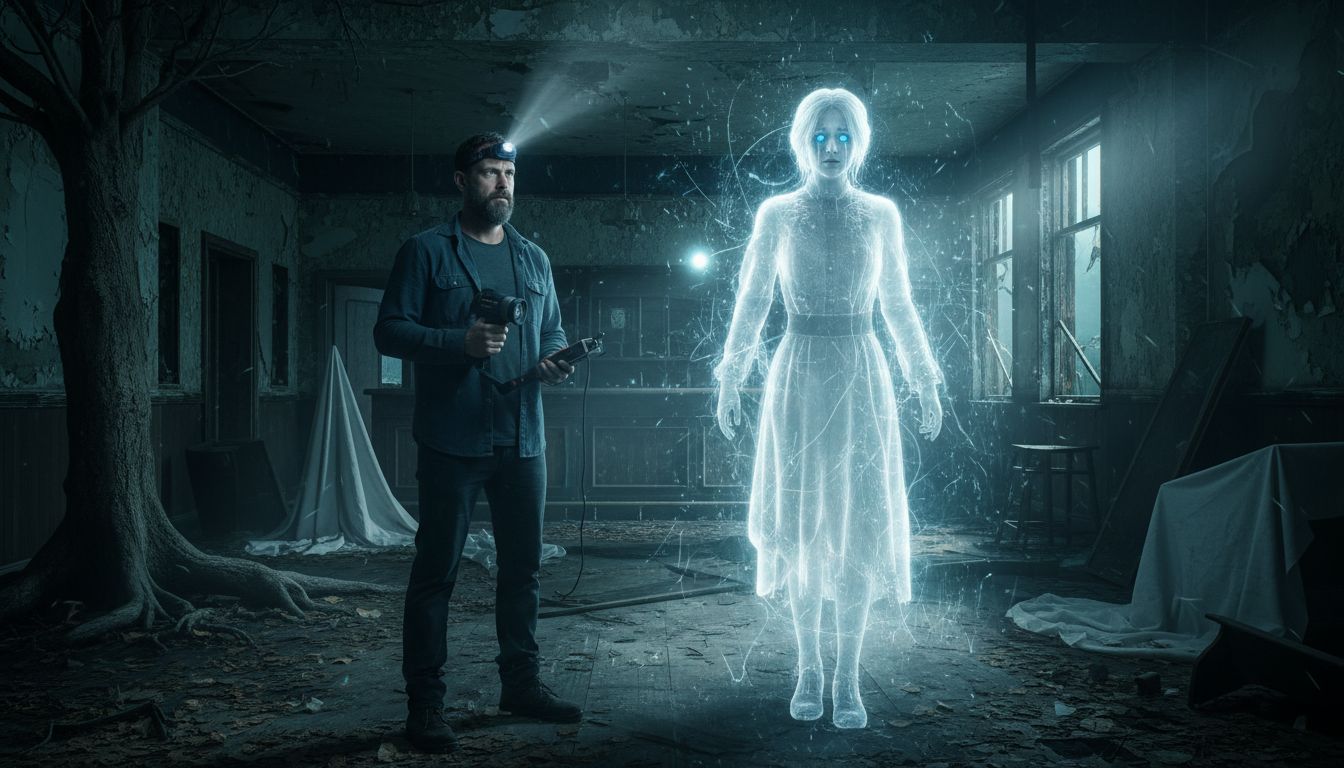
A full‑body apparition was captured on video inside the abandoned Crying Tree Restaurant and Bar on Grange Lane, Gateacre, during a night‑time investigation by self‑described paranormal researcher Nat Thomas. Thomas, a 40‑year‑old from St Helens, described the image as a “one in a million” clear figure that stood out against the usual haze of mist and stray light that often obscures alleged sightings at the site. The footage, released to the Liverpool Echo on 4 April 2026, shows a faint, human‑shaped silhouette on the landing of the former pub, prompting renewed interest in a location already noted by local folklore as a paranormal hotspot.
The Investigation
Thomas entered the Crying Tree – a former public house that closed in the early 2000s and has since become a popular destination for urban explorers – equipped with a thermal camera, a handheld infrared recorder and a high‑definition video camcorder. She spent roughly three hours documenting the interior, noting the typical “mists and lights” that many investigators attribute to natural temperature differentials and building decay. At approximately 02:17 am, the camera recorded a distinct, upright shape that remained stationary for about twelve seconds before fading as the ambient light shifted. “I’ve chased these kinds of experiences since I was a kid seeing things in the old school hallway,” Thomas said, “and this was the first time I captured something that looked like a full figure, not just a trick of the light.”
The Apparition
The image, posted on Thomas’s social‑media channel alongside the article, shows a translucent outline roughly 1.6 metres tall, with faint edges that suggest a human form but lack discernible facial features. Analysts familiar with low‑light imaging have noted that the silhouette aligns with the camera’s infrared spectrum, reducing the likelihood of a conventional photographic artifact. Nonetheless, experts caution that “optical anomalies can arise from lens flare, dust particles, or reflections off nearby surfaces,” especially in environments with fluctuating temperature and humidity. The Crying Tree’s brick walls and broken windows create a complex visual field that can amplify such effects.
Community Reaction
Local historians confirm that the Crying Tree, originally built in the late 19th century as the “Crying Tree Public House,” has long been associated with eerie anecdotes, ranging from unexplained footsteps to sudden temperature drops. “The building has a rich social history and, like many abandoned structures, it gathers stories that reflect the community’s imagination,” said Gateacre historian Margaret Hughes. Conversely, Dr. Emily Carter, a psychology professor at the University of Liverpool, urges caution: “Human perception is highly suggestible, especially in dark, isolated settings. Confirmation bias can lead investigators to interpret ambiguous visual cues as supernatural.”
Context and Outlook
The Crying Tree is one of several sites in Merseyside that feature regularly in paranormal surveys, alongside the former Liverpool Masonic Hall and the abandoned Woolton Station. While Thomas’s footage adds a visual element to the anecdotal record, it does not constitute scientific proof of a paranormal entity. Researchers emphasize the need for repeatable, controlled observations and independent verification before drawing definitive conclusions. As interest spikes, the site may see increased foot traffic, raising safety concerns for the structurally unsound building. Authorities have not issued any official statements regarding the recent sighting, but local councilors have reiterated that trespassing on private, derelict property remains prohibited.
Looking Ahead
Nat Thomas plans to return to the Crying Tree with a larger team and additional equipment, aiming to capture longer‑duration recordings and gather environmental data such as temperature gradients and electromagnetic readings. “If there’s something here, we owe it to the community and to the field of paranormal research to investigate it rigorously,” she said. Whether the image will stand up to further scrutiny remains to be seen, but the incident has undeniably reignited public fascination with Gateacre’s most haunted landmark, reminding both believers and skeptics alike that the line between folklore and fact is often as thin as the mist that drifts through the old pub’s empty corridors.