Overview
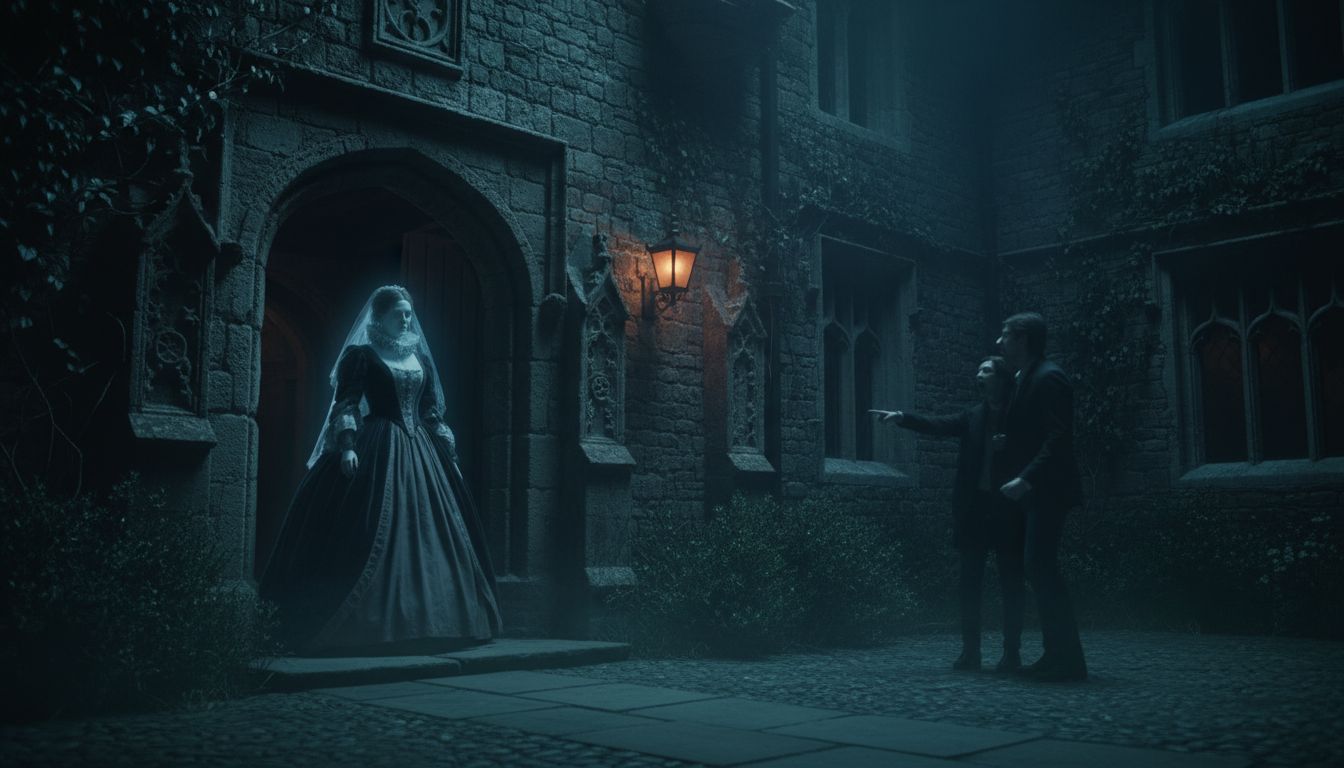
The Talbot Hotel in the market town of Oundle, Northamptonshire, has become the focus of renewed interest this month as staff and guests report sightings of a spectral figure believed to be Mary, Queen of Scots. The 16th‑century monarch was executed at Fotheringhay Castle on 8 February 1587, and many of the castle’s stonework was later repurposed in the construction of the hotel’s main building during the early 19th century. According to multiple eyewitnesses, a woman in a flowing black dress appears in the corridors and lobby, often accompanied by faint sobbing sounds. The phenomenon has attracted the attention of local paranormal investigators who claim the trauma of the queen’s death may have been “imprinted” on the reused masonry.
Historical Context
Mary Stuart, who ruled Scotland from 1542 to 1567, spent her final years imprisoned by her cousin, Queen Elizabeth I, before being tried for involvement in plots against the English throne. She was beheaded at Fotheringhay Castle, a Tudor stronghold that fell into ruin after the execution. In 1805, the estate’s owners sold much of the castle’s stone, which was incorporated into several buildings in the region, including what is now the Talbot Hotel. Historians note that the reuse of historic masonry was common practice, but the connection between the physical material and the queen’s tragic end has long been a point of folklore in the area.
Reported Encounters
Hotel staff first logged a sighting in January when a night‑shift concierge, James Whitaker, described “a pale figure gliding past the bar, dressed in a long black gown, her face hidden, and a soft wail that seemed to echo down the hallway.” Similar reports have come from guests, including a family from London who claimed the apparition lingered near the fireplace for several minutes before vanishing. The hotel’s logbook now contains over a dozen entries detailing the time, location, and description of each incident. While the accounts vary slightly, the core elements—a black dress, a sorrowful sound, and an unmistakable sense of melancholy—remain consistent.
Investigation and Expert Views
The Talbot’s owners invited the Northamptonshire Paranormal Research Society (NPRS) to conduct a preliminary survey. Lead investigator Dr. Eleanor Clarke explained that “the theory that emotional trauma can be ‘recorded’ in building materials is not supported by mainstream science, but it is a recurring motif in psychical research.” Using thermal imaging and audio recorders, the team captured several unexplained temperature drops and low‑frequency moans in the hotel’s east wing, though no conclusive evidence of a physical entity was obtained. Historian Prof. Alan Whitfield of the University of Cambridge cautioned that “while the story is compelling, it is essential to differentiate between documented history and anecdotal folklore. The reuse of castle stone does not automatically confer a haunted reputation.”
Outlook
The hotel plans to host a “Haunted History” weekend in early March, featuring guided tours, talks by historians, and a live‑streamed session with the NPRS team. Management hopes the event will attract tourism while acknowledging the need for responsible storytelling. As the 400th anniversary of Mary’s execution approaches, the Talbot Hotel’s spectral legend underscores the enduring fascination with Britain’s turbulent past—blending documented history with the human penchant for mystery. Whether the sightings are the result of genuine paranormal activity, psychological suggestion, or simply the power of a good story remains an open question, one that continues to captivate both skeptics and believers alike.


