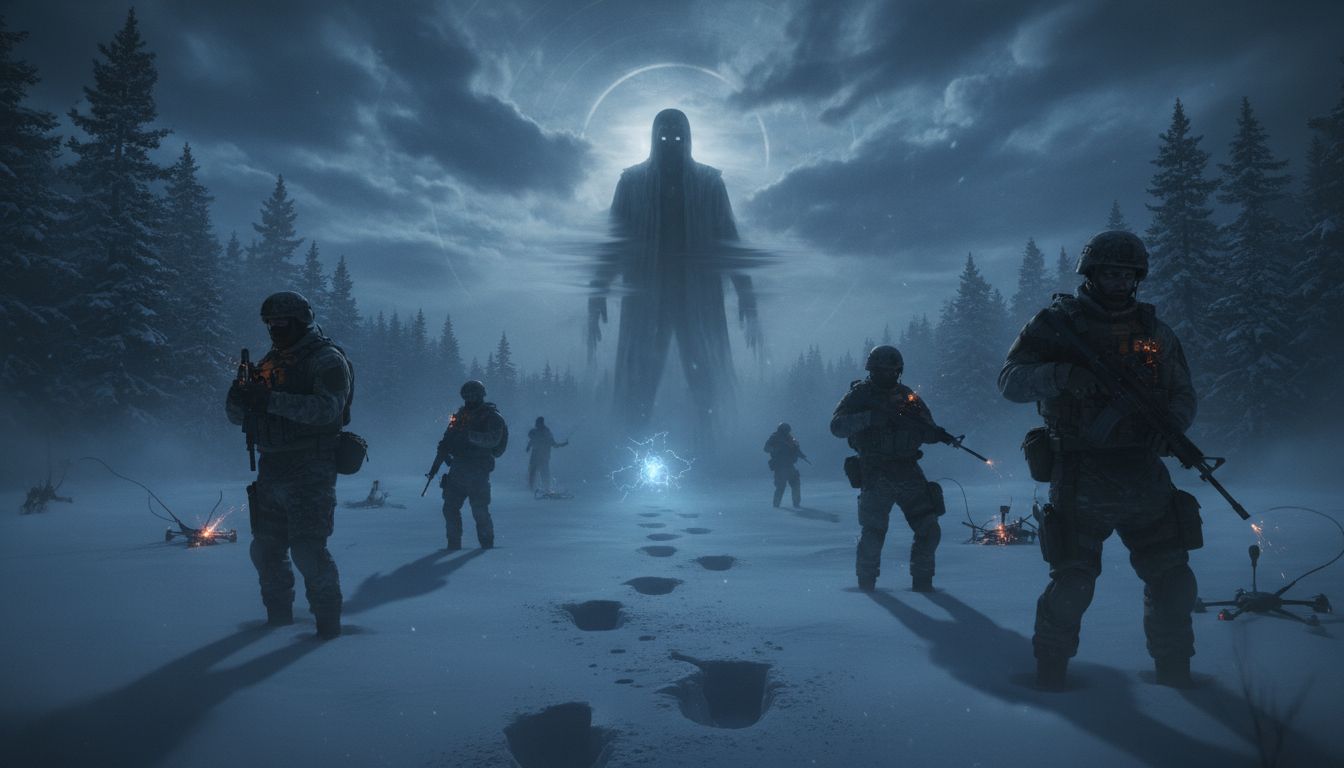
Reports of encounters with mysterious, towering figures in North American forests have long fueled debates among cryptid enthusiasts, indigenous communities, and those with an interest in the paranormal. Recent attention has focused on claims that these so-called “giants”—often referred to as Sasquatch or Bigfoot—may possess abilities far beyond those of any known animal. Witnesses describe not only seeing massive, humanlike beings, but also experiencing phenomena such as malfunctioning firearms, failing electronics, and footprints that end abruptly as if the entity vanished into thin air.
The lore around these encounters is deep and varied. According to the YouTube channel Hollow Light, which explores paranormal theories and folklore, these stories are anything but new. “The roots of these stories are found in the oral traditions of the First Nations and indigenous peoples of North America,” explains host JRod. Tribes in the Pacific Northwest, for instance, have long spoken of the “Sasquits”—wild, hairy giants believed to inhabit the mountains. Similar stories echo from the Cherokee, who tell of the “Sue Kaloo,” and the Iroquois, who recount legends of stone giants. These beings are often described as reclusive but immensely powerful, sometimes acting as keepers of wilderness knowledge or as threats to those who wander too far alone.
Such accounts are not limited to indigenous traditions. As settlers and explorers moved westward in the 19th century, they too reported strange encounters. Notable examples include fur traders’ journals and explorer David Thompson’s 1811 account of finding 14-inch footprints near the Rockies. Frontier newspapers ran stories of “wild men” discovered in the woods—figures reportedly eight feet tall and covered in hair. These reports, often met with skepticism or treated as curiosities, were nonetheless widespread. “What’s important here is not just that giants in the woods were spoken of. It’s that they were spoken of everywhere,” the video notes, emphasizing the pervasiveness of these legends across the continent.
The contemporary problem, as articulated by Hollow Light, is the consistent appearance of details that challenge conventional explanations. Many eyewitnesses report that when a Sasquatch is near, guns suddenly jam and electronic devices cease to function. Others describe footprints that stretch for miles only to vanish midstride, or thermal camera images that suggest something both present and absent. The sense of dread and the impression that these beings are not entirely of this world have led some to suggest a supernatural or interdimensional explanation, rather than a strictly biological one.
This line of thinking has given rise to theories linking Sasquatch to the Nephilim of biblical lore—giant, hybrid offspring described in Genesis 6 as the product of “the sons of God and the daughters of men.” Proponents of this theory argue that the uncanny characteristics of Sasquatch encounters—such as cloaking, vanishing, and unexplained technological failures—support the idea that these beings are not merely animals, but possibly remnants of ancient giants that straddle the boundary between worlds. “Are these giants only myth, or are they the lingering shadow of a much older curse?” the episode asks, pointing to a broader historical and spiritual context.
While mainstream science continues to approach such claims with skepticism, the persistence and consistency of these stories—across cultures and centuries—ensure that the mystery of the giants in the woods remains a subject of fascination and debate. Whether viewed as undiscovered animals, mythic beings, or something altogether stranger, Sasquatch and its kin occupy a unique place in both folklore and the ongoing search for answers at the edges of the known world.


