Overview
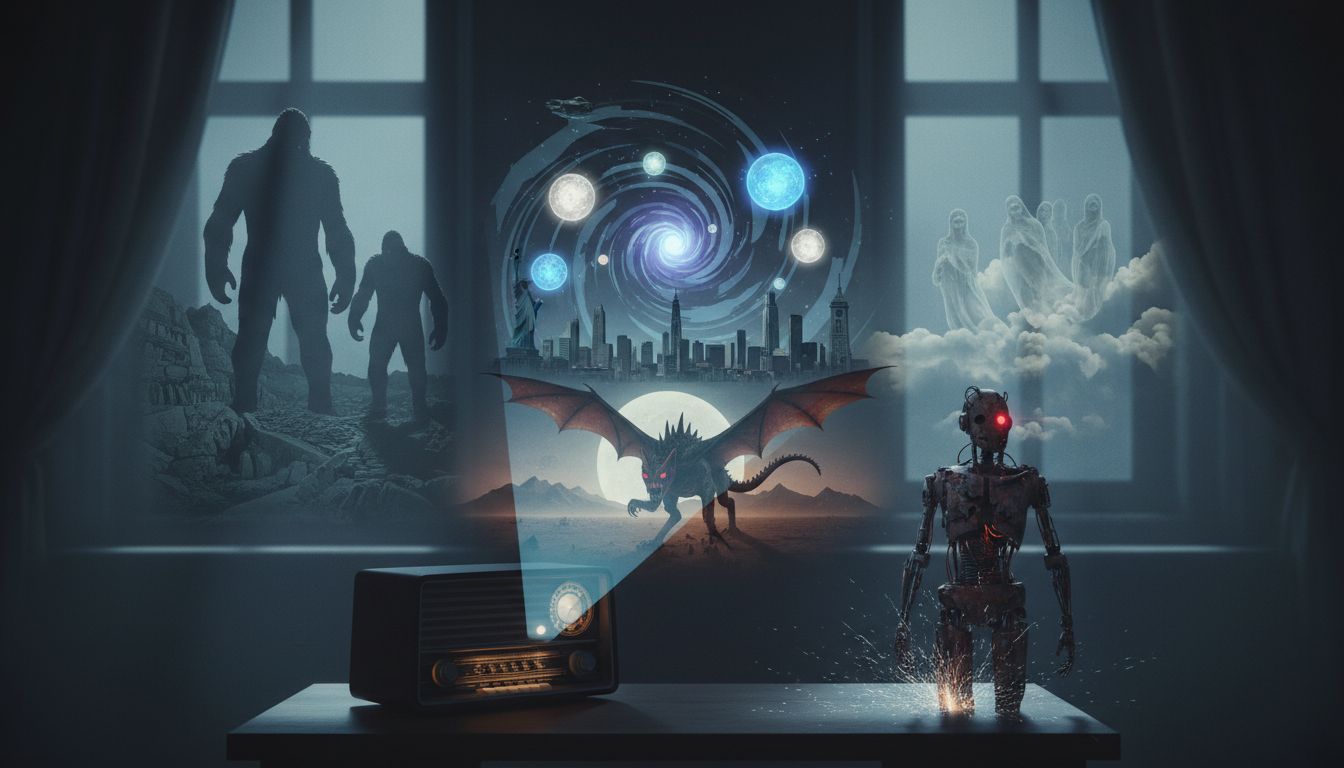
The latest episode of Coast to Coast AM, the long‑running late‑night program that explores the fringe of science and folklore, featured a sweeping look at a variety of cryptids and anomalous phenomena reported around the world. Host George Noory opened the two‑hour broadcast by noting that “the human imagination is as boundless as the sky, and tonight we’ll travel from the misty forests of North America to the bustling streets of Lisbon, chasing stories that defy easy explanation.” The segment catalogued sightings of giants, Bigfoot, luminous UFO orbs over New York and Portugal, the infamous Argentine chupacabra, speculative discussions about the afterlife, and even reports of autonomous robotic entities appearing in remote locales.
Key Topics Discussed
Giants and Bigfoot – Listeners were presented with recent testimonies from hikers in the Pacific Northwest who claimed to have encountered towering humanoid figures, as well as a new video from a Minnesota trail that allegedly captures a large, bipedal creature moving through dense foliage. The show’s research team highlighted a 2023 field study by the University of Washington’s Department of Anthropology, which concluded that many “giant” sightings could be traced to misidentified wildlife or optical illusion.
UFO Orbs Over Urban Centers – A series of short‑duration videos from New York City’s Times Square and Portugal’s Praça do Comércio were aired, showing bright, spherical lights performing erratic maneuvers. The program quoted Dr. Luis Méndez, a senior researcher at the European Space Agency, who cautioned that “while some of these orbs could be classified as atmospheric phenomena, the lack of radar corroboration makes definitive identification difficult.”
Chupacabra in Argentina – Rural communities in the province of Jujuy reported livestock deaths with puncture wounds, a classic hallmark of the chupacabra legend. The episode featured an interview with María González, a local veterinarian, who explained that “most of the evidence points to known predators such as foxes, but the cultural imprint of the chupacabra continues to shape how residents interpret these events.”
Afterlife Conversations – In a more philosophical segment, Noory hosted a panel of theologians and neuroscientists discussing near‑death experiences and the possibility of consciousness persisting after bodily death. Reverend Thomas Kelley suggested that “personal narratives of the afterlife often mirror cultural mythologies,” while Dr. Elaine Park, a neuroscientist at Stanford, emphasized that “brain activity during trauma can produce vivid, hallucinatory experiences that feel profoundly real.”
Robotic Anomalies – The final portion examined reports of autonomous machines appearing in isolated areas of Siberia and the Australian Outback. A clip from a remote camera showed a metallic figure moving with purpose, prompting speculation about advanced AI prototypes or undisclosed military testing. Colonel James Riley of the U.S. Air Force, speaking off‑record, remarked that “while the Pentagon does conduct secretive technology trials, there is currently no public evidence linking these sightings to official programs.”
Expert Perspectives
The episode balanced anecdotal accounts with scholarly commentary. Dr. Karen Sullivan, a folklorist at the University of Toronto, explained that “cryptid narratives serve as modern mythmaking, reflecting societal anxieties about the unknown.” She highlighted that similar patterns emerge across cultures: giants in European legends, Bigfoot in North America, and the chupacabra in Latin America. Meanwhile, Dr. Miguel Alvarez, an astrophysicist at the National Institute for Space Research in Brazil, urged caution: “Extraordinary claims require extraordinary evidence. Until we have multi‑sensor verification—radar, infrared, and visual—UFO orb reports remain speculative.”
Scientific Viewpoint
The scientific community, while often skeptical of paranormal claims, acknowledges the value of systematic data collection. Recent initiatives such as the U.S. Department of Defense’s Unidentified Aerial Phenomena (UAP) Task Force have begun cataloguing sightings with a rigorous methodology. In the context of the Coast to Coast AM episode, the show’s producers referenced a 2022 peer‑reviewed paper that applied machine‑learning algorithms to thousands of UFO reports, finding that approximately 18% could not be readily explained by known aircraft, weather, or astronomical objects. Nonetheless, researchers caution that “data gaps and reporting biases” limit definitive conclusions.
Global Context
The episode underscored how reports of anomalous entities transcend borders, reflecting a shared human curiosity about the unknown. From the mist‑shrouded forests of the Pacific Northwest to the neon‑lit plazas of Lisbon, the stories discussed on Coast to Coast AM illustrate a global tapestry of folklore, technology, and scientific inquiry. As host George Noory concluded, “Whether we are looking at giants, UFOs, or machines that seem to think for themselves, the pursuit of answers brings us together—across cultures, disciplines, and the very limits of what we consider possible.”


