Overview
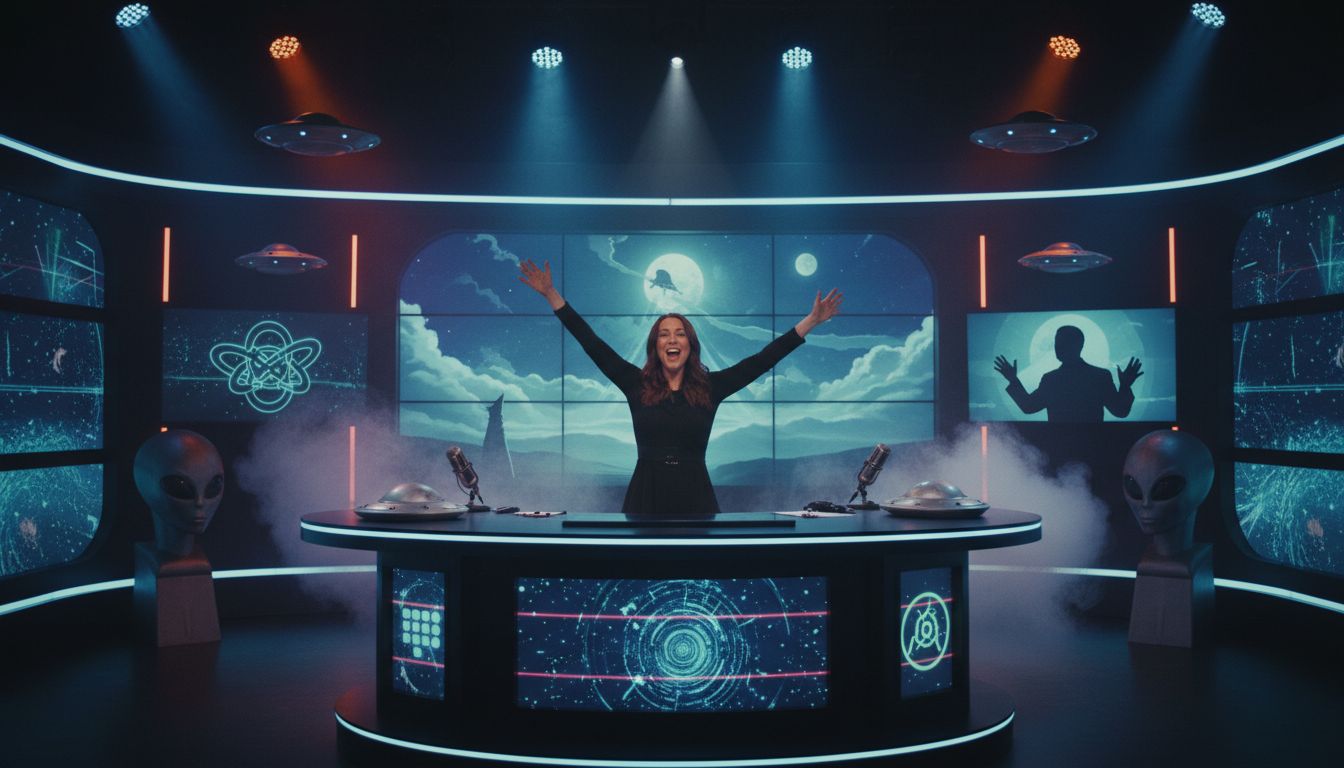
In a live Saturday‑morning broadcast, independent researcher Amy (known online as Aliengirl111) examined the growing momentum behind U.S. efforts to declassify information on Unidentified Aerial Phenomena (UAP). The program linked recent statements from former presidents, current congressional task forces, and high‑profile whistleblowers, suggesting that a coordinated push toward greater transparency may be underway. While the discussion was lively, the host emphasized that any shift in policy will depend on formal government action and verifiable evidence rather than speculation alone.
Political Context
The centerpiece of the show was a post by former President Donald Trump on Truth Social, in which he said he would direct relevant agencies to identify and release all classified files concerning “alien and extraterrestrial life” and UAP. Trump’s claim follows remarks he made during a press gaggle about former President Barack Obama allegedly possessing classified material on non‑human visitors. Obama, in multiple interviews, has acknowledged that the government holds video and radar records of aerial objects that remain unexplained, though he stopped short of confirming extraterrestrial origins. The broadcast also referenced a 1995 speech by former President Bill Clinton, in which he noted that, if the Air Force had recovered alien bodies after the Roswell incident, he had not been informed. These historical remarks are being revisited as part of a broader narrative that U.S. leadership is increasingly willing to discuss the topic publicly.
Congressional Action and Whistleblowers
Rep. Anna Paulina Luna, chair of the House Oversight Committee’s task force on declassifying federal secrets, testified that her office possesses “direct photo‑visual evidence” of technology that appears to exceed known human capabilities, citing a video in which a UAP allegedly deflected a Hellfire missile. Luna also introduced the notion of “interdimensional beings,” suggesting that some phenomena may operate outside conventional space‑time frameworks. Documentary filmmaker Dan Farah, director of The Age of Disclosure, highlighted bipartisan support for disclosure, noting that senators Marco Rubio, Mike Rounds, and Kirsten Gillibrand have voiced interest in further hearings. Former head of the Advanced Aerospace Threat Identification Program, Luis Elizondo, warned that unexplained aerial incursions could pose national‑security risks, underscoring the urgency of congressional oversight.
Evidence and Expert Commentary
The program featured a range of expert opinions on the nature of the sightings. Dr. Astrid Stuckelberger described an alleged “entity” that emerged through a portal at the CERN Large Hadron Collider, a claim she qualified as still under investigation. The host also referenced a popular discussion from The Joe Rogan Experience about a massive, allegedly buried UFO in South Korea, noting that the size of the object would make relocation impractical. While these anecdotes generate public interest, the broadcast stressed that corroborated data—such as high‑resolution sensor recordings and independent analysis—remain essential before drawing definitive conclusions.
Outlook
Amy concluded that the stigma historically attached to UFO research is diminishing, largely because of executive interest and bipartisan congressional pressure. She argued that “disclosure” is unlikely to be a single, dramatic announcement; rather, it will unfold through a series of incremental releases, legislative hearings, and scientific evaluations. Skeptics continue to demand rigorous proof, and many of the claims presented on the show have yet to be independently verified. Nonetheless, the convergence of political statements, legislative initiatives, and emerging evidence suggests that the United States is moving toward a more open dialogue about phenomena that challenge current scientific and security paradigms.