Overview
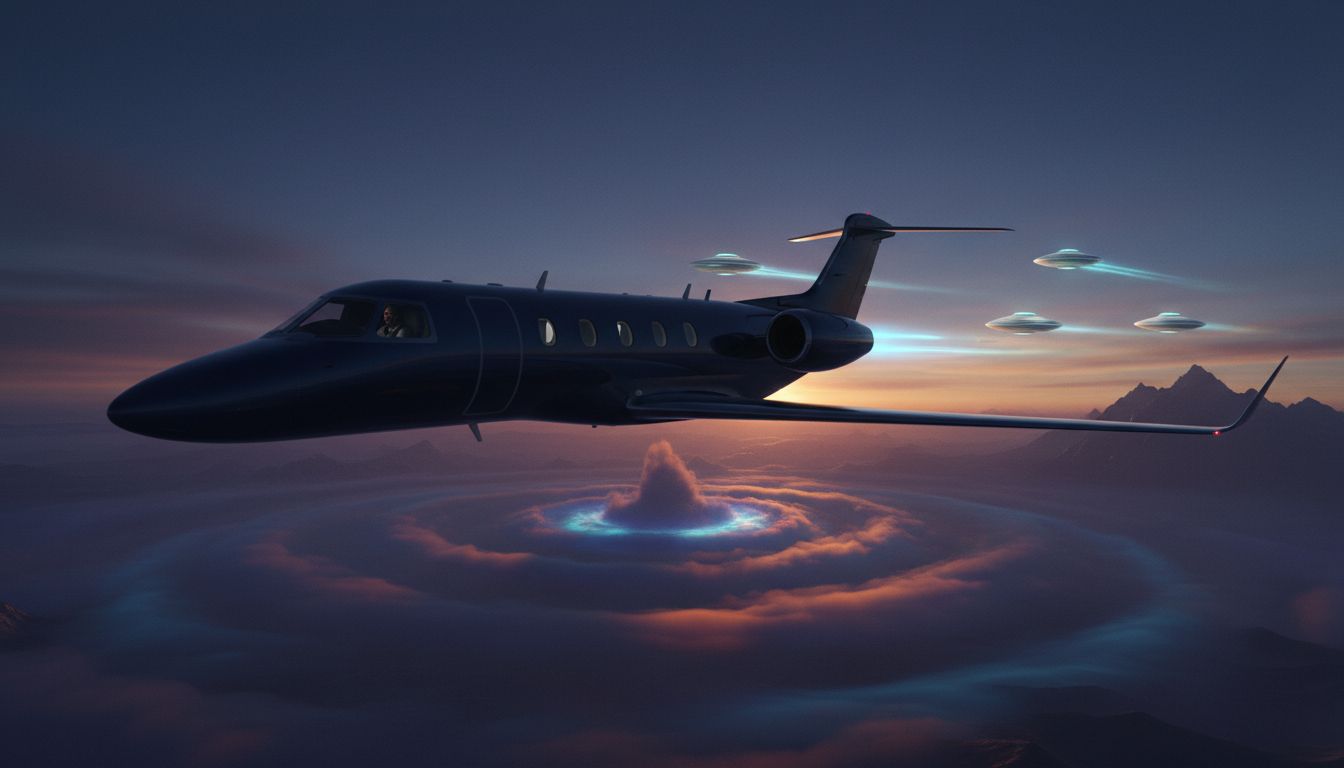
Grammy‑winning singer‑songwriter Kacey Musgraves sparked a fresh wave of public interest in unidentified aerial phenomena (UAP) after posting a short video on social media that appears to show mysterious objects tracking her private jet. The clip, first reported by The Independent, quickly circulated across platforms, prompting both fans and UFO researchers to examine the footage for clues. While the video has not been officially explained, it arrives amid renewed governmental scrutiny of UAP sightings, adding another high‑profile anecdote to an ongoing debate about the nature of such encounters.
The Video and Musgraves’ Reaction
The footage, captured from the cockpit window of Musgraves’ Gulfstream G550, shows two luminous, disc‑shaped lights maintaining a steady distance from the aircraft as it climbs over the western United States. The objects remain visible for roughly 15 seconds before disappearing from view. In the accompanying caption, Musgraves wrote that she was “caught off‑guard by something moving alongside the jet” and invited followers to share their thoughts. She did not offer a definitive interpretation, stating only that the experience was “unsettling” and “definitely not a typical aircraft.” The video’s raw quality—taken with a handheld camera—has made it difficult for analysts to determine whether the lights could be conventional aircraft, drones, or atmospheric reflections.
Official and Expert Responses
To date, no federal agency—including the Department of Defense’s Unidentified Aerial Phenomena Task Force—has issued a formal comment on Musgraves’ footage. A spokesperson for the Federal Aviation Administration (FAA) declined to comment on ongoing investigations, noting that “the FAA routinely receives reports of aerial sightings and evaluates them on a case‑by‑case basis.” Independent aerospace analysts have offered tentative explanations: some point to the possibility of high‑altitude balloons or commercial aircraft using external lighting, while others suggest the lights could be reflections from the jet’s own navigation systems. Dr. Michael S. Scherer, a senior researcher at the UAP Center at the University of Texas, cautioned that “without calibrated instrumentation, it is impossible to rule out mundane explanations, but the persistence of the objects in the frame is noteworthy.”
Context Within the Wider UAP Debate
Musgraves’ video joins a growing catalog of recent high‑profile sightings that have kept UAP investigations in the public eye. In 2023, the Office of the Director of National Intelligence released a preliminary assessment acknowledging that many sightings remain unexplained, and in early 2024 Congress approved additional funding for a permanent UAP office. The entertainment industry has also contributed to the discourse; several Hollywood productions have incorporated UAP themes, blurring the line between pop culture and scientific inquiry. Musgraves’ status as a celebrated musician amplifies the visibility of the incident, echoing earlier instances where celebrities—such as former President Bill Clinton’s 1973 sighting—prompted broader media coverage.
What Comes Next
The lack of an official explanation means the video will likely continue to be dissected by both amateur enthusiasts and professional investigators. Musgraves has indicated she will cooperate with any legitimate inquiry, offering the original high‑resolution files to researchers upon request. Meanwhile, the Pentagon’s UAP office is expected to release its annual report later this year, which may address whether similar sightings have been logged by military or civilian pilots. As the conversation evolves, experts stress the importance of transparent data collection and rigorous analysis to separate sensational speculation from verifiable phenomena. Whether Musgraves’ jet was truly escorted by extraterrestrial craft or simply shadowed by conventional aircraft, the incident underscores the persistent curiosity—and the methodological challenges—surrounding today’s UAP investigations.


