Overview
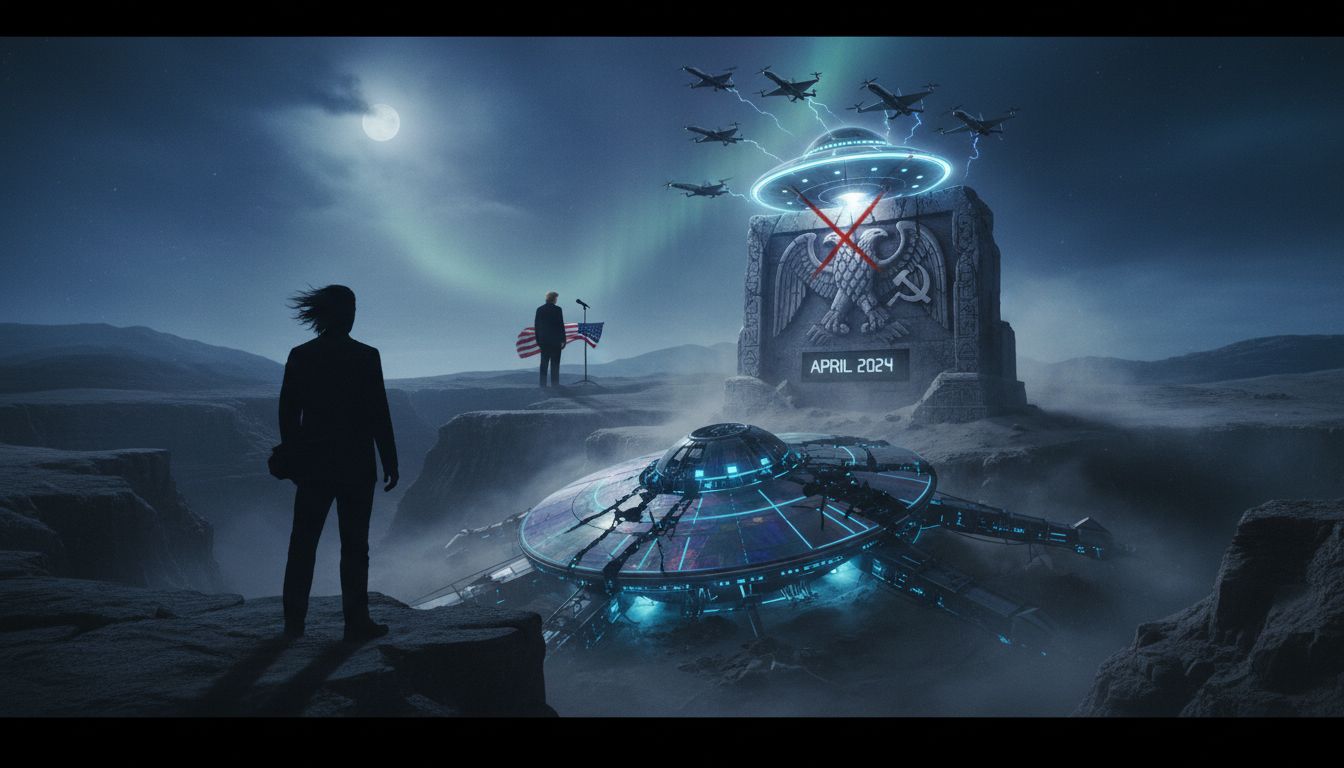
Former intelligence officer David Grusch returned to the national spotlight during the National Space Symposium in Colorado earlier this month, reiterating claims that the United States possesses “definitive evidence” of a sentient, non‑human intelligence interacting with Earth. Speaking as a special consultant to Republican Representative Eric Burlington, Grusch said the government has not only observed unidentified aerial phenomena (UAPs) but has also reverse‑engineered components of an alien craft. His remarks came just days after President Donald Trump addressed a press conference with the Artemis II astronauts, promising that “information about UFOs will be released shortly” and citing interviews with pilots from his first term who witnessed “things you wouldn’t believe.”
Congressional Push for Declassification
In the weeks following the symposium, several members of Congress have escalated calls for transparency. Representatives Eric Burlington and Joaquin Luna filed a joint resolution urging the Department of Defense (DoD) to declassify all UAP‑related material by the end of the fiscal year. The resolution references Grusch’s testimony and the “1971 U.S.–USSR treaty on unidentified aerial phenomena,” a little‑known agreement that allegedly required both superpowers to share data on aerial encounters to avoid inadvertent nuclear escalation. While the treaty’s existence has not been publicly confirmed, lawmakers argue that acknowledging it would underscore the strategic importance of full disclosure.
Presidential Promises and Missed Deadline
Trump’s pledge set a public expectation for a major release on April 27, a date that passed without the anticipated documents. The administration’s silence has fueled speculation that the DoD is resisting the disclosure, citing concerns over national security and the potential impact on classified programs. In a statement to reporters, a White House spokesperson said the administration remains “committed to a responsible, phased release of information” but that “some material requires further review.” The missed deadline has drawn criticism from both UFO researchers and mainstream observers, who view the delay as a political maneuver rather than a procedural hurdle.
Historical Context and Technical Claims
Grusch’s assertions extend beyond anecdotal sightings. He claims that analyses of recovered debris have revealed materials with “properties not achievable by known terrestrial manufacturing,” and that engineers have successfully reverse‑engineered propulsion concepts that defy conventional physics. In a recent interview on Jeremy Corbell’s channel, Grusch warned that the forthcoming truth will be “a difficult pill to swallow,” emphasizing the need for a coordinated societal response that includes scientific, academic, and ethical frameworks. While independent verification of these technical claims remains absent, the consistency of Grusch’s narrative with earlier whistle‑blower testimonies—such as those from the 2023 Pentagon UAP report—adds a layer of credibility that policymakers find hard to ignore.
Outlook
The convergence of Grusch’s testimony, congressional pressure, and the president’s public promises has created a rare moment of bipartisan attention on the UAP issue. Analysts at the Congressional Research Service note that even limited declassification could have “significant implications for aerospace research, intelligence oversight, and public trust.” However, the path forward remains uncertain. If the DoD continues to withhold material, lawmakers may pursue oversight hearings or subpoena powers, while the administration could face renewed scrutiny over its handling of classified information. As the debate unfolds, the “uncomfortable truth” that Grusch describes may yet emerge—not as a sensational revelation, but as a measured, evidence‑based assessment that reshapes the United States’ approach to unidentified aerial phenomena.