Overview
A trail‑camera clip uploaded from a remote area of western Montana has quickly become a talking point among online communities that track unexplained wildlife sightings. The short video, posted under hashtags such as #cryptid, #paranormal, and #unexplained, shows a pale, elongated figure moving across a ridge in a manner that the narrator describes as “faster than anything alive.” While the footage has been shared widely on social media, the lack of identifying information about the hiker, the exact location, and any corroborating evidence has prompted both curiosity and skepticism among observers.
The Montana Humanoid Sighting
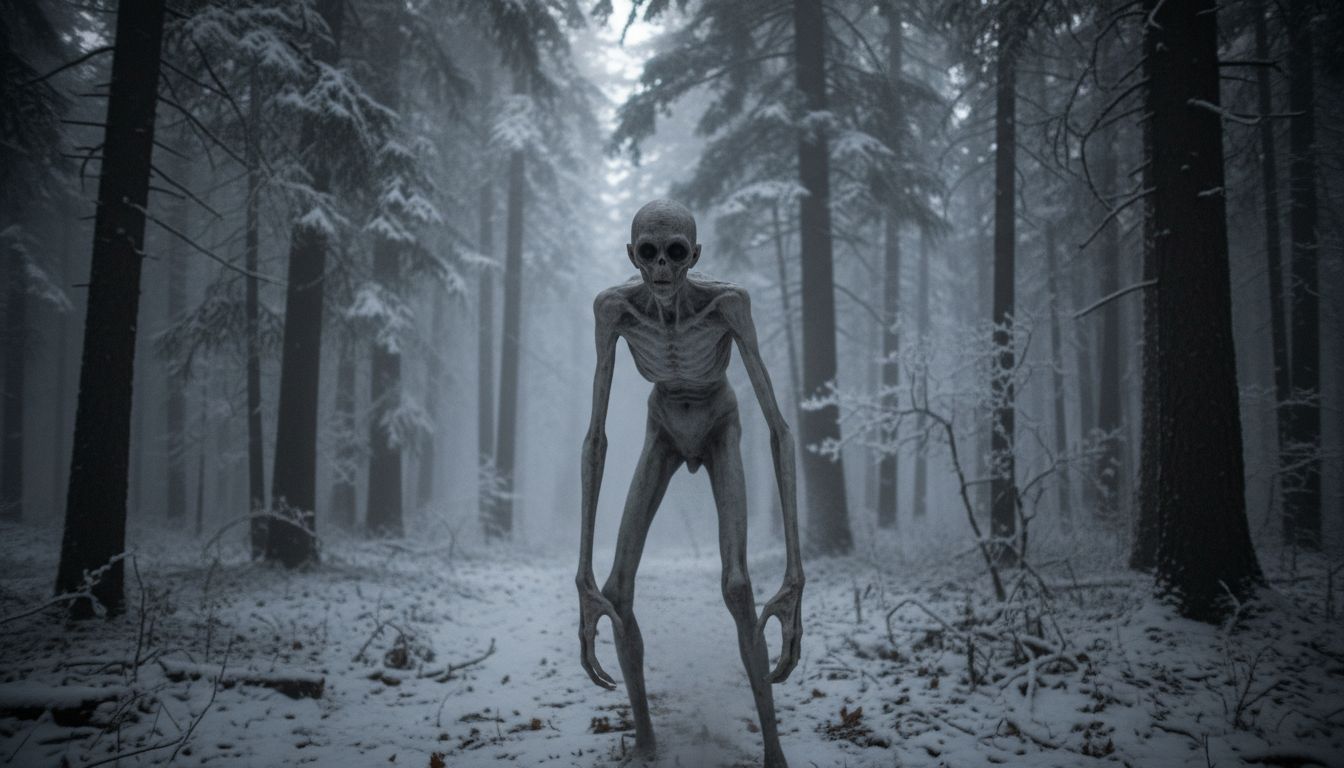
In the opening segment, the camera captures a spindly, humanoid silhouette that appears to crawl on all fours before sprinting across the rocky terrain. The creature’s proportions—disproportionately long limbs and a thin torso—do not match known mammals native to the region, leading the video’s narrator to suggest the entity may be a “cryptid” rather than a misidentified animal. Unnamed wildlife specialists consulted for the video reportedly could not offer a definitive identification, stating that “the morphology and gait observed do not correspond with any documented species in Montana.” The experts’ inability to rule out a hoax or a camera artifact was noted, but no formal scientific analysis was presented.
Folklore Context and Related Clips
The compilation then shifts to a discussion of “skinwalkers,” a figure rooted in Indigenous folklore of the American Southwest, described as shapeshifters capable of assuming animal forms. To illustrate the legend, a dash‑cam recording shows a driver encountering a tall, white‑clad figure standing motionless in the middle of a dark road. While the footage is presented as a possible modern encounter, investigators of the clip have highlighted common visual effects—such as lens flare and motion blur—that can create the illusion of a humanoid apparition. The segment underscores how regional myths can shape the interpretation of ambiguous visual data.
Expert Review and Digital Production
The final clip, attributed to the creator “@Shortest Blockbusters,” features a high‑intensity, night‑time drive through a wooded area where a large, multi‑legged creature resembling an oversized arachnid lunges at the vehicle. A watermark identifying the source as a cinematic short indicates the segment is likely a piece of CGI‑enhanced horror rather than genuine field footage. Media analysts point out that the inclusion of such staged material alongside purported “found footage” blurs the line between authentic documentation and entertainment, a practice that can amplify public belief in cryptid phenomena without substantive proof.
Conclusion
The Montana video illustrates the enduring fascination with cryptids and the supernatural, especially in isolated settings where limited verification is possible. While the initial trail‑camera clip remains unexplained, the absence of verifiable metadata, expert attribution, and peer‑reviewed analysis means it cannot be classified as credible evidence of an unknown species. The surrounding segments—folklore commentary and a clearly labeled CGI short—highlight how modern digital platforms can intertwine myth, speculation, and artistic production, complicating efforts to separate fact from fiction. As researchers continue to emphasize rigorous documentation standards, viewers are reminded to approach such viral content with a critical eye and an awareness of the broader cultural narratives that shape its reception.