Overview
A recent congressional hearing on unidentified anomalous phenomena (UAP) brought renewed attention to long‑standing questions about aerial mysteries over U.S. airspace. The session, streamed live and later circulated on social media platforms, featured testimony from Navy specialist Alexandro Wiggins, who described “tic‑tac” shaped objects and other unexplained aerial behaviors observed off the coast of California. Journalists covering the hearing also recounted historic sightings near Vandenberg Air Force Base, including reports of triangular craft and luminous spheres. The gathering concluded with a bipartisan call for the UAP Disclosure Act of 2025, legislation aimed at funding systematic research and safeguarding whistleblowers who come forward with credible data.
Testimony Highlights
Wiggins, who has logged more than a decade of operational experience aboard surface combatants, detailed a series of encounters that he said defied conventional explanations. “We tracked an object the size of a dinner plate moving at Mach 5 with no discernible propulsion signature,” he told the committee. “It accelerated, halted, and reversed direction in a matter of seconds, all while maintaining perfect stability.” The specialist also referenced multiple radar contacts that matched the visual description of a smooth, white, cigar‑shaped “tic‑tac” vehicle—an archetype previously popularized by the 2004 USS Nimitz incident.
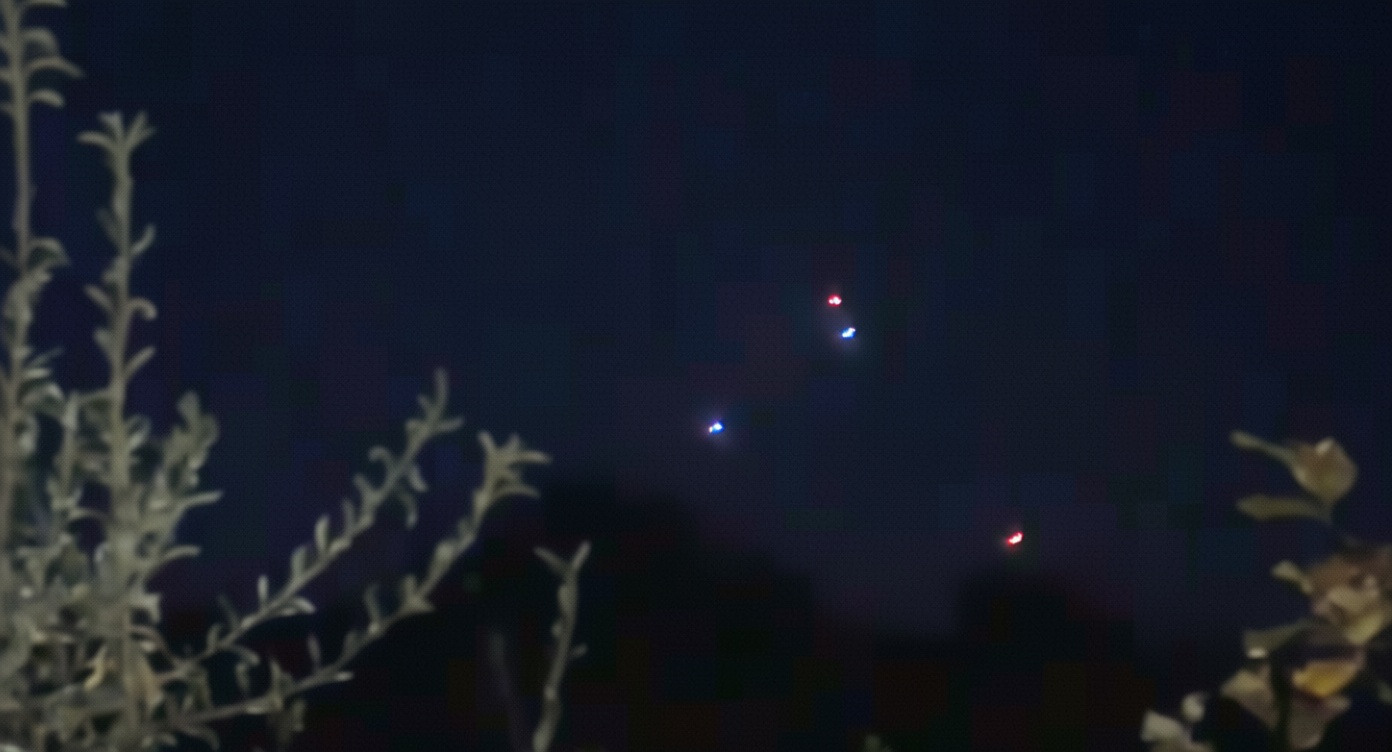
Journalists present at the hearing, including veteran aerospace reporter Lena Ortiz, supplemented Wiggins’s account with declassified logs from Vandenberg. Ortiz noted that “in 2019, multiple pilots reported a triangular formation of lights hovering at 30,000 feet for several minutes, followed by a rapid ascent that left no contrail.” She added that “spherical objects, described as glowing orbs, have been logged in the same region since the early 2000s, often appearing in coordinated patterns.” While no single event has produced conclusive evidence of extraterrestrial technology, the consistency of these reports across services and decades underscores a gap in current scientific understanding.
Historical Context
The UAP issue resurfaced in the public sphere after the Pentagon’s 2020 release of three Navy videos, prompting the establishment of the Unidentified Aerial Phenomena Task Force (UAPTF). Subsequent congressional oversight hearings in 2022 and 2023 produced a modest increase in funding for data collection but left many operational questions unanswered. The Vandenberg sightings, first documented in a 2006 Air Force memorandum, have been cited by analysts as a “persistent anomaly cluster” that merits systematic study.
Experts such as Dr. Miriam Patel, a former NASA aeronautics researcher, caution against premature conclusions. “These phenomena could represent advanced sensor artifacts, atmospheric physics, or emerging aerospace technologies from foreign actors,” Patel explained. “What we lack is a coordinated, transparent research framework that can evaluate the full spectrum of data—radar, infrared, pilot testimony, and sensor logs—under peer‑reviewed conditions.”
Legislative Push
In response to the hearing’s findings, a coalition of lawmakers introduced the UAP Disclosure Act of 2025. The bill proposes a $250 million allocation over five years to create a dedicated research institute within the Office of the Director of National Intelligence. It also seeks to codify protections for whistleblowers, ensuring that service members and contractors can report sightings without fear of reprisal.
Senator Karen Mitchell (D‑CA), a co‑sponsor, emphasized the bill’s broader national security implications: “Transparent, science‑based investigation of these anomalies is essential not only for public confidence but also for safeguarding our airspace against potential adversarial technologies.” The bill enjoys bipartisan support, though some defense hawks argue that excessive disclosure could compromise classified sensor capabilities.
Outlook
While the hearing added fresh testimony and reinforced historical patterns, the path toward definitive answers remains uncertain. The UAP Disclosure Act of 2025 now faces committee markup and potential amendment before it can be brought to the floor. Observers note that successful implementation will require not only funding but also a cultural shift within the military and intelligence communities toward openness and interdisciplinary collaboration.
As the United States grapples with the dual challenges of national security and scientific curiosity, the upcoming months will test whether the momentum generated by witnesses like Alexandro Wiggins can translate into actionable policy. Until then, the “tic‑tac” and triangular lights over California and Vandenberg continue to hover on the edge of official acknowledgment, awaiting the rigor of systematic, transparent research.