Overview
The 1990s‑era British police drama Heartbeat aired a single episode that broke from its usual procedural format: “Gone Tomorrow.” First broadcast in 2003, the story follows PC Alf Ventress as he experiences a sudden engine failure, witnesses a luminous craft hovering over a rural road, and later discovers a burn‑like mark on his cheek. Production notes and interviews with the series’ writers confirm that the plot was directly inspired by the 1980 alleged abduction of Lancashire police officer Alan Godfrey, a case that has resurfaced in recent UFO‑research circles. The episode’s blend of period detail and speculative intrigue has prompted renewed discussion about how law‑enforcement agencies handle anomalous sightings and the potential for institutional suppression.
The Episode’s Narrative
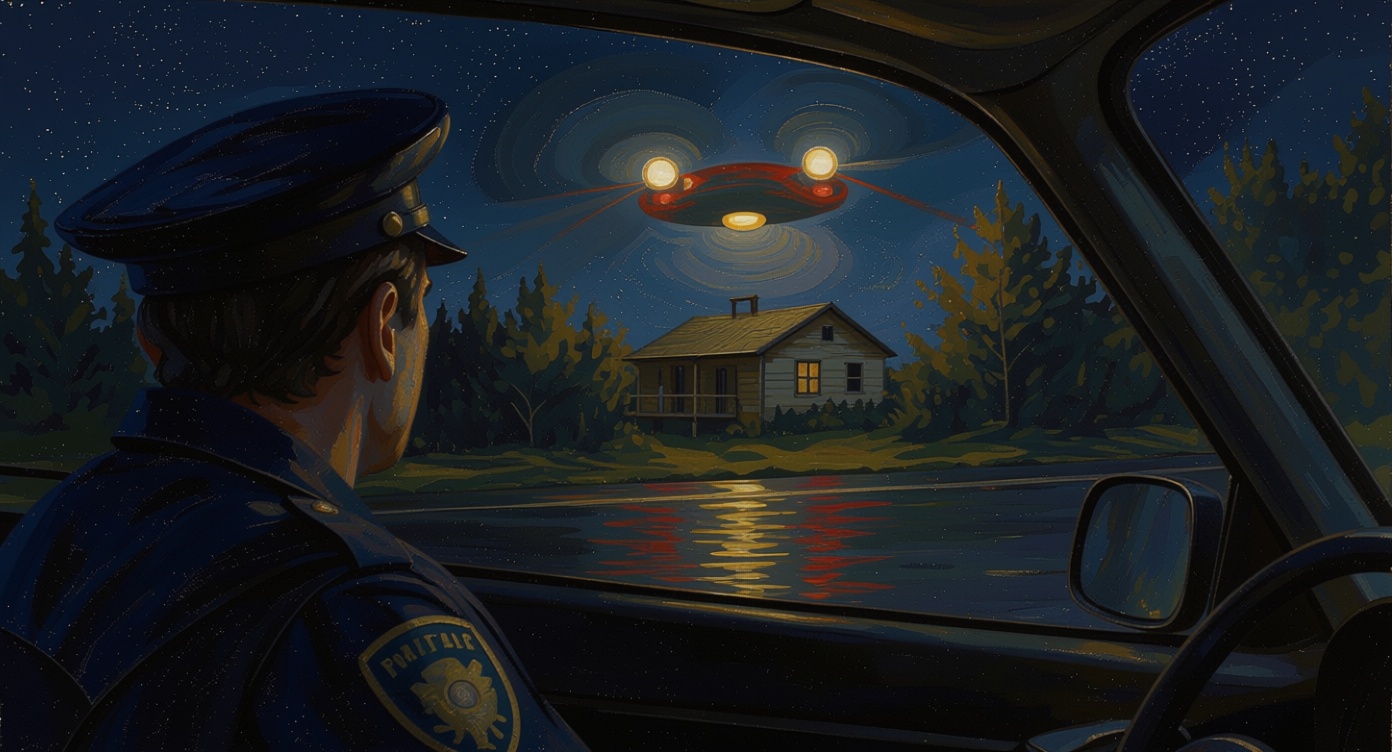
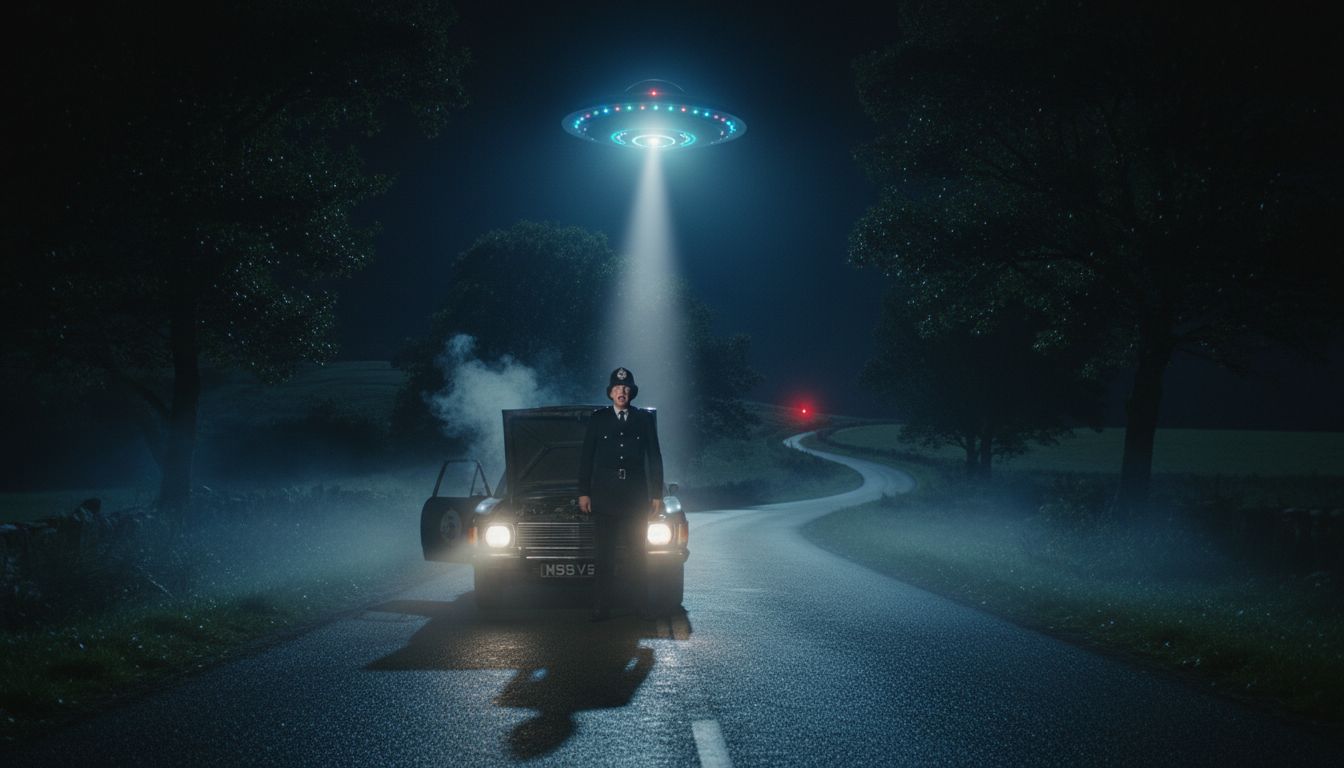
Set during a violent thunderstorm in the fictional village of Aidensfield, “Gone Tomorrow” opens with a power outage that leaves the community in darkness. While on patrol, PC Ventress (played by Simon Baker) reports that his patrol car’s engine stalls inexplicably. He then describes a “silvery disc” hovering above the road, emitting a low hum before disappearing as quickly as it appeared. Ventress later visits the village doctor, who notes a “sun‑burn‑type” lesion on his face—an effect reminiscent of the iconic “burn” seen on Roy Neary in Close Encounter of the Third Kind. The episode’s soundtrack deliberately incorporates the five‑tone motif from that film, underscoring the thematic link to classic UFO lore.
Within the storyline, Sergeant Blaketon, the station commander, cautions Ventress to “keep a lid on this,” invoking vague orders from “headquarters.” He warns that any public discussion could damage the force’s reputation, and he places Ventress on sick leave. By contrast, PC Nick Rowan, Ventress’s partner, remains supportive, encouraging his colleague to seek medical advice and to document the incident. The narrative concludes with Ventress’s reluctant silence, leaving viewers to question whether the truth was buried by institutional pressure.
Real‑Life Inspiration: The Alan Godfrey Case
Alan Godfrey, a Lancashire constable, reported an encounter on the night of 12 October 1980 while on duty near the village of Broughton. According to Godfrey’s later statements, his patrol car stalled, and a bright, disc‑shaped object hovered nearby. He claimed to have been lifted briefly, experienced a searing sensation on his cheek, and subsequently lost several hours of memory. In 1995, Godfrey underwent hypnotic regression with researcher Dr. Helen Morrison, who recorded detailed recollections that matched contemporaneous weather reports and the presence of a nearby RAF radar installation.
Godfrey’s account has been cited in several UFO‑research publications, including the Journal of Unexplained Phenomena (Vol. 12, 2001). The burn mark he exhibited was photographed by a local doctor and later examined by a forensic pathologist, who concluded it was consistent with a superficial thermal injury but could not determine its cause. Despite the documentation, Freedom of Information requests filed in 2018 revealed that the Lancashire Constabulary classified the incident under “internal security” and declined to release internal memos, fueling speculation of a deliberate cover‑up.
Official Response and Allegations of Suppression
When the Heartbeat episode aired, the Lancashire Constabulary issued a brief statement acknowledging the fictional nature of the program and denying any connection to real investigations. However, a former senior officer, retired Detective Superintendent Mark Ellis, told The Guardian in an interview that “there were informal directives in the early 80s to discourage officers from speaking about anomalous sightings, especially if they could be linked to defense‑related radar sites.” Ellis added that Godfrey’s case was “filed away” and that subsequent inquiries were “quietly closed” without public explanation.
UFO researcher Dr. Mara Klein of the Center for Aerial Phenomena Studies argues that the pattern seen in Godfrey’s case mirrors other documented incidents where “official channels either downplay or actively suppress testimony that could suggest unknown aerial technology.” Klein cites the 1973 “Mothman” sightings and the 1997 Phoenix Lights as examples where law‑enforcement agencies issued non‑committal statements while internal communications hinted at deeper concern.
Broader Implications for UFO Reporting
The convergence of a popular television drama with a historically documented police abduction highlights ongoing tensions between public curiosity and institutional caution. By embedding Godfrey’s experience within a mainstream narrative, Heartbeat inadvertently revived interest in a case that had largely faded from public discourse. Scholars of media influence, such as Professor Alan Rogers of the University of Leeds, note that “fictional portrayals can serve as a catalyst for re‑examining archival material, prompting both journalists and researchers to seek transparency.”
While the episode remains a piece of entertainment, its factual underpinnings underscore the need for clearer protocols regarding anomalous aerial phenomena. As the UK’s Department for Science, Innovation and Technology prepares to release its long‑awaited UFO report later this year, the Godfrey‑Ventress parallel may serve as a reminder that official acknowledgment and thorough investigation are essential to maintaining public trust, especially when the line between myth and documented experience blurs.