Overview
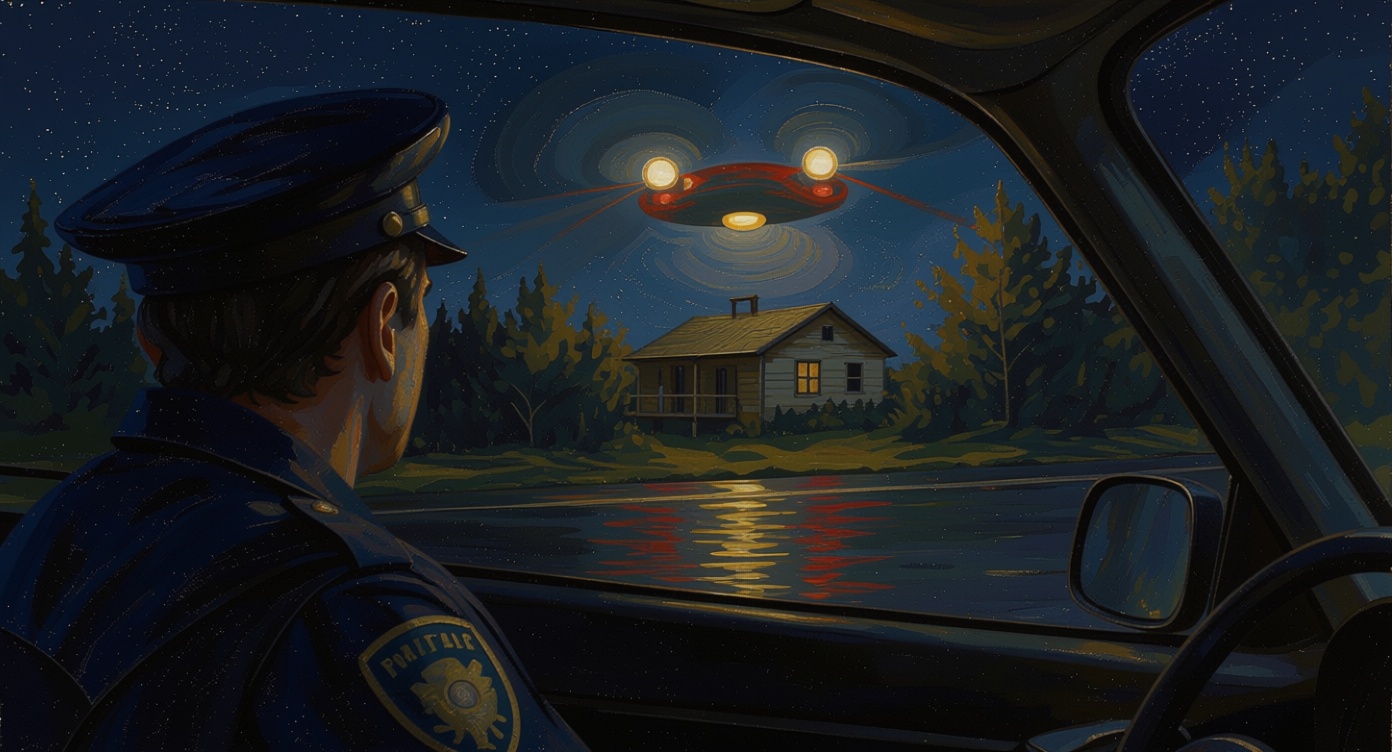
The History Channel’s new series “Beyond Skinwalker Ranch” turned its cameras on Sedona, Arizona, after a two‑week field investigation that began in December. The program, which premiered on June 6, follows a team of investigators as they examine a cluster of reports that include UFO sightings, unexplained lights, and alleged “portals” in the red‑rock region. While anecdotal accounts of “men in black,” hidden military tunnels, and other folklore have long circulated around Sedona’s famed vortex sites, the production claims to bring a scientific lens to phenomena that have traditionally been dismissed as myth.
The Investigation Team
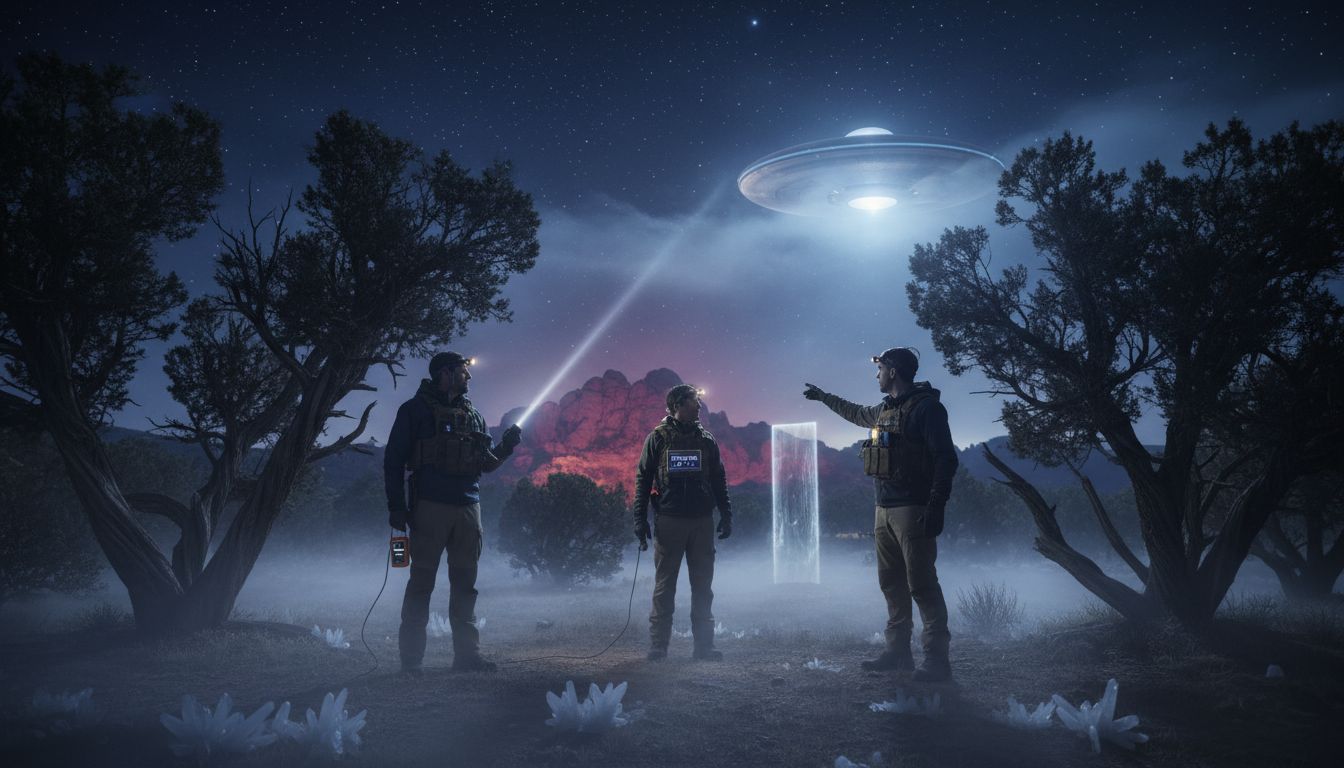
The crew was led by Andrew Bustamante, a former CIA intelligence officer and decorated veteran, and Paul Beban, an award‑winning investigative journalist. They were joined by a small group of scientists, local historians, and residents such as John and Mason Bradshaw of the Bradshaw Ranch, as well as UFO researcher Tom Dongo. According to the series’ logline, the team “explores Bradshaw Ranch in Sedona, Ariz., and encounters dangerous radiation levels, a strange temperature anomaly and a UAP.” Executive Producer David Carr emphasized that the series “is not holding back” and that “there is no censorship” in presenting the data collected on site.
Key Findings at Bradshaw Ranch
During the two‑week filming period, the investigators recorded several measurable anomalies at Bradshaw Ranch, a property that has become a focal point for Sedona’s paranormal lore. Portable Geiger counters registered radiation levels above background norms, prompting safety precautions for the crew. Simultaneously, thermal imaging equipment detected a localized temperature drop of several degrees Celsius that persisted despite ambient conditions—a phenomenon the team described as a “temperature anomaly.”
In addition to these physical readings, the team captured electromagnetic signatures centered around 1.6 GHz, a frequency previously reported at Utah’s Skinwalker Ranch, the subject of the History Channel’s earlier series “The Secret of Skinwalker Ranch.” Researchers noted that the signal’s pattern suggested “sophisticated interference,” raising the possibility of federal or experimental technology rather than a purely natural source. Visual recordings of an Unidentified Anomalous Phenomena (UAP)—a brief, luminous object that moved erratically before vanishing—were also included in the episode, though the footage remains inconclusive.
Scientific Context and Skepticism
The anomalies reported at Bradshaw Ranch have drawn attention from both the scientific community and skeptics. Radiation spikes can arise from a variety of mundane sources, such as naturally occurring radon or localized mineral deposits. Temperature inversions are similarly well‑documented in desert environments, especially near canyon walls where airflow can create microclimates. The 1.6 GHz signal, while intriguing, falls within the range used by many commercial and governmental communication systems, complicating attribution.
Dr. Laura Mendoza, a physicist at Northern Arizona University who was not involved in the production, cautioned that “isolated measurements need to be corroborated with baseline data and peer‑reviewed analysis before any firm conclusions can be drawn.” She added that the presence of a professional production crew can sometimes influence environmental readings, intentionally or otherwise.
Reception and Next Steps
The first episode aired to a mixed audience, garnering strong viewership numbers for the History Channel’s primetime slot. Viewers praised the series for its transparent presentation of data, while others expressed concern that the show’s entertainment format might blur the line between investigation and speculation. Carr reiterated the network’s commitment to “present the truth that we found, based on science,” and announced a follow‑up episode, Bradshaw Ranch Pt. 2, scheduled for July 11, which will reportedly delve deeper into the electromagnetic findings and feature additional expert commentary.
As the series progresses, the Sedona community remains divided. Local businesses, such as the Cowboy Club that hosted the crew, have welcomed the publicity, whereas some residents fear that heightened attention could attract “paranormal tourism” that disrupts daily life. Regardless of the outcome, “Beyond Skinwalker Ranch” has placed Sedona’s long‑standing mysteries into a national conversation, prompting both scientific inquiry and public curiosity about the unexplained phenomena that continue to captivate the region.