Overview
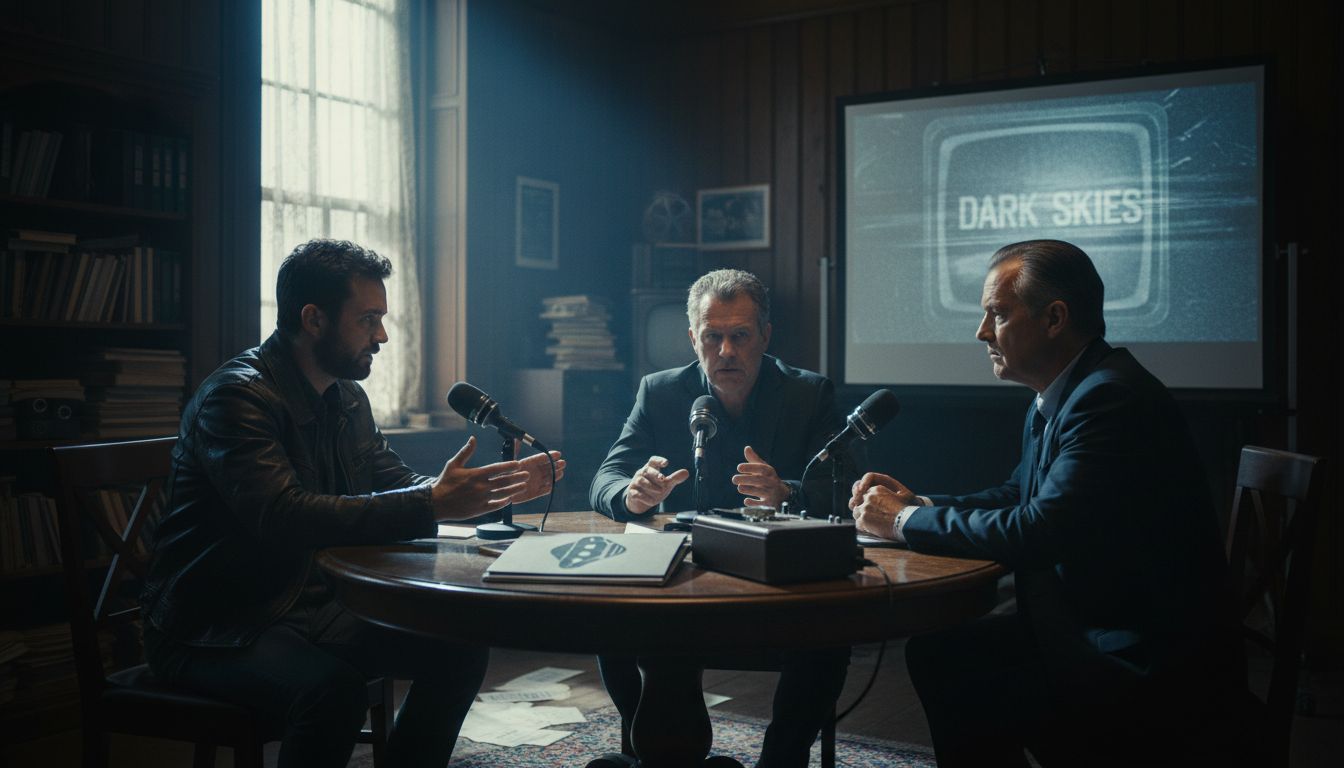
In a recent episode of NewsNation’s “Reality Check,” investigative journalist Ross Coulthart sat down with television writers Bryce Zabel and Brent Friedman, the creative forces behind the 1996 sci‑fi series Dark Skies. The conversation turned to the series’ uncanny alignment with later government disclosures about unidentified aerial phenomena (UAP) and the alleged involvement of Pentagon, Naval Intelligence, and CIA officials in shaping Hollywood’s narrative. According to Zabel and Friedman, the creators were contacted by a Naval Intelligence officer shortly after the show’s debut, who praised the program for “getting a lot right” and offered to provide “input” on future storylines.
The Show and Its Premise
Dark Skies aired for two seasons on the United Paramount Network (UPN) and blended historical events—such as the Roswell incident and Project Blue Book—with a fictional secret government program tasked with investigating extraterrestrial contact. The series portrayed a covert alliance between military intelligence and a clandestine research team, a premise that mirrors the structure of the Pentagon’s All-domain Anomaly Resolution Office (AARO), formally established in 2022. While the show was marketed as entertainment, Zabel and Friedman acknowledge that they consulted publicly available declassified documents and “leaked” reports to craft a plausible storyline.
Naval Outreach and the “Secret of the Universe”
According to the interview, a Naval Intelligence officer reached out to the writers in late 1996, stating that the series “got a lot right” and that the department was interested in ensuring the show’s depiction remained “accurate enough to avoid public panic.” The officer reportedly supplied the writers with a confidential briefing packet—described by Friedman as a “paper that claimed to hold the ‘secret of the universe.’” The packet allegedly contained excerpts from classified assessments of UAP sightings, technical analyses of flight characteristics, and speculation about possible non‑human technologies.
Both creators said they were offered limited editorial guidance, such as avoiding explicit references to classified programs and refraining from naming real‑world agencies. “We were told to keep the story grounded but not to reveal anything that could jeopardize ongoing investigations,” Zabel recalled. The writers declined the offer, citing a desire to maintain creative independence, but they did incorporate some of the technical language provided by the Navy into later episodes.
Government Influence on the UFO Narrative
The interview highlights a broader pattern of government‑media interaction that dates back to the Cold War, when the Department of Defense used Hollywood as a conduit for disinformation and, at times, recruitment messaging. Coulthart referenced declassified documents indicating that the CIA’s Project Blue‑Bird and later Project Mogul were discussed in early 1950s films to shape public perception of aerial anomalies. Zabel and Friedman argue that Dark Skies represents a more recent iteration of this practice, where the Pentagon subtly steered the storyline to align with its own secrecy protocols.
Both writers expressed concern that such collaboration can blur the line between fact and fiction, making it difficult for the public to discern genuine disclosures from dramatized speculation. “When a government agency validates a fictional series, it lends an air of credibility that can be misleading,” Friedman noted.
Implications for Ongoing Disclosure
The conversation comes at a time when the U.S. government has begun to release unclassified UAP footage and preliminary assessment reports through the Office of the Director of National Intelligence. Advocates for full transparency argue that the Pentagon’s selective sharing of information fuels conspiracy theories, while skeptics warn that premature release could compromise national security.
Zabel and Friedman suggest that the entertainment industry’s historic ties to intelligence agencies may influence public expectations about what a “full disclosure” will look like. Their experience underscores the need for clear demarcation between official statements and fictional portrayals. As Coulthart concluded, “Understanding the origins of these narratives is essential if we are to evaluate the credibility of any future revelations about extraterrestrial life.”
Looking Ahead
While Dark Skies remains a product of its era, the creators’ testimony adds a new layer to the ongoing debate over UAP transparency. Their account of direct contact from Naval Intelligence, coupled with the provision of a mysterious briefing document, illustrates how government agencies have historically engaged with Hollywood to manage the flow of information. As lawmakers push for more robust oversight of the AARO and related programs, the intersection of media, secrecy, and national security will likely remain a focal point for both journalists and policymakers.