Overview
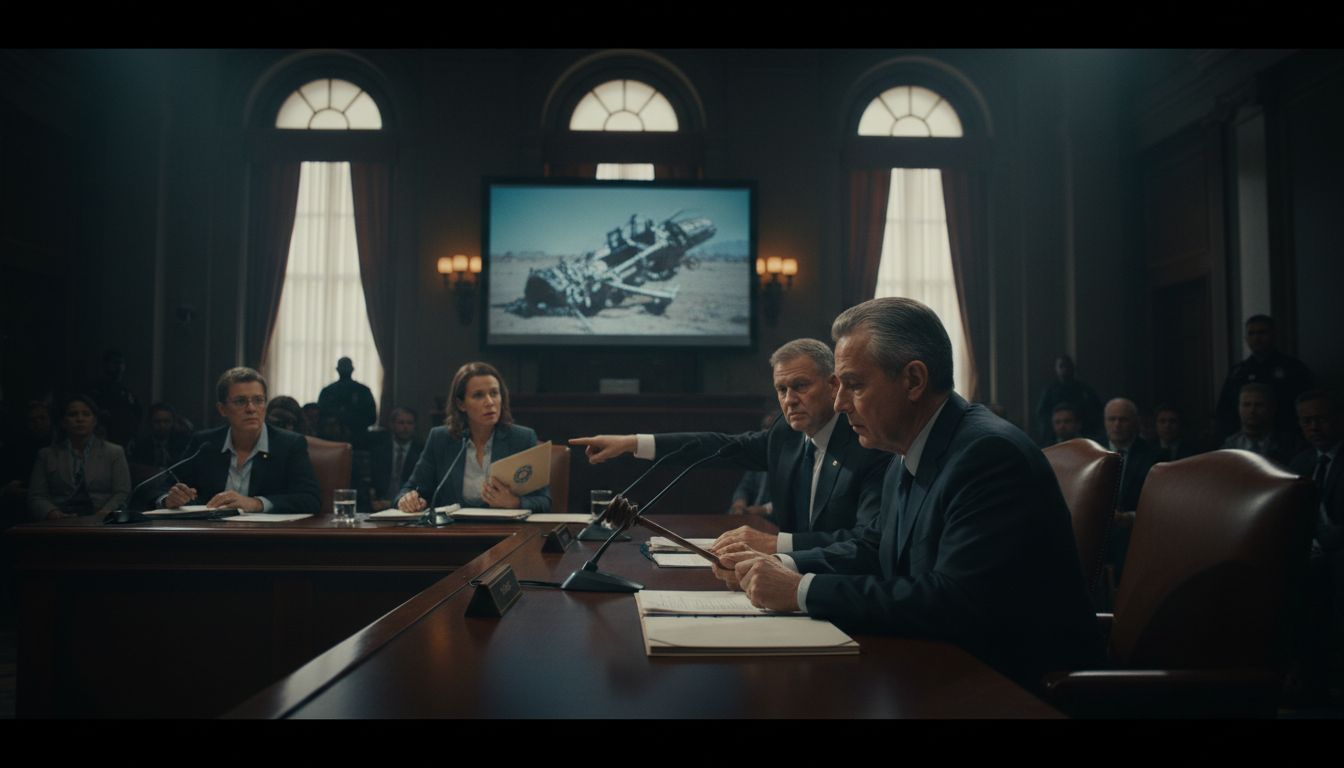
During a closed‑door session of the House Oversight and Accountability Committee, two prominent witnesses — environmental activist Michael Shellenberger and former Pentagon intelligence official Luis Elizondo — pressed lawmakers to confront what they described as a decades‑long pattern of secrecy surrounding Unidentified Aerial Phenomena (UAP). The hearing, convened on [date], focused on the government’s handling of UAP incidents, funding streams, and alleged “crash retrieval” programs that have operated without congressional oversight. Both witnesses argued that the lack of transparency hampers national security assessments and erodes public trust.
Key Testimonies
Shellenberger and Elizondo cited several high‑profile encounters to illustrate the scope of the issue. They referenced the 2015 declassified UAP video that showed an object maneuvering at speeds inconsistent with known aircraft, as well as a later incident in which an “orb” reportedly forced an F‑22 fighter to alter its flight path during a training exercise. A 13‑minute video captured near Kuwait in 2023, showing luminous white orbs performing coordinated maneuvers, was also highlighted as evidence of sophisticated aerial behavior. The witnesses linked these events to the Department of Defense’s “Immaculate Constellation” program, a classified effort they claim has managed UAP and non‑human intelligence (NHI) matters for years without external review.
Legislative Gaps
The discussion turned to the 2023 UAP Disclosure Act, legislation that was intended to institutionalize reporting requirements and create an independent review board. According to the witnesses, the act’s key provisions — notably the authority to compel the executive branch to release classified UAP data and the establishment of a permanent UAP Records Review Board — remain unimplemented. Rep. Nancy Mace (R‑SC) questioned committee members about the status of these mandates, noting that “the promise of transparency has not yet translated into concrete action.” Both Shellenberger and Elizondo warned that without a statutory mechanism, the executive can continue to withhold material that may be critical to understanding both domestic and foreign technological capabilities.
Calls for Reform
In response to the identified gaps, the witnesses urged the creation of an independent UAP Records Review Board staffed by bipartisan members with security clearances, tasked with auditing all UAP‑related documentation across the Department of Defense, intelligence agencies, and other federal entities. They also advocated for stronger executive accountability, suggesting that the President‑elect’s stated commitment to “pursue full transparency” be codified through executive orders that obligate agencies to cooperate with congressional inquiries. Elizondo emphasized that “both our nation and potential adversaries may already possess UAP‑derived technology,” underscoring the strategic imperative of a coordinated, open assessment.
Next Steps and Outlook
Committee Chair Rep. James Comer (R‑KY) signaled that the hearing’s testimony will inform forthcoming legislation aimed at closing the loopholes left by the 2023 act. The Oversight Committee plans to issue a report within the next 90 days, outlining recommendations for a statutory review board and detailing funding requirements for UAP research. While the witnesses expressed cautious optimism about the President‑elect’s pledge, they reminded lawmakers that “real transparency will only come when the executive branch relinquishes its unilateral control over classified UAP data.” As the debate moves from the hearing room to the Capitol floor, the push for an independent, accountable framework appears poised to reshape how the United States addresses one of its most persistent intelligence challenges.


