Overview
A story circulating on the Icelandic‑focused paranormal site Moon Mausoleum claims that a specter known as Hvítárvellir‑Skotta has been tormenting the same lineage for more than a century—far exceeding the typical 120‑year limit cited in many Icelandic ghost tales. Published on 23 January 2026, the article draws on oral histories collected from the historic Hvítárvellir farm in Borgarfjörður and situates the legend within broader Norse concepts of restless spirits. While the narrative remains rooted in folklore, researchers note that such generational hauntings provide valuable insight into Iceland’s cultural memory and the evolution of mythic motifs.
Historical Setting of Hvítárvellir
Hvítárvellir is a sprawling estate perched at the mouth of the Hvítá River, long regarded as one of Iceland’s most valuable tracts of land and a premier salmon fishing ground. Records from the 17th‑century land registers confirm the farm’s prominence, and its stone mansion has survived numerous ownership changes. According to the Moon Mausoleum piece, “the family living there centuries ago was plagued by a ghost said to have been raised from the dead and sent as vengeance after a woman chose to marry someone else.” The tale suggests that the original grievance dates to the early 1800s, a period when arranged marriages and property alliances were common in rural Icelandic society.
The Hvítárvellir‑Skotta Legend
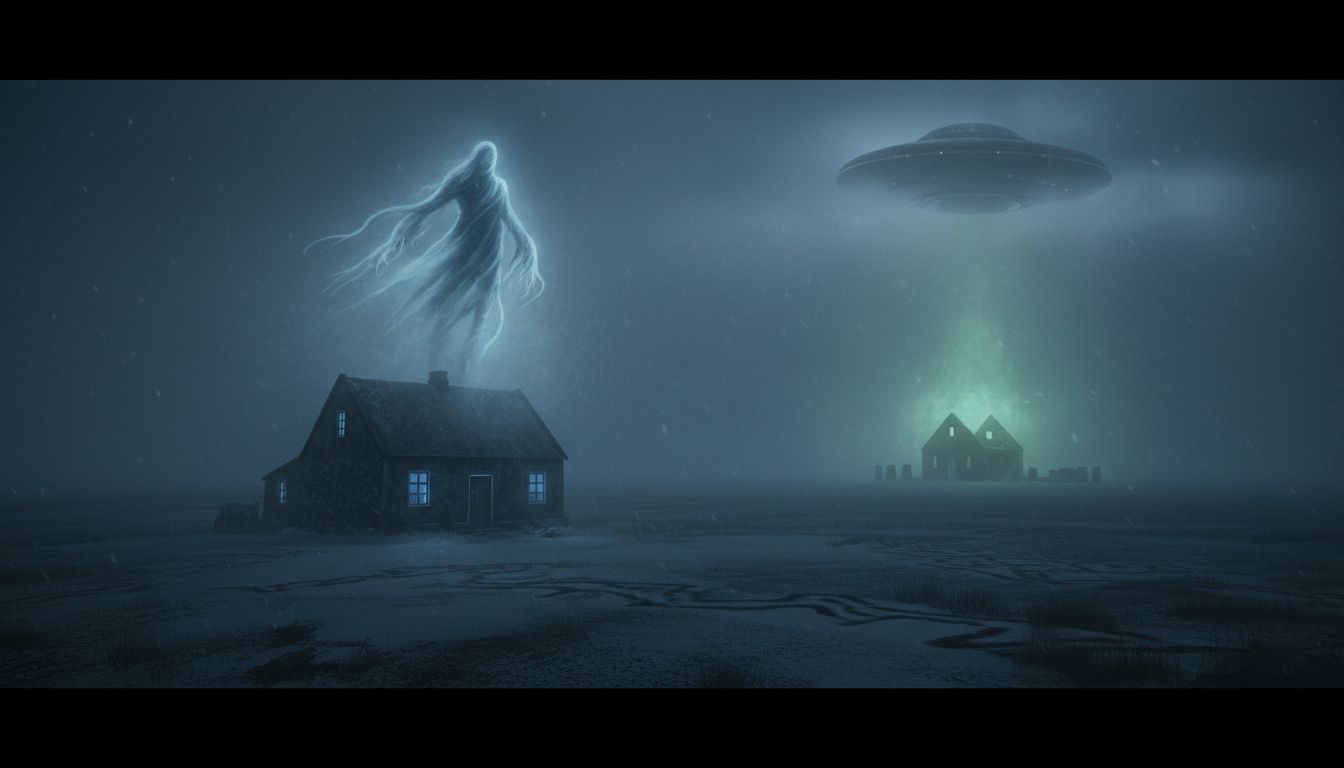
The specter, referred to as Hvítárvellir‑Skotta, is described as a female entity who allegedly rose from the grave to exact revenge on a family that rejected her romantic choice. The legend asserts that the haunting has persisted across four generations, with each descendant reporting unexplained noises, cold spots, and fleeting apparitions in the manor’s corridors. The article quotes a contemporary descendant: “Even now, when we close the old doors at night, we feel a presence that seems to linger longer than any story I’ve heard.” While the claim of a 120‑year limit is common in Icelandic folklore—“How long can a ghost linger? Some Icelandic ghost stories claim it is for 120 years”—the Hvítárvellir‑Skotta narrative pushes the timeframe to over 120 years, challenging that conventional boundary.
Fylgja and Generational Hauntings
The phenomenon aligns with the Norse concept of the Fylgja (or Fylgur), a type of attendant spirit documented from the 12th century onward. Originally perceived as a protective or guiding totem, the Fylgja’s role morphed over centuries, especially after the 17th‑century folklorist surveys that recorded more malevolent interpretations. Scholars such as Dr. Guðrún Jónsdóttir of the University of Iceland note that “the shift from benevolent guardian to vengeful haunt reflects the intertwining of Christian morality with older pagan beliefs.” In many Icelandic accounts, Fylgjur attach themselves to the female line of a family, a detail echoed in the Hvítárvellir‑Skotta story where the curse appears to follow the matrilineal descendants.
Current Perspectives and Future Research
Although the Moon Mausoleum article stops short of providing empirical verification, it has sparked interest among cultural historians and paranormal investigators alike. Dr. Árni Stefánsson, a folklorist specializing in Icelandic oral tradition, cautions against sensationalism: “Legends like Hvítárvellir‑Skotta are valuable cultural artifacts, but they should be examined within the context of communal memory, land inheritance disputes, and the psychological impact of long‑standing family narratives.” Ongoing fieldwork at the Hvítárvellir site includes audio‑visual monitoring and archival research to trace any documented incidents that predate the modern retelling. Until such data emerge, the story remains a compelling example of how mythic motifs can endure and adapt, keeping the specter of the past alive in the present.