Overview
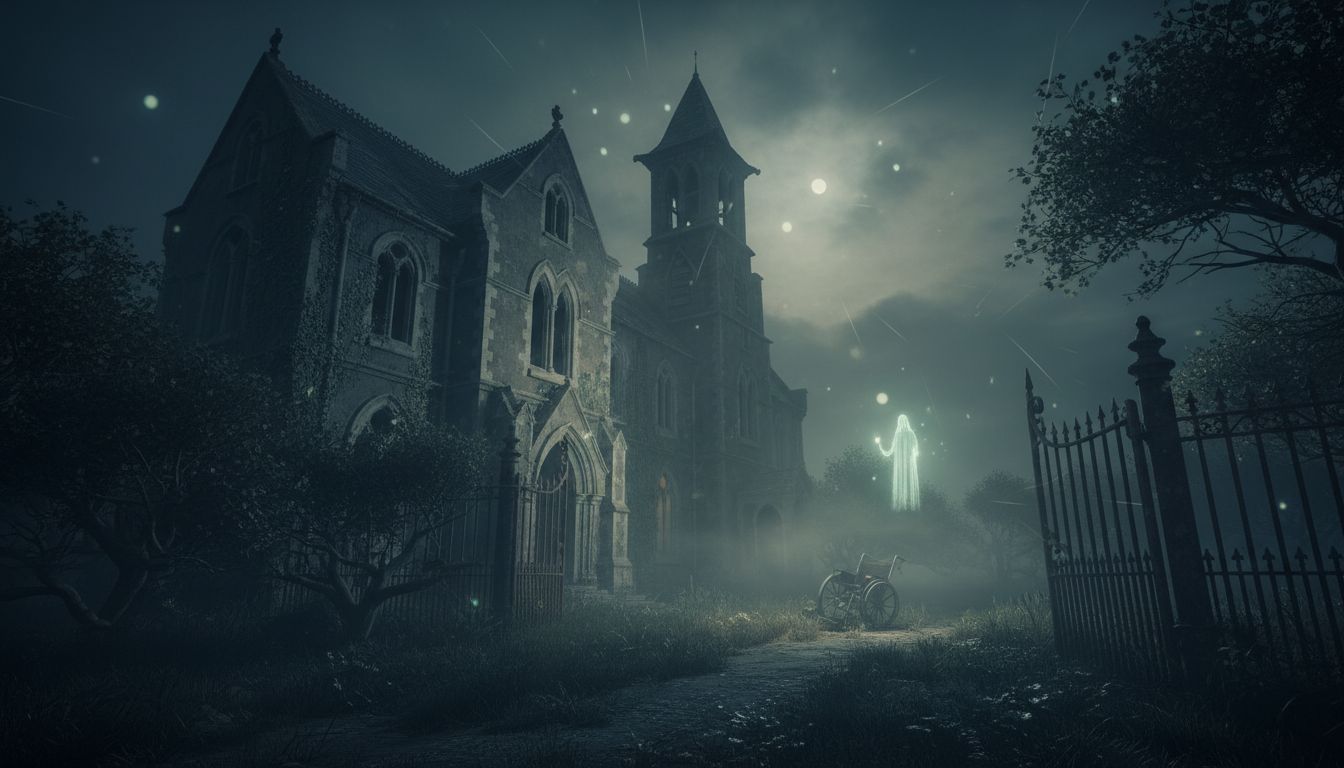
England’s legacy of psychiatric institutions includes a number of sites that continue to attract both historians and paranormal investigators. While the primary interest lies in the documented history of mistreatment, overcrowding, and evolving standards of care, a growing body of eyewitness reports describes recurring auditory and visual anomalies—screams, disembodied voices, and luminous orbs—that many attribute to restless spirits. The phenomenon has prompted a series of field studies, most recently compiled by Paranormal Daily News (24 March 2025), which catalogues the most frequently cited hauntings at former asylums across the country.
Bethlem Royal Hospital (Bedlam)
Founded in 1247 and relocated several times before settling in Beckenham in 1930, Bethlem Royal Hospital—commonly known as “Bedlam”—remains the archetype for the chaotic image of historic mental‑health facilities. The site’s notoriety extends beyond its medical history into popular culture, inspiring films such as the 1946 horror classic Bedlam starring Boris Karloff. According to a 2025 interview with the “Lordprice London Experience” team, the most persistent apparition is that of Rebecca, a young woman who allegedly died in the 19th‑century wards clutching a gold sovereign given by a rejected lover. The account states:
“She … snapped, was admitted to Bedlam, and died clutching the coin. After a guard removed it, her spirit began roaming the corridors, searching for the lost token.”
Investigators from the Society for Paranormal Research (SPR) reported temperature drops and faint metallic clinks in the former Moorfields wing, phenomena they interpret as consistent with the “searching” narrative. Hospital archivists, however, note no official record of a patient named Rebecca, underscoring the difficulty of separating folklore from documented fact.
Other Notable Asylums
- Colney Hatch Lunatic Asylum (now the site of the North London Cemetery) is reputed for sudden, high‑pitched screams echoing through its vaulted cellars. Audio recordings collected during a 2023 night‑watch documented intermittent, non‑human cries lasting up to 12 seconds.
- Bracebridge St. John’s Hospital in Lincolnshire, now a residential complex, has been the focus of several “object‑throwing” incidents reported by residents; objects such as books and crockery have reportedly moved without visible cause.
- Severalls Hospital in Colchester, converted into private housing, continues to generate reports of shimmering orbs captured on infrared cameras, a phenomenon investigators link to residual energy fields.
- Nocton Hall, once a lunatic asylum and later a private school, is said to host the apparition of a murdered servant, observed in period clothing by multiple witnesses.
- St. Andrew’s Hospital in Northamptonshire, now a care home, has a long‑standing claim of a ghostly nurse who appears at the end of corridors during night shifts.
- The Brecon and Radnor Joint Counties Lunatic Asylum (Wales, historically administered by English authorities) reports sightings of shell‑shocked soldiers—a likely echo of its use as a military psychiatric facility during World I.
Historical Context and Research Challenges
These reports must be viewed against a backdrop of documented neglect and harsh treatment that characterized many of the institutions. Contemporary accounts from the 19th century describe overcrowding, inadequate sanitation, and punitive regimes—conditions that have been linked to high mortality rates and, consequently, to the collective memory of trauma. Dr. Eleanor Haines, a historian of psychiatric care at the University of Manchester, cautions that “the intertwining of genuine suffering with later myth‑making creates a fertile ground for paranormal interpretation.” Moreover, the lack of comprehensive patient registers—particularly for early periods—complicates verification of specific stories such as Rebecca’s.
Conclusion
While scientific consensus remains skeptical of supernatural explanations, the consistency of anecdotal evidence across multiple former asylums suggests a cultural pattern of hauntings tied to institutional trauma. Ongoing collaborations between heritage organizations, academic historians, and paranormal research groups aim to document these phenomena with rigorous methodology—audio‑visual logging, environmental monitoring, and archival cross‑referencing. Whether the reported apparitions represent unresolved grief, psychosomatic responses, or genuine anomalies, they continue to shape public perception of England’s psychiatric past, reminding us that the walls of these former institutions still echo with stories that refuse to be forgotten.