Overview
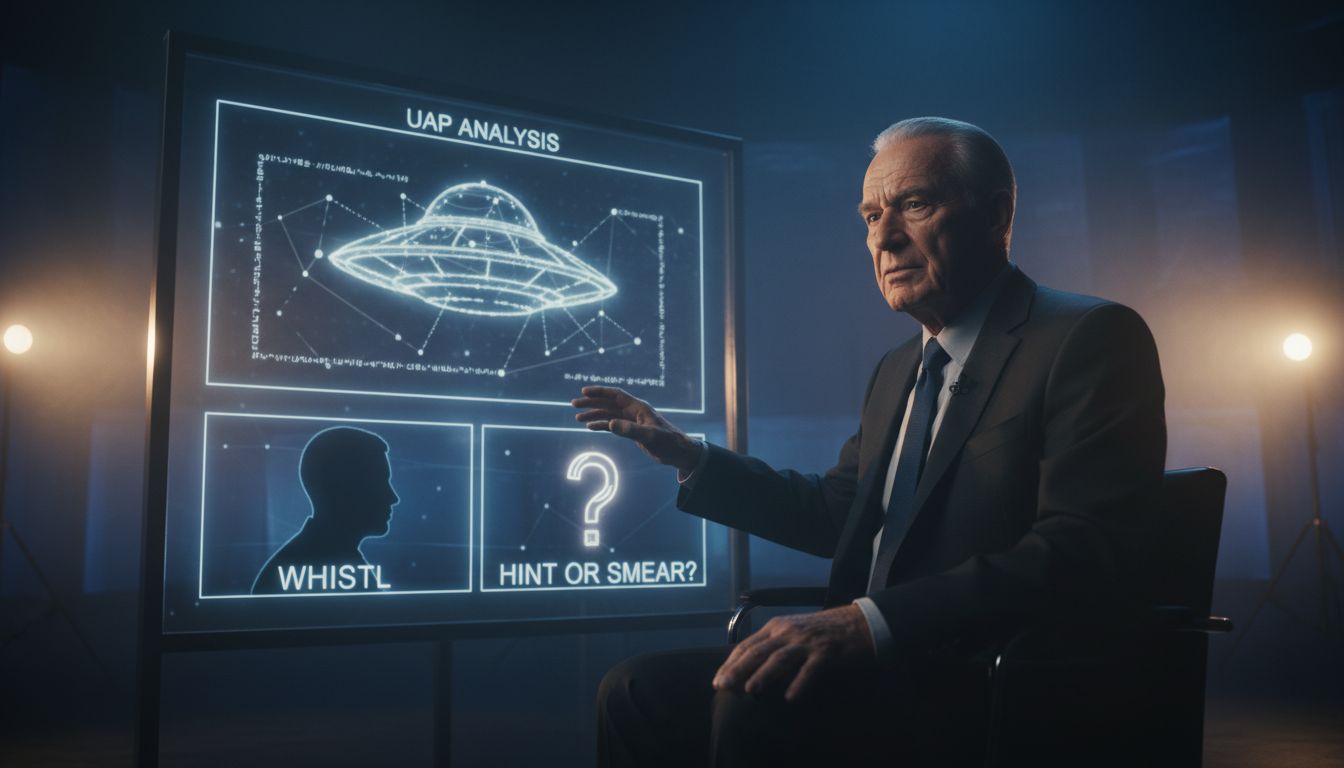
On a recent episode of The Good Trouble Show, intelligence veteran and commentator Matt Ford revealed new details about the U.S. government's handling of Unidentified Anomalous Phenomena (UAP), focusing on the Pentagon’s All-domain Anomaly Resolution Office (AARO). The discussion, which featured pointed criticism of AARO by Representative Anna Paulina Luna, raised questions about the agency’s transparency, effectiveness, and possible possession of advanced or "exotic" technology. Ford's exposé, based on a job inquiry he received from an AARO recruiter, adds fuel to ongoing congressional debates regarding government UAP programs and the credibility of official narratives.
Critique of AARO's Mission and Output
AARO was established in 2022 and formalized through the 2023 National Defense Authorization Act, with the stated mission of centralizing data on UAPs across air, sea, and space, assessing risks, and reporting findings to Congress. However, critics like Rep. Luna argue the office has failed to deliver. “Arrow from the get-go has not been an honest broker with Congress. That's been my opinion. I don't think we need to keep funding Arrow,” Luna stated in a recent podcast appearance.
Matt Ford underscored these criticisms on The Good Trouble Show, noting that, “After probably multi-millions of dollars of taxpayer funds spent on Arrow, [we have] one historical record report, volume one. That's it. No raw sensor data, no appendices, no case files, no methodology.” The long-awaited second volume, mandated by Congress, has yet to materialize, with no explanation or timeline provided. Independent analysts have also flagged numerous factual errors and a lack of verifiable evidence in AARO’s only released report.
Allegations of Internal Secrecy and Whistleblower Suppression
The show delved into more troubling allegations regarding AARO’s internal operations under its founding director, Dr. Sean Kirkpatrick, a career intelligence official. Ford referenced a letter he submitted to Congress, now part of the official record, alleging that Kirkpatrick assembled a secret advisory board that included Glenn Gaffney, the former head of the CIA’s Directorate of Science and Technology—an individual alleged to have ties to legacy UAP crash retrieval programs. “That’s literally like the fox advising the hen house from day one, turning Arrow literally into a potential fly paper trap for whistleblowers,” Ford argued.
The secrecy extended to Congress, as Kirkpatrick reportedly refused to disclose the names of advisory board members, citing classification. This has fueled suspicions that AARO may be more interested in controlling UAP narratives and discrediting whistleblowers than in genuine investigation or transparency.
Tensions with Congressional Whistleblowers
The tension between AARO leadership and UAP whistleblowers became public after David Grusch, a former intelligence official, testified to Congress about alleged government retrieval and reverse engineering of non-human technology. Kirkpatrick responded with a sharply worded LinkedIn post, stating, “None of the conspiracy-minded whistleblowers in the public eye had elected to come to Arrow to provide their evidence. Anyone that would rather be sensationalist in the public eye than bring their evidence to the one organization established in law is suspect.” He further asserted that “Arrow has yet to find any credible evidence to support the allegations of any reverse engineering program for nonhuman technology.”
After departing AARO, Kirkpatrick joined Oak Ridge National Laboratory but continued to criticize congressional figures and whistleblowers, describing their actions as “playhouse politics” and accusing them of wasting taxpayer resources.
Context and Implications
The revelations and debates highlighted on The Good Trouble Show reflect broader frustration within Congress and among UAP researchers regarding government transparency. While some see recent statements and leaks as hints that the U.S. may possess advanced or exotic technology, others argue the lack of hard evidence and the pattern of secrecy point instead to bureaucratic inertia—or deliberate obfuscation.
As Ford concluded, the ongoing questions about AARO’s purpose and performance—combined with pointed internal and external criticism—are likely to intensify calls for congressional oversight and reform. Whether this leads to greater transparency or further controversy remains to be seen, but the public and lawmakers alike are demanding answers.