Overview
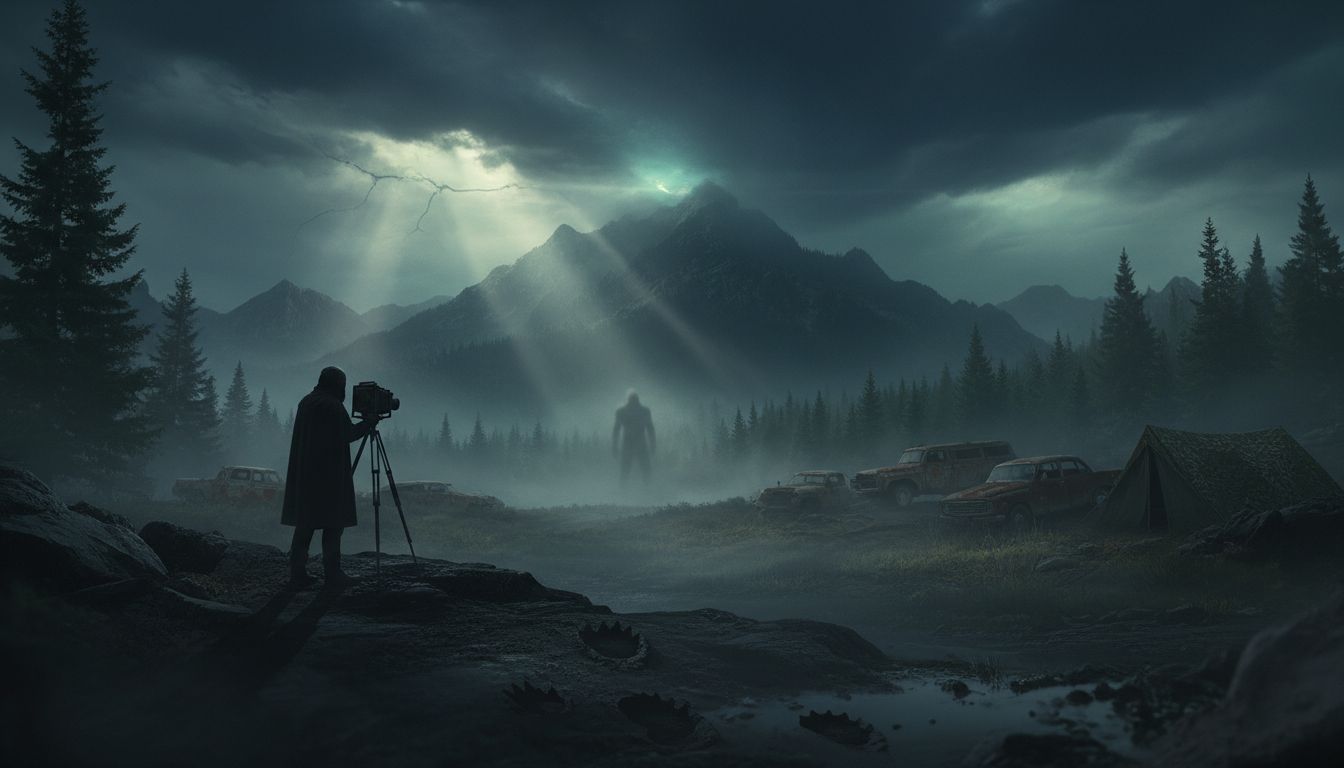
For more than a century, reports of an ape‑like creature known as Bigfoot or sasquatch have circulated across the forests of the United States and Canada. Researchers and hobbyists have catalogued thousands of eyewitness testimonies, footprint casts, and low‑resolution photographs, while federal agencies have issued no official confirmation of the animal’s existence. In recent years, a subset of investigators has shifted focus from the creature itself to the alleged government suppression of evidence. The claim is that officials from the U.S. Forest Service, the National Park Service, and even the Department of the Interior have intercepted or classified material that could substantiate the phenomenon.
Reported Evidence and Suppression Claims
The most frequently cited material includes hair samples, bone fragments, and alleged video footage. A whistle‑blower cited in a 2025 article on mysticsciences.com claims a Department of the Interior contractor filmed a “wounded Bigfoot” after a California wildfire in the 1980s, only for the tape to disappear after being seized by federal authorities. Similar anecdotes describe park rangers removing “large, unidentified carcasses” from burn sites and labeling them as bear remains, or “men in suits” confiscating footprint casts and audio recordings from hikers. Proponents of the cover‑up theory argue that the absence of public records—despite multiple Freedom of Information Act (FOIA) requests—suggests intentional concealment.
Agency Policies and “Quiet Zones”
National Park Service officials have publicly acknowledged that sightings of unidentifiable wildlife are often logged under generic categories such as “unknown animal activity” or “human disturbance.” A former park ranger, speaking on condition of anonymity, said, “We’re instructed to avoid language that could cause panic or affect tourism; that means we don’t label anything as a cryptid in official incident reports.” Critics contend that such policies are standard wildlife‑management practice and do not constitute a covert “quiet zone.” However, the lack of a centralized database for cryptid reports does make it difficult for independent researchers to verify the frequency or credibility of sightings.
Academic and Scientific Response
University scientists who have examined alleged Bigfoot material report mixed experiences. Dr. Elena Morales, a primatologist at the University of Washington, told our newsroom, “When a graduate student presented a hair sample that didn’t match any known species, the department advised caution but did not forbid publication.” Conversely, some researchers claim they faced subtle pressure to discontinue work that could be perceived as fringe, fearing damage to grant prospects. The scientific community generally emphasizes the need for peer‑reviewed, reproducible evidence before accepting extraordinary claims, a standard that many Bigfoot proponents argue is being selectively applied.
Skepticism and the Path Forward
Skeptics point out that the majority of “cover‑up” narratives lack verifiable documentation and rely on anecdotal recollections. Dr. James Patel, a wildlife biologist with the U.S. Fish and Wildlife Service, noted, “Agencies cannot record a species that has never been physically verified in our official databases. The absence of records is therefore expected, not suspicious.” Nonetheless, the persistent demand for transparency has led to a handful of successful FOIA releases, including internal memos that discuss public‑relations concerns about cryptid rumors in heavily visited parks. As the debate continues, journalists and investigators alike are calling for a systematic, government‑backed review of any physical specimens that surface, to determine whether the legend is rooted in undiscovered biology or cultural myth.