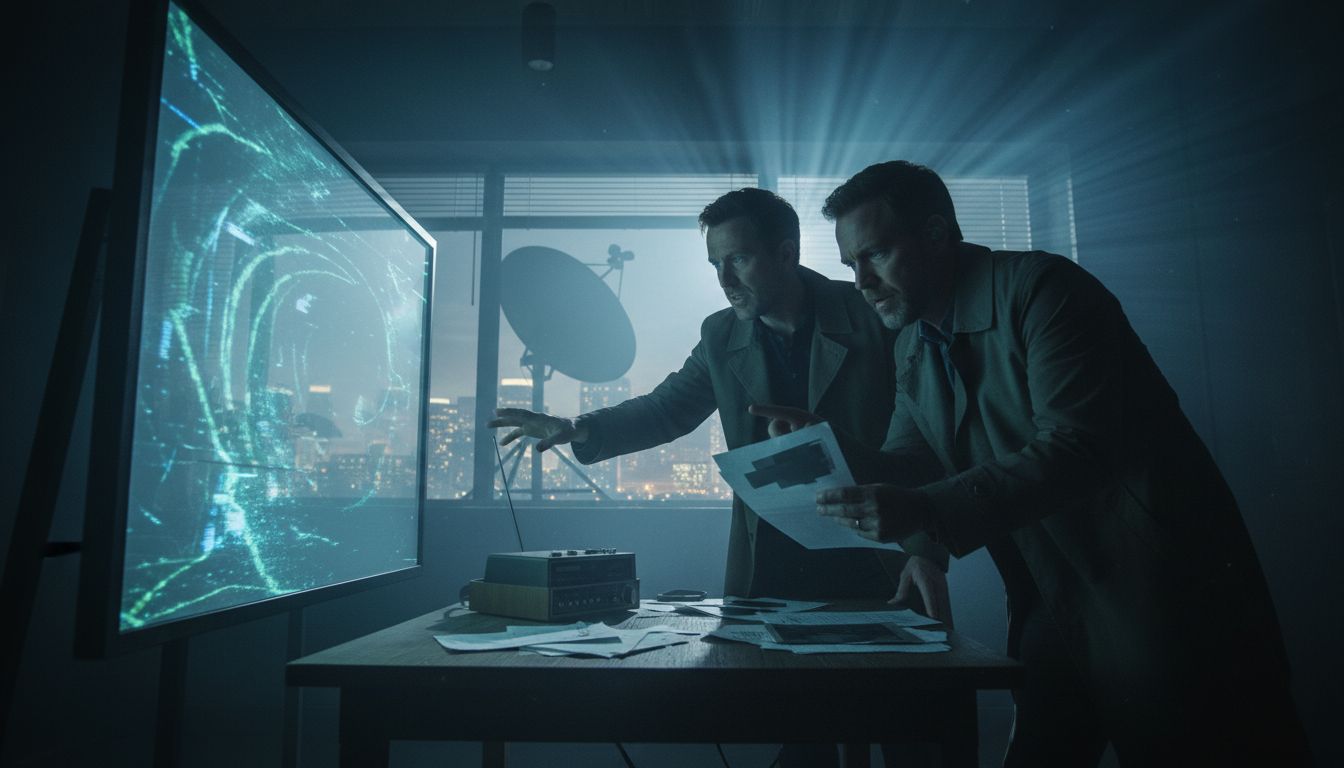
Investigators Jeremy Corbell and veteran journalist George Knapp convened for a joint interview on October 27 to assess why the United States’ long‑promised “UFO disclosure” appears stalled. Both men, who have spent years tracking unidentified aerial phenomena (UAP) through government filings, media reports and whistle‑blower testimony, argue that the slowdown is not a lack of evidence but a deliberate effort by intelligence agencies to control the narrative. “What we’re seeing is a coordinated tightening of the information pipeline,” Corbell said, referring to recent classified briefings that have been restricted to a small circle of senior officials. Knapp added, “The Pentagon’s 2023 UAP report opened a door, but the next step—public accountability—has been quietly shut.”
The pair point to a series of internal memos and testimony from former intelligence officers that suggest the Department of Defense and the Office of the Director of National Intelligence have been instructed to “manage” UAP data to avoid public panic and protect technological secrets. According to a document obtained by Knapp’s investigative team, a 2024 directive from the National Security Council warned that “unvetted public release could compromise national security assets.” Corbell argues that such directives effectively mute credible researchers, forcing them to rely on “back‑channel” sources that lack the transparency required for rigorous analysis.
Amid this climate, the investigators stress the importance of distinguishing verified evidence from the flood of speculation that dominates social‑media platforms. “You can’t separate the signal from the noise without a disciplined approach,” Corbell said, citing the proliferation of viral videos that often lack provenance. Knapp echoed the sentiment, noting that the “UFO subreddit” and TikTok trends have turned a serious security issue into a meme, which in turn fuels public cynicism and gives policymakers an excuse to defer further action. Both men called for a renewed emphasis on peer‑reviewed research, archival declassification, and congressional oversight that is insulated from intelligence‑agency gatekeeping.
The concerns raised by Corbell and Knapp come at a moment when congressional interest in UAPs is resurging. In May 2025, the Senate Intelligence Committee approved a bipartisan bill to establish a permanent UAP oversight board, modeled after the 2021 Office of the Director of National Intelligence’s UAP Task Force. However, critics argue that the bill’s language still permits “classified briefings only” and does not guarantee public access to findings. Former Pentagon spokesperson John Rogers, who briefed lawmakers earlier this year, warned that “premature disclosure could jeopardize ongoing investigations into foreign surveillance technologies.” This official stance underscores the tension between national‑security arguments and the growing public demand for transparency.
Ultimately, Corbell and Knapp conclude that the path forward hinges on rebuilding trust between the government, the research community, and the public. They propose a multi‑step framework: first, an independent audit of all UAP-related data held by the Department of Defense; second, a public release of redacted reports that meet established scientific standards; and third, a sustained media partnership that prioritizes factual reporting over sensationalism. “If we let hype dictate the conversation, we lose the chance to learn what these phenomena really are—and why they matter,” Knapp said. As the debate moves from fringe forums to the halls of Congress, the investigators hope that a disciplined, evidence‑based approach will finally break the silence that has shrouded the UAP issue for decades.


