Overview
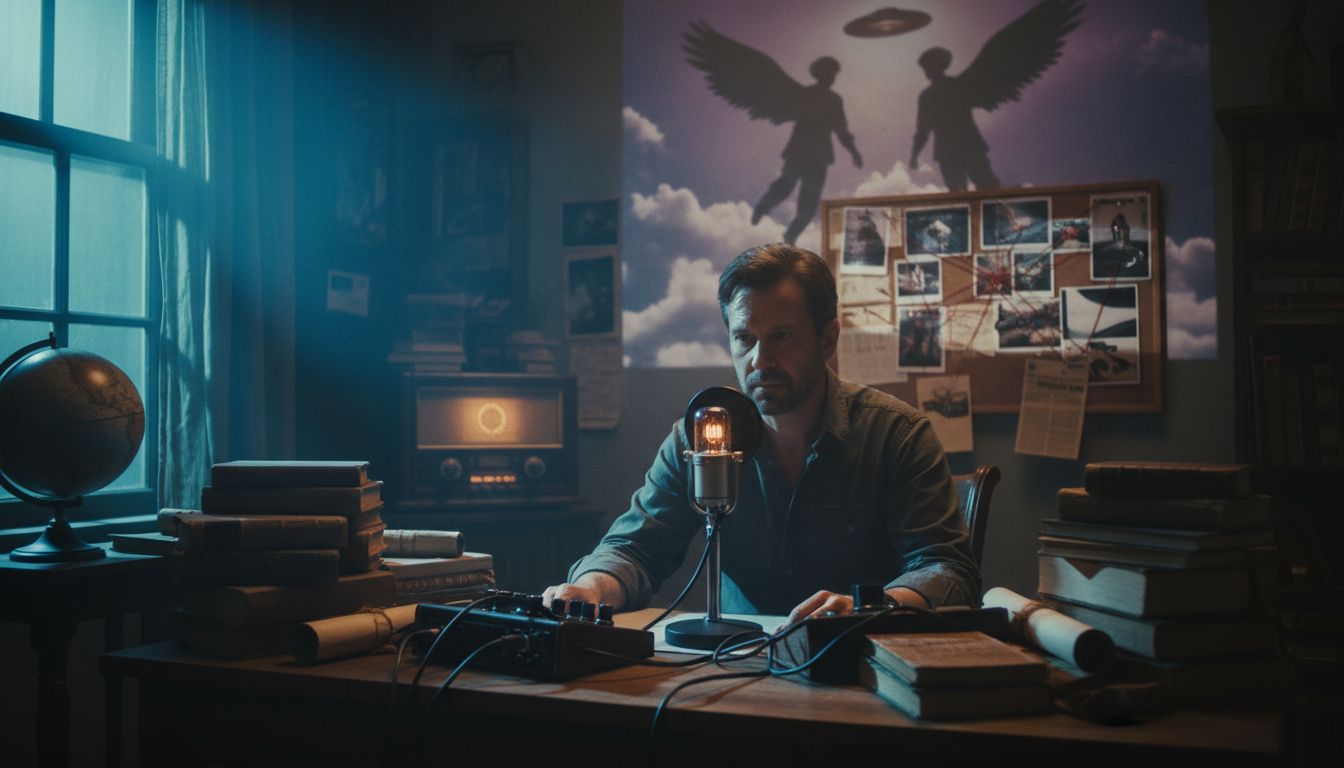
On May 5 2026, the Breakers with Mike Signorelli podcast released an episode titled “IT’S NOT ALIENS: The Secret Truth Governments are Soft‑Disclosing.” Hosted by veteran UFO researcher Mike Signorelli and featuring guests Joseph Z, Alan DiDio and Josh Hamstra, the program argues that the emerging wave of official “UFO disclosure” is not about extraterrestrials but about a broader spiritual deception. The discussion frames recent government references to “non‑human intelligence” as part of a strategic effort to normalize encounters that, according to the hosts, align more closely with biblical descriptions of demons, Nephilim, or interdimensional beings than with alien life from other planets. The episode, available through the Charisma Podcast Network (https://www.charismapodcastnetwork.com/show/the-breakers-with-mike-signorelli/its-not-aliens), positions the conversation at the intersection of national security, theology, and public perception.
Government Soft‑Disclosure
In the past two years, U.S. and allied agencies have begun releasing declassified files on Unidentified Aerial Phenomena (UAP), a shift that analysts describe as “soft‑disclosure.” Official statements now reference “non‑human intelligence” without specifying whether the source is biological, mechanical, or otherwise. Signorelli’s team interprets this language as a deliberate move to broaden the definition of what the public might encounter, thereby easing the path for later policy or cultural changes. “The language is intentionally vague,” Alan DiDio said on the show, noting that the term allows governments to discuss phenomena that fall outside conventional scientific categories while avoiding the politically charged label of “aliens.” Critics of the soft‑disclosure approach caution that the lack of concrete evidence leaves room for speculation and may undermine public trust in official communications.
Biblical Interpretation of UFO Phenomena
The podcast’s central claim is that the phenomena described in modern UFO reports have precedents in scripture. Joseph Z referenced Genesis 6, where “the sons of God” co‑habited with human women, producing the Nephilim—a term some scholars associate with giants or hybrid beings. The hosts also draw parallels between contemporary “interdimensional” sightings and biblical accounts of demonic activity, arguing that the “non‑human intelligence” language echoes ancient warnings about spiritual deception. While the episode does not present empirical data to substantiate a supernatural explanation, it emphasizes that a biblical worldview provides a framework for discerning truth amid a flood of unverified information. “If the Church does not define this moment, culture will—and many will be misled,” Signorelli warned, urging believers to apply prophetic discernment.
Implications and Reception
The episode has resonated with a segment of the Christian community that views the UFO surge as a potential end‑times sign, as reflected in the show’s promotion of related ministries and prophetic training programs. At the same time, mainstream UFO researchers and scientists remain skeptical of the spiritual interpretation, noting that most UAP sightings lack the corroborating evidence needed to support either extraterrestrial or supernatural origins. Independent analyst Dr. Elena Morales, a senior fellow at the Center for Aerospace Studies, remarked that “government references to ‘non‑human intelligence’ are primarily a diplomatic tool to acknowledge unknowns without committing to a specific ontology.” As public interest in UAPs continues to grow, the debate highlighted by Signorelli’s podcast underscores a broader challenge: balancing transparent disclosure with rigorous, evidence‑based analysis while navigating competing cultural narratives.
Bottom line: The May 5 episode of The Breakers presents a theologically driven critique of current government UAP disclosures, suggesting that the phenomena may be better understood as spiritual rather than extraterrestrial. While the podcast offers a coherent biblical framework, its conclusions remain contested within both the scientific community and among secular observers, illustrating the complex interplay between faith, policy, and the quest for truth in the era of UFO disclosure.


