UFOs—now more commonly called unidentified anomalous phenomena (UAP)—have moved from fringe curiosity to a subject of serious governmental and scientific scrutiny. In the past year, senior officials from the Pentagon, members of Congress, and leaders of intelligence agencies have testified publicly about unexplained aerial observations, while NASA convened an independent study team that produced a detailed roadmap for future research. The team’s final report, released earlier this year, concluded that no current evidence points to extraterrestrial origins, yet the same briefing highlighted persistent public demand for answers about possible alien technology and alleged cover‑ups. Media coverage has mirrored this shift, with major outlets such as The New York Times and the Washington Post dedicating regular columns to the topic, and public opinion polls showing that a growing share of Americans consider the possibility of extraterrestrial visitation plausible.
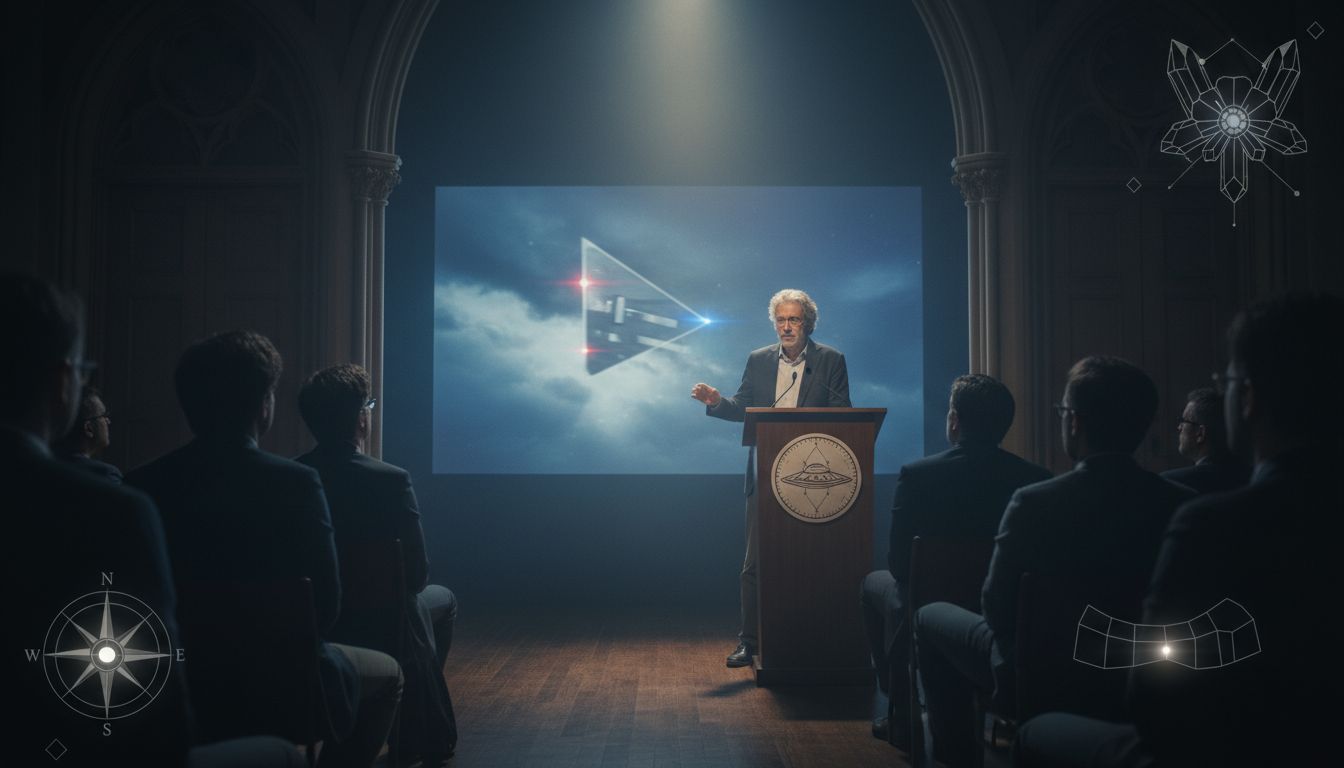
Against this backdrop, Dr. Christian Peters, a sociologist specializing in science and technology studies, addressed the Sol Foundation Symposium on October 28, 2025, urging the academic community to bring social‑science expertise to the UAP debate. “The phenomenon is as much a social fact as it is a physical one,” Peters told the assembled audience of researchers, policymakers, and defense officials. He argued that without systematic study of how information about UAP is produced, disseminated, and received, any attempt to balance national security with public transparency will be incomplete. His remarks echoed a broader call within the scientific community for interdisciplinary collaboration that moves beyond the traditional focus on instrumentation and data collection.
Peters identified three interlocking issues that demand immediate attention: intelligence, trust, and research ethics. The intelligence dimension concerns the classification of UAP reports, the reliability of sensor data, and the protocols governing inter‑agency sharing of information. “When data are locked behind security clearances, we create a vacuum that fuels speculation,” he noted, emphasizing that the credibility of any governmental assessment hinges on transparent validation processes. Trust, meanwhile, reflects the public’s perception of whether authorities are withholding or manipulating information. Recent Freedom of Information Act requests and whistle‑blower testimonies have heightened skepticism, prompting calls for mechanisms that can rebuild confidence without compromising legitimate security concerns. Finally, research ethics encompass questions about informed consent for participants in sighting investigations, the potential stigmatization of witnesses, and the responsible handling of sensitive material that could have geopolitical ramifications.
Social scientists are uniquely equipped to address these challenges. Decades of research into human‑technological systems, risk perception, and collective behavior provide methodological tools—such as survey design, discourse analysis, and experimental simulations—that can map how UAP narratives evolve across media ecosystems. Studies of public attitudes toward UFOs, for example, have revealed that belief in extraterrestrials correlates with broader trust in institutions and exposure to certain information channels. By applying these insights, scholars can advise policymakers on communication strategies that mitigate misinformation while respecting classified constraints. Moreover, ethical frameworks developed in fields like medical research and human subjects protection can be adapted to ensure that individuals reporting sightings are treated with dignity and that their data are used responsibly.
The implications for democratic societies are profound. As legislators draft bills to strengthen the UAP Office within the Office of the Director of National Intelligence, they are confronted with the need to codify oversight mechanisms that are both effective and publicly accountable. Peters cautioned that “a purely technical response will miss the relational dynamics that shape public opinion and, ultimately, policy outcomes.” He advocated for the creation of interdisciplinary advisory panels that include sociologists, anthropologists, and communication scholars alongside engineers and intelligence analysts. Such panels could evaluate disclosure protocols, assess the impact of declassification on national security, and recommend best practices for engaging with civilian researchers and citizen‑science initiatives.
In the months ahead, the conversation is likely to move from anecdote to evidence‑based analysis, provided that the social dimensions of the UAP phenomenon receive the same rigor as the physical investigations. The Sol Foundation Symposium’s emphasis on social science underscores a growing consensus: understanding how societies interpret, react to, and govern unexplained aerial events is essential for crafting policies that protect both security interests and democratic transparency. If researchers heed Peters’s call, the next phase of UAP inquiry could become a model for how complex, contested scientific issues are navigated in the public sphere.


