Overview
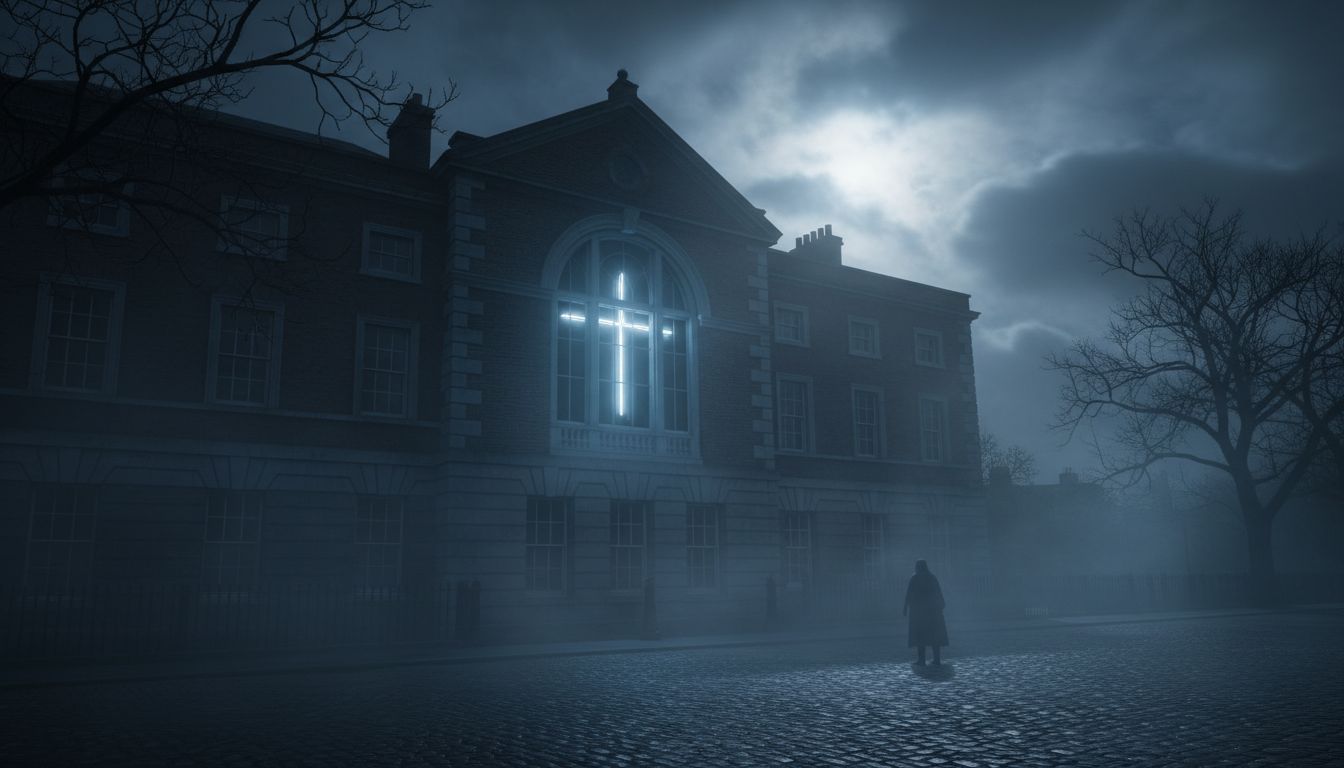
A faint, luminous cross is said to appear in a window of Iveagh House on Holy Thursday each year, a phenomenon linked to a 19th‑century legend about a dying Catholic maid. The story, which has circulated in Dublin folklore for generations, blends the city’s religious history with the storied past of the former Guinness family residence, now the headquarters of Ireland’s Department of Foreign Affairs. While no scientific evidence confirms the apparition, the tale continues to attract curiosity from locals, historians, and paranormal investigators alike.
Historical background
Built in 1736, Ivevey House originally comprised two separate Georgian townhouses that were merged in 1862 by Benjamin Guinness, grandson of Arthur Guinness, to create a single, grand residence for the brewing dynasty. The mansion’s white façade overlooks St. Stephen’s Green, one of Dublin’s most prominent public parks. In 1939 the Irish government acquired the property, and it has since served as the Department of Foreign Affairs. Architectural records confirm extensive renovations over the centuries, including window replacements in the early 2000s, yet the building’s external appearance has remained largely unchanged.
The legend of the dying servant
According to the oral tradition recorded by the online portal Moon Mausoleum, a young maid employed by the Guinness household fell gravely ill in the upper rooms. As a devout Catholic, she reportedly begged for a priest to administer the last rites. The Guinness family, identified in the legend as staunch Protestants, allegedly denied her request. The story continues that the maid’s rosary was torn from her hands and thrown from the same window onto the garden below, after which she died. The narrative positions the maid’s unfulfilled faith as the catalyst for the recurring cross that allegedly materializes each Holy Thursday.
Contemporary observations
Former staff members and occasional visitors have recounted a subtle “unease” in the upper chambers of Ivevey House, especially during the week leading up to Easter. Seán O’Leary, a retired senior civil servant who worked in the building during the 1990s, told the Irish Times, “We would sometimes hear a soft rustling, and on Holy Thursday a faint outline seemed to linger on the glass. It never stayed long enough for anyone to photograph, but the feeling was unmistakable.” Paranormal researcher Dr. Fiona McDermott of the University of Dublin’s Folklore Department notes, “Such recurring visual phenomena are common in sites where collective memory ties a specific religious symbol to a tragic event. Whether the cross is a psychogenic visual effect or a cultural imprint is still debated.”
Perspectives and context
Scholars caution against treating the story as historical fact. Professor Eoin Gallagher, a historian specializing in 19th‑century Irish domestic life, explains, “There is no archival record of a servant’s death under those circumstances at Ivevey House. The legend likely emerged in the early 20th century, reflecting broader Catholic‑Protestant tensions in Ireland and the symbolic power of the crucifix during Holy Week.” The Department of Foreign Affairs, which now occupies the building, issued a brief statement acknowledging the folklore: “Ivevey House is a site of national heritage. While we respect local traditions, we have no official position on paranormal claims.”
The enduring narrative of the cross in the window illustrates how architecture, family legacy, and religious memory intertwine in Dublin’s cultural landscape. Whether the phenomenon is a genuine visual anomaly, a product of collective belief, or simply an evocative story, it continues to shape the public’s imagination of a house that once housed one of Ireland’s most famous families and now serves the nation’s diplomatic mission.