Overview
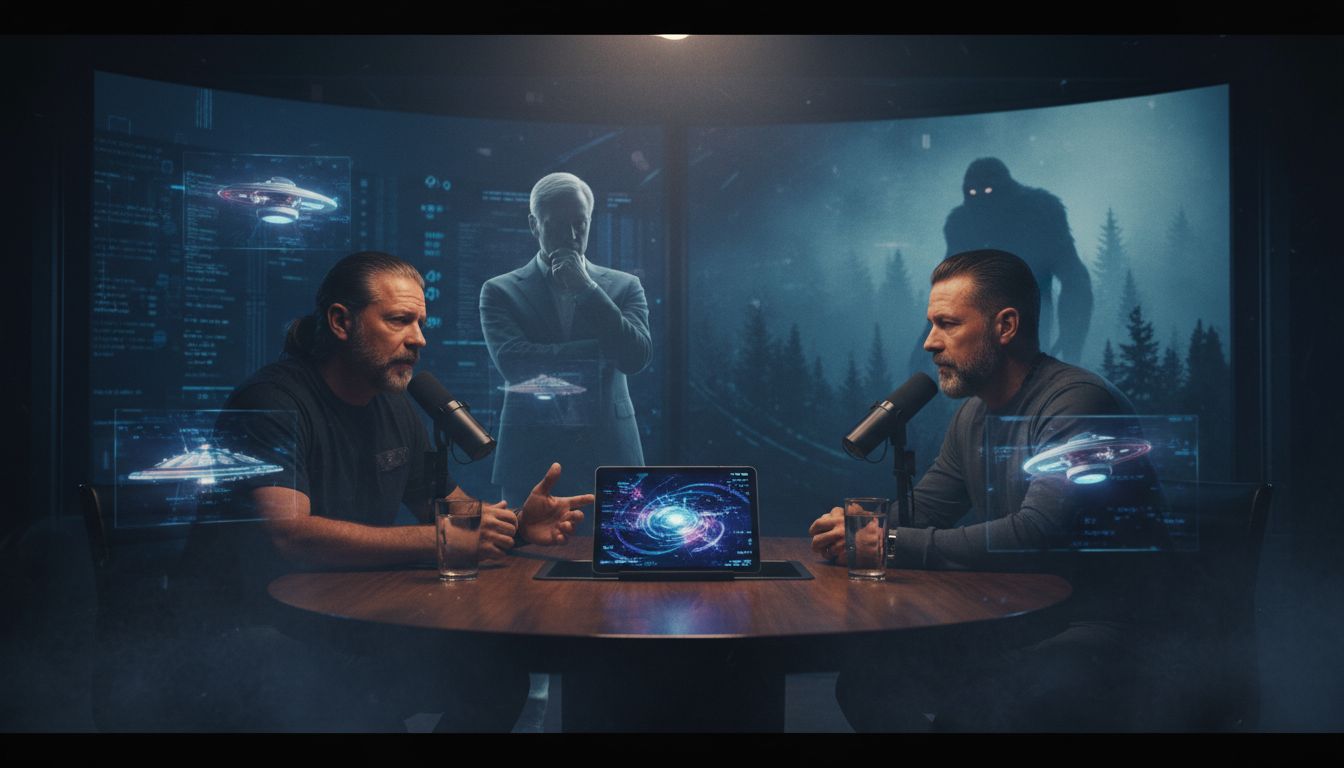
In the latest episode of The Joe Rogan Experience, host Joe Rogan sat down with former Navy SEAL and author Andy Stumpf to promote Stumpf’s new book, Drownproof and to discuss a range of topics that bridge military experience, emerging technology, and controversial scientific claims. While the conversation drifted into the long‑standing debate over UFO disclosure—referencing physicist Hal Puthoff’s role in weighing the pros and cons of releasing classified information—the bulk of the interview focused on recent operational losses, cutting‑edge surveillance tools, and health issues that have captured public attention. Throughout, both men maintained a skeptical stance toward institutional narratives, emphasizing the need for transparent evidence.
Military Realities
Stumpf provided a firsthand account of the physical and psychological demands placed on elite operators. He described the rigorous training standards that, while hazardous, are deemed essential for survival in high‑risk combat scenarios. The discussion turned to a tragic incident in January 2024, when two SEALs drowned during a boarding operation in the Arabian Sea, underscoring the persistent dangers of maritime missions. Stumpf also highlighted a lesser‑known injury risk: the “backblast” from the Carl‑Gustaf recoilless rifle can cause internal trauma, including separation of lung linings, a reminder that modern weaponry carries hidden hazards.
Technological Advances and Surveillance
The pair examined several emerging technologies that could reshape both warfare and civilian life. Rogan cited “Gravity Industries” jet suits, noting their potential for rapid personnel movement, while also mentioning a purported CIA tool called “Ghost Murmur” that allegedly detects human heartbeats through walls at a distance. Although the existence of such a device has not been independently verified, Rogan framed it as an example of the expanding reach of surveillance capabilities. The conversation also ventured into quantum computing, where Rogan referenced a Google research blog suggesting that quantum chips might achieve unprecedented speeds by exploiting the Many‑Worlds Interpretation of quantum mechanics—a claim that remains theoretical and subject to ongoing peer review.
Health, Controversial Claims, and UFO Disclosure
Health topics dominated a sizable portion of the dialogue. The hosts discussed Alpha‑gal syndrome, a tick‑borne allergy to red meat that recently affected Black Rifle Coffee CEO Evan Hafer, illustrating how emerging zoonotic diseases can impact individuals across sectors. Rogan revisited the hypothesis linking high rates of Lyme disease on the U.S. East Coast to past biological research at Plum Island, a theory that lacks conclusive evidence but continues to fuel public debate. The conversation also touched on vaccine skepticism, with Rogan mentioning unverified concerns about “turbo cancers” linked to mRNA technology—a claim that the scientific community has not substantiated.
When the conversation shifted to UFO disclosure, Rogan asked Stumpf whether a genuine choice still exists for the government to release classified aerial phenomena data. Stumpf referenced Hal Puthoff’s involvement in advisory panels that weigh the national security implications of disclosure, noting that the decision hinges on balancing transparency with potential geopolitical fallout. Both guests agreed that, without clear, de‑classified evidence, public speculation will likely continue to outpace factual understanding.
Historical Context and Closing Thoughts
Rogan and Stumpf also explored the intersection of myth and anthropology, citing the “Kandahar Giant”—a soldier‑reported 12‑foot humanoid—as an urban legend that, while unverified, reflects enduring human fascination with unknown beings. Stumpf offered a measured perspective, reminding listeners that extinct species such as Gigantopithecus once roamed the Earth, providing a scientific anchor for discussions about large primates in prehistoric times. The episode concluded with a broader critique of institutional accountability, from the Pentagon’s ongoing audit failures to perceived “rackets” within the funeral and pharmaceutical industries. While the conversation covered a wide array of subjects, its central thread remained a call


