Overview
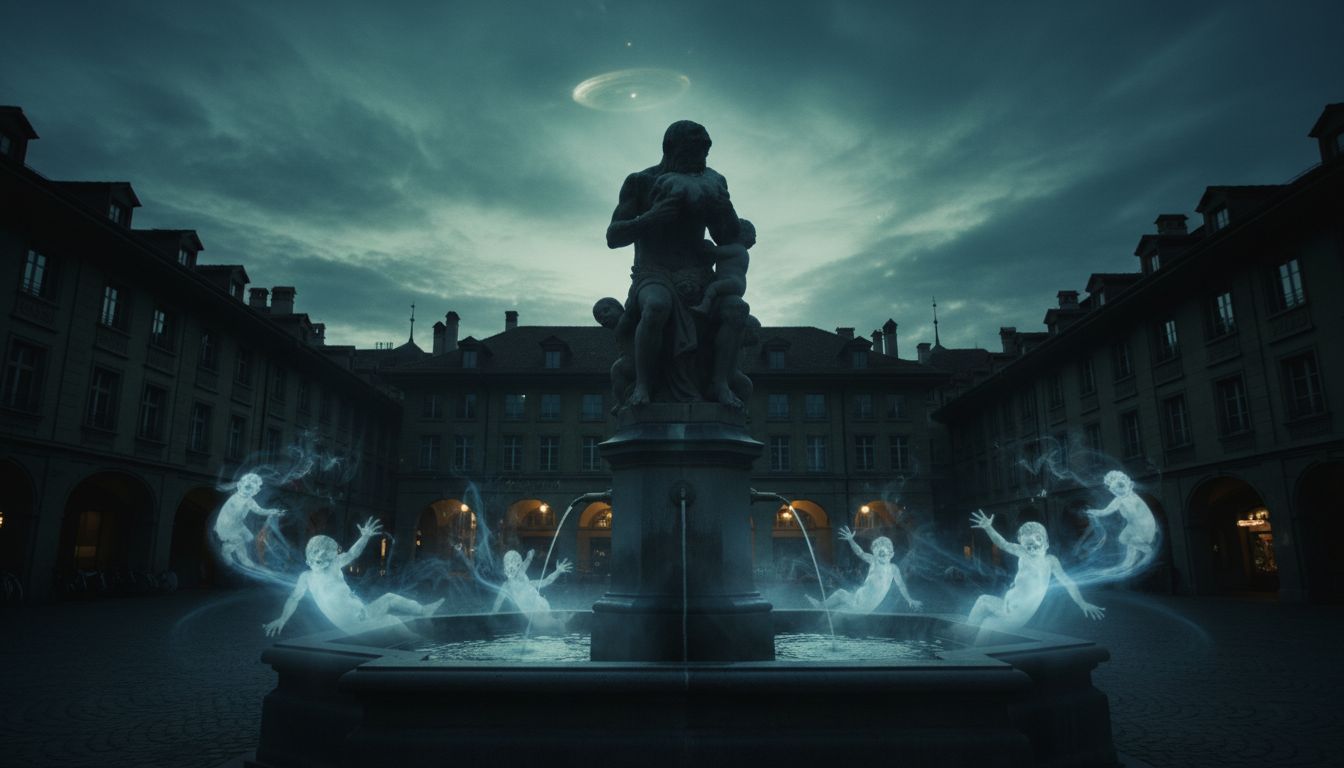
In Bern’s bustling Old Town, the Kindlifresserbrunnen—literally “Child‑Eater Fountain”—continues to draw both tourists and scholars to Kornhausplatz. Sculpted in 1546 by Hans Gieng, the marble ogre clutching a sack of terrified infants has long been a subject of artistic and historical debate. In recent weeks, the fountain has reappeared in local media not for its baroque detail but for a persistent folk legend that claims the site is haunted by the spirits of abandoned children allegedly led through hidden underground tunnels beneath the square.
Historical Context
The fountain was commissioned during the Reformation era as a civic warning, though its exact symbolism remains contested. Some historians view it as a cautionary allegory against infanticide, while others link it to anti‑Jewish sentiment or to the myth of Kronos, the child‑devouring Titan. Architectural records confirm that the fountain has stood in its present location for more than four centuries, surviving Bern’s medieval walls and several urban renovations. “Gieng’s work reflects the moral anxieties of 16th‑century Bern,” notes Dr. Markus Keller, a professor of Swiss art history at the University of Bern, “but the precise intent was never formally documented.”
The Legend of the Underground Tunnels
According to long‑standing local folklore, the meadow that later became Kornhausplatz once lay between two monastic complexes—one male, one female. A concealed passage allegedly linked the cloisters, and, as the story goes, it was also used to disappear unwanted infants. The narrative describes newborns, born in secrecy or shame, being placed into the darkness of the tunnel and never seen again. Over time, residents claim that the spirits of these children return as “mist‑like apparitions” that hover around the fountain at night. The legend is echoed in a 2025 caption by photographer Andrew Bossi, who described the area as “haunted,” a sentiment echoed on the Moon Mausoleum site that first circulated the tale.
Contemporary Perspectives and Investigation
City officials have neither confirmed nor denied the existence of such tunnels. Bern’s heritage department, led by cultural officer Claudia Meier, acknowledges the folklore but stresses a lack of archaeological evidence. “Extensive surveys of the Kornhausplatz substructure have not revealed any concealed passages dating to the medieval period,” Meier said in a recent interview. Nevertheless, local paranormal groups have organized night vigils at the fountain, reporting faint sounds and fleeting visual impressions that they attribute to the “ghosts of the discarded children.” Researchers caution that psychological suggestion and the fountain’s dramatic imagery can amplify perceived phenomena, a point highlighted by Dr. Lina Hofmann, a psychologist specializing in folklore and perception.
Balancing Myth and Memory
While the Kindlifresserbrunnen remains a striking example of Renaissance public art, the surrounding legend underscores Bern’s complex relationship with its past. The story of hidden tunnels and restless infants reflects broader historical anxieties about infanticide, secrecy, and social stigma—issues that, though centuries old, still resonate in contemporary discourse. As Bern prepares to unveil a new interpretive plaque at the fountain later this year, city planners aim to present both the artistic heritage and the folklore, allowing visitors to appreciate the statue’s historical significance while understanding the powerful narratives that have grown around it.