Overview
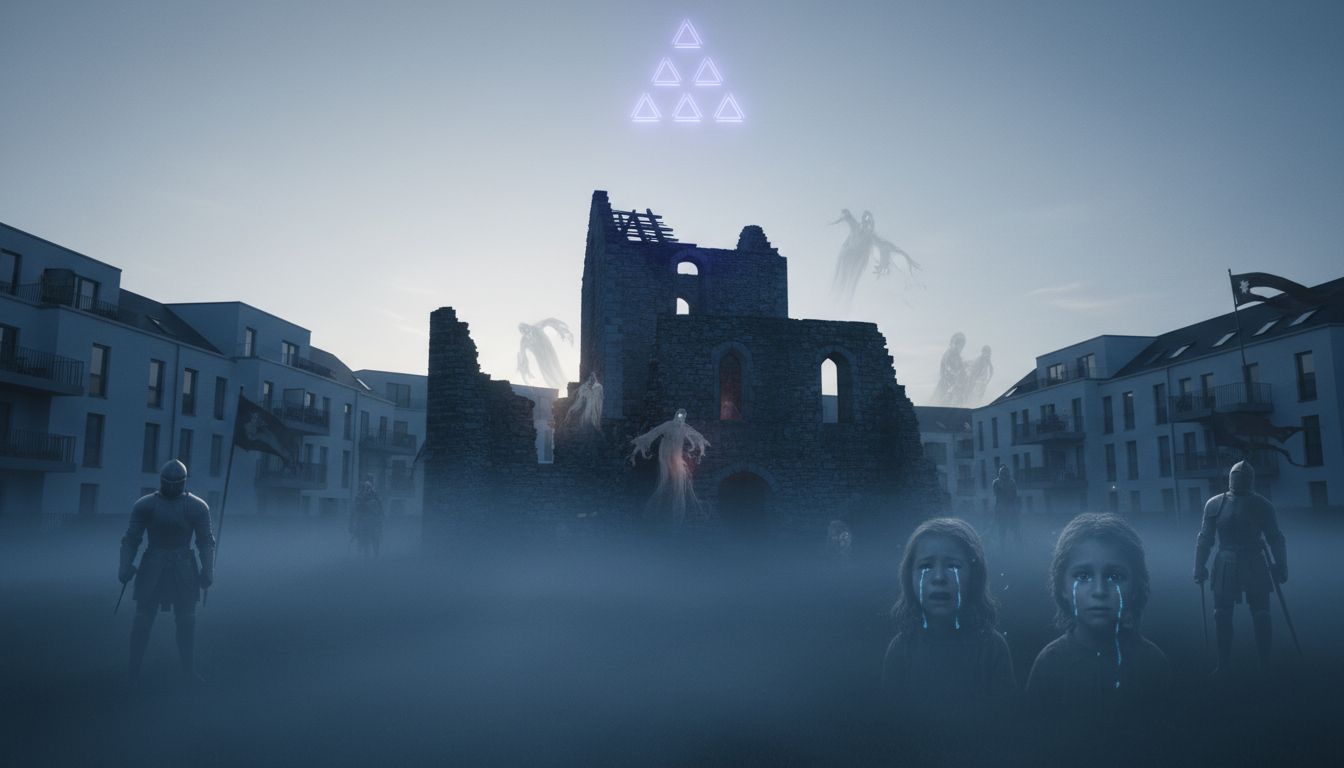
A cluster of modern apartments now occupies the former commandery grounds of St. Johann’s‑Vorstadt, a district that stretches along the Rhine in Basel, Switzerland. While the sleek façades are a recent addition, the site’s past as a medieval stronghold of the Knights Hospitaller continues to attract attention. Residents and visitors alike report sightings of an armored rider, the distant wail of children from ancient wells, and fleeting apparitions inside the remnants of the old Ritterhaus. Local historians note that these accounts are part of a broader tradition of Basel’s “ghost stories,” which have been catalogued in regional folklore guides for decades.
Historical Background
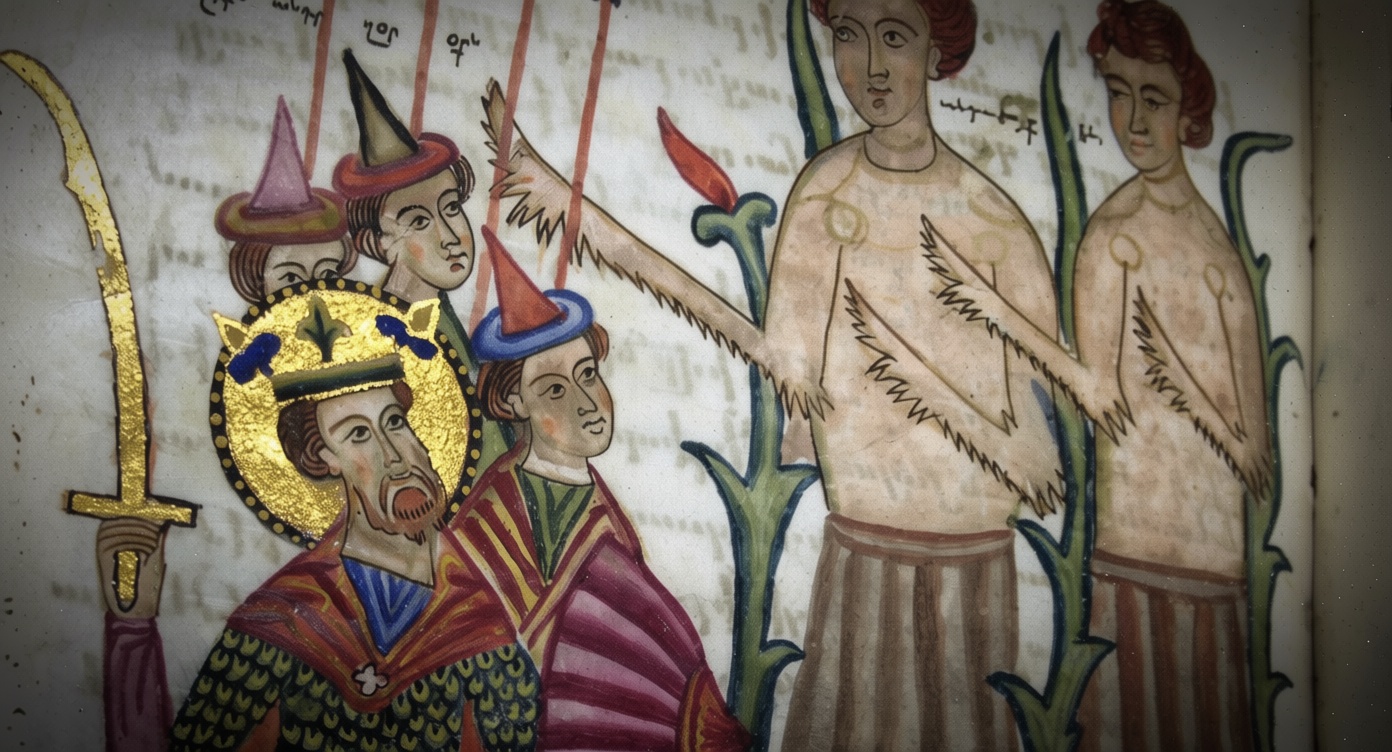
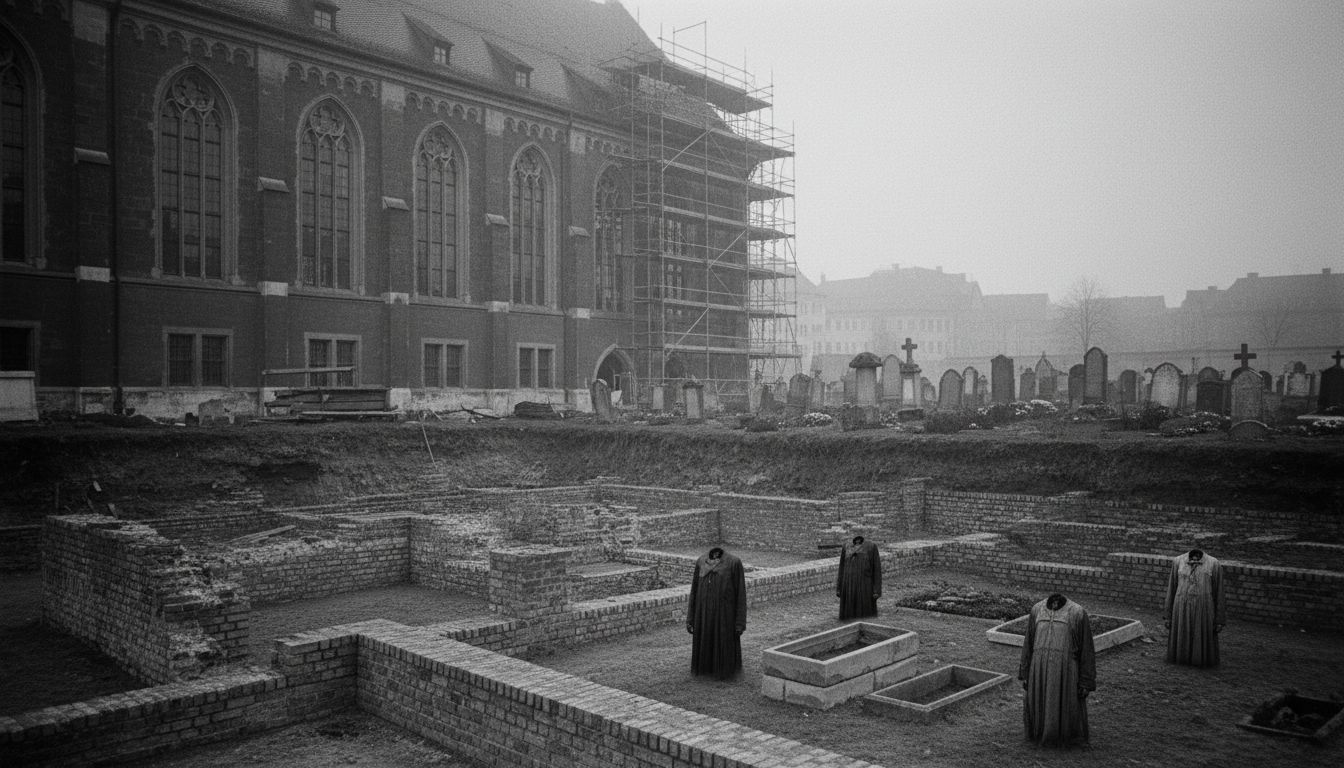
The Order of St. John, better known as the Knights Hospitaller, established a commandery in Basel in 1206, roughly three centuries after the First Crusade’s capture of Jerusalem. The complex—comprising a chapel, a churchyard, and the Ritterhaus (knight’s house)—stood about 300 metres northwest of Basel’s medieval walls, directly beside the river that has long defined the city’s trade and defense. The commandery served both religious and charitable functions, providing shelter for pilgrims and medical care for the sick. Over the centuries, the site evolved from a fortified monastic enclave into a bustling working‑class neighborhood, eventually giving way to the high‑rise apartments built in the early 2000s.
Contemporary Setting
Today, the address St. Johanns‑Vorstadt 84‑88 houses over a hundred residents, many of whom are unaware of the land’s crusader legacy. The area is also a focal point for Basel’s “haunted‑location tours,” which guide participants past the historic St. Johanns‑Tor—one of the city’s three surviving medieval gates—and the narrow alleys that once led to the commandery’s courtyard. Tour operators, such as Basel Ghost Walks, reference the “Armored Rider” legend in promotional material, emphasizing the blend of tangible history and intangible folklore that draws both tourists and paranormal enthusiasts.
Reported Phenomena
According to anecdotal reports collected by the Moon Mausoleum blog, witnesses describe a spectral knight in full plate armor, visor lowered, sword raised, riding silently through the courtyard at night. The rider’s phantom steed is said to produce no sound or hoofprints on the stone pavement. In addition, several residents have recounted hearing “the anguished cries of children” emanating from the old well shafts that once supplied water to the commandery. A handful of visitors claim to have seen fleeting silhouettes within the Ritterhaus, especially near the riverbank where the original structure’s foundations remain visible. While these accounts lack scientific verification, they are consistent with a pattern of “residual hauntings” documented in European medieval sites.
Cultural Impact
The persistence of these legends underscores Basel’s layered identity, where Celtic origins, medieval religiosity, and modern urban life intersect. Local cultural office spokesperson Lena Keller remarked, “Folklore like the armored rider adds a narrative depth to our heritage sites; it encourages people to explore history beyond the textbook.” Academic researcher Dr. Markus Vogel of the University of Basel’s Department of Medieval Studies cautions against sensationalism, noting that “such stories often arise from a community’s collective memory of traumatic or significant events, in this case the dissolution of the commandery and subsequent urban redevelopment.” Nonetheless, the hauntings have become a modest economic asset, boosting attendance at guided tours and prompting the city’s tourism board to feature the district in its “Mysteries of Basel” brochure.
Outlook
As Basel continues to balance preservation with development, the St. Johanns‑Vorstadt site illustrates how historical narratives can evolve into contemporary cultural phenomena. Whether the armored specter is a lingering echo of 13th‑century knights or a modern myth amplified by tourism, the stories serve as a reminder that the city’s past remains a living part of its present landscape. Researchers plan to conduct a systematic survey of resident experiences later this year, aiming to differentiate between folklore transmission and potential environmental factors that might explain the reported sounds and visual anomalies. Until then, the “Knightly Ghosts” of St. Johann’s‑Vorstadt will remain an intriguing footnote in Basel’s rich tapestry of history and legend.