Overview
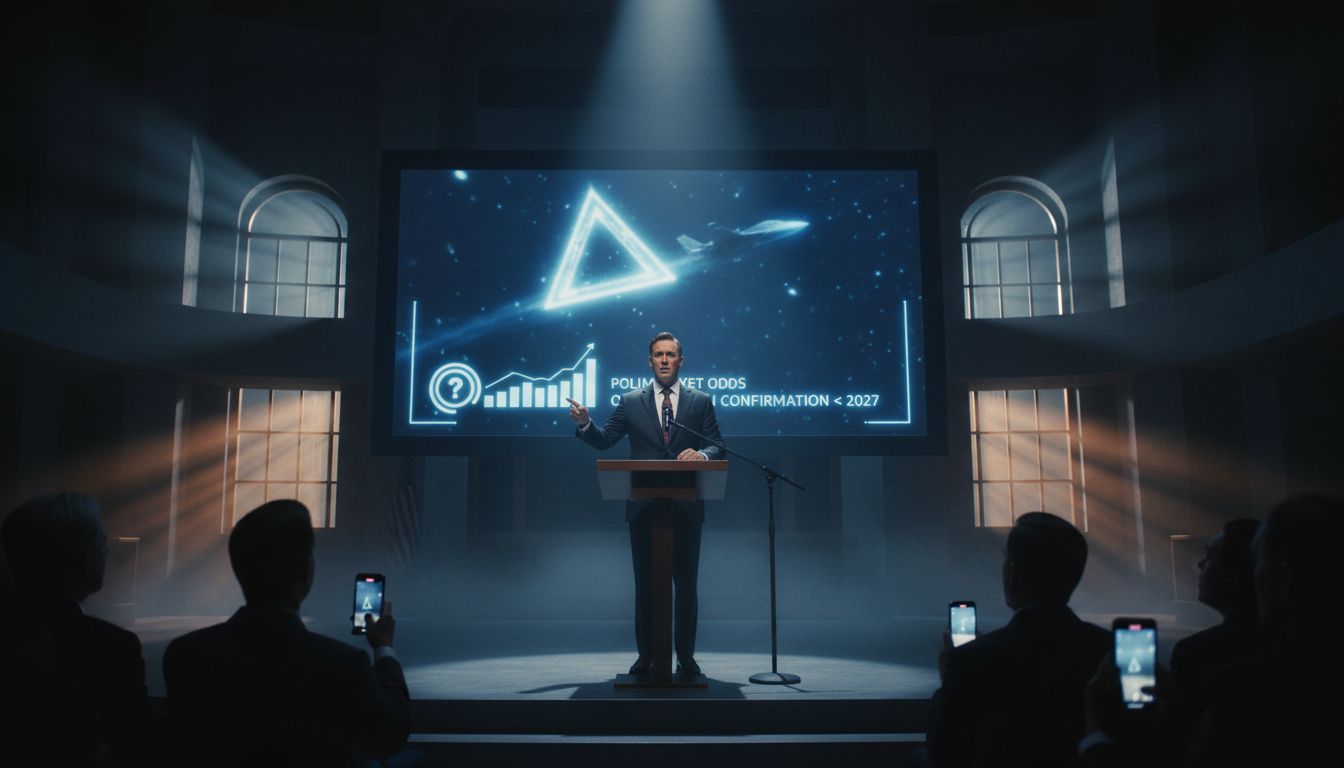
A recent statement by Republican Congressman Andy Ogles of Tennessee has reignited discussion in Washington and among UFO‑UAP researchers about the likelihood of an official U.S. government disclosure of extraterrestrial phenomena. Ogles told reporters that he has personally viewed “highly classified evidence” concerning unidentified aerial phenomena, a claim that has been echoed in social‑media posts and cited by market analysts tracking public expectations for a formal acknowledgment. While the congressman’s remarks do not constitute proof, they have contributed to a measurable shift in prediction‑market odds that a confirmation could occur before 2027.
Congressional Context
Congress has held a series of briefings on UAPs since 2020, culminating in the release of a classified Pentagon report in 2021 and an unclassified summary in 2022. In the most recent open hearing, held in March 2024, members of the Senate Intelligence Committee and the House Oversight Committee examined the status of ongoing investigations, emphasizing the need for transparency while protecting national‑security interests. Ogles’ admission—reported in a tweet that he “has seen evidence so classified that just knowing it exists makes you a target”—adds a personal dimension to the broader legislative effort. “I cannot discuss the specifics, but the material I have seen is compelling,” Ogles wrote, underscoring the tension between secrecy and the public’s right to know.
Market Indicators
Prediction platforms that aggregate public sentiment have begun to reflect the heightened interest. On Polymarket, a decentralized forecasting market, the contract betting on a U.S. government confirmation of alien life by the end of 2027 rose from 9% in early February to 21% as of this week—a 12‑percentage‑point increase. Analysts at the firm note that the surge aligns with “a confluence of political statements, leaked documents, and growing media coverage.” While such markets are not scientific evidence, they serve as barometers of collective belief and can influence investor behavior in sectors ranging from aerospace to defense technology.
Evidence and Verification
Despite the buzz, no concrete documentation has been released to substantiate Ogles’ claim. The congressman declined to provide details, citing security clearances and the risk of becoming a “target.” Independent experts caution against conflating personal testimony with verifiable data. Dr. James Michaels, a senior researcher at the National Institute for Aerospace Studies, remarked, “A single anecdotal account, even from a member of Congress, does not meet the evidentiary standards required for official acknowledgment.” He added that any declassification would likely involve a coordinated effort across multiple agencies, not a solitary disclosure.
Outlook and Implications
The convergence of congressional interest, public speculation, and market activity suggests that the topic of UAPs is moving further into mainstream discourse. If additional lawmakers corroborate Ogles’ remarks or if the intelligence community releases further findings, the pressure for an official statement could intensify before the 2027 benchmark that prediction markets have highlighted. However, analysts stress that geopolitical considerations—such as heightened tensions with rival powers and the safeguarding of advanced aerospace technologies—may continue to limit the scope of any public release. As the next congressional hearing on UAPs approaches in late 2024, observers will be watching for any new testimony that could either substantiate Ogles’ claim or reinforce the status quo of classified secrecy.


