Overview
In Indonesian and Malaysian folklore, few supernatural figures are as feared or as enduring as the Kuntilanak—known in Malaysia as the Pontianak. Described in the source material as a spirit caught between a vengeful ghost and a vampiric predator, she is said to haunt the living with both menace and grief. The legend is especially prominent in Java and Kalimantan, where stories place her among some of the region’s most unsettling ghost traditions. Her reputation rests on a grim origin story: she is believed to be the restless spirit of a woman who died during pregnancy or childbirth, left unable to complete the life cycle and move on.
Folklore, Appearance, and Haunting Signs
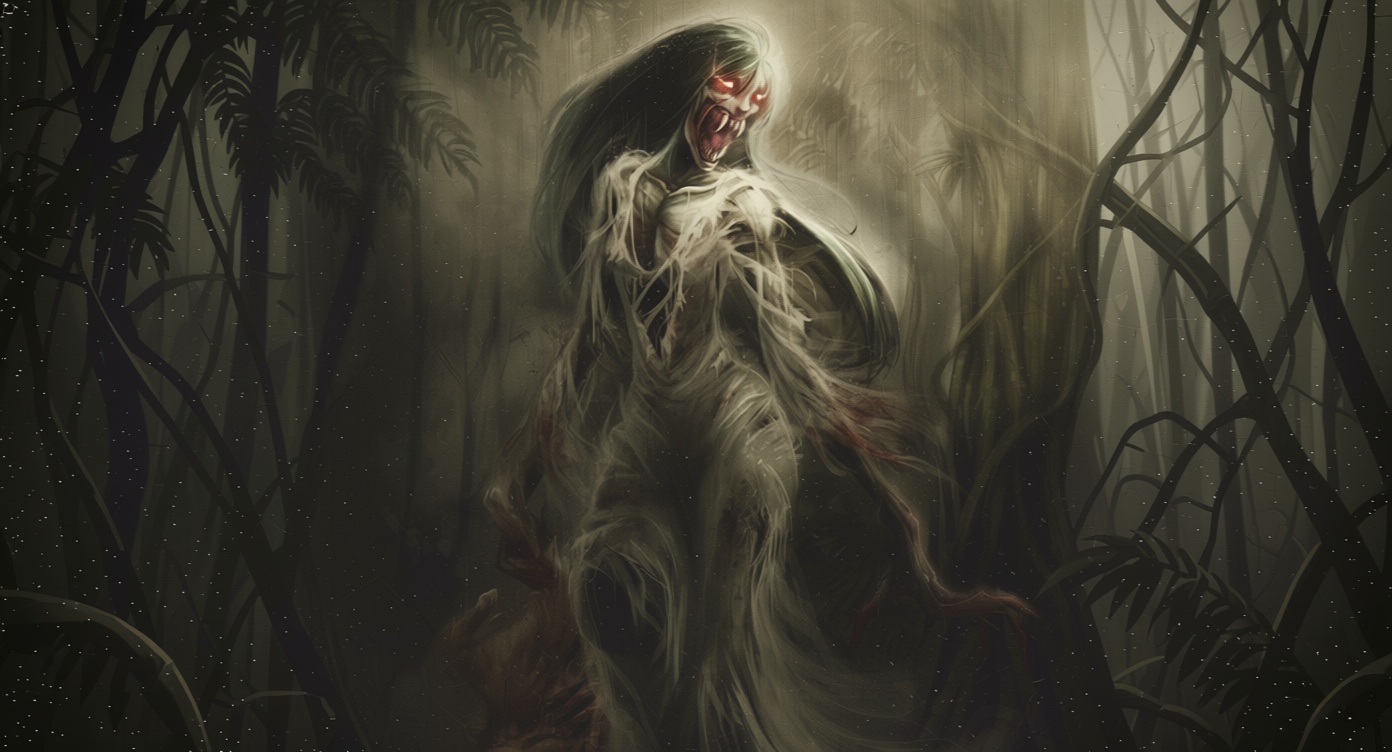
Across versions of the tale, the Kuntilanak is typically imagined as a long-haired woman in white, sometimes in a traditional kebaya or a funeral shroud, and often depicted in modern retellings with blood-stained clothing. Her presence is said to be announced by sensory clues rather than immediate sight: the sound of an infant crying, the scent of jasmine or frangipani, and then, in darker tellings, the smell of decay. These details make the figure especially effective as a folklore warning system, turning familiar sounds and scents into omens of danger. The article notes that some interpretations cast her as a spirit that lures men, blending revenge motifs with fears about vulnerability and predation at night.
A Ghost That Becomes a Predator
What distinguishes the Kuntilanak from many other “woman in white” legends is the way the figure shifts into something far more monstrous. In one common variation, she reveals a hollow back, connecting her to the Sundel bolong, another Indonesian ghost associated with an open cavity in the body. Other accounts describe her with sharp fangs, long fingernails, and a vampiric appetite, using those claws to tear into victims and feed on their blood and organs. Some versions even give her wings, allowing her to flee after an attack while making a distinctive “ke-ke-ke” sound. The result is a hybrid entity: part ghost, part vampire, and part nightmare creature, shaped by local beliefs but easily adapted into horror storytelling.
The Banana Tree Connection
One of the most distinctive features of the legend is its association with banana trees, which are described in the article as hollow at the center and therefore suitable as spiritual dwellings in Javanese and Malay belief. The Kuntilanak is said to hide in these hollows, emerging at night or when a person passes too close. This connection reflects a broader cultural idea that certain trees can serve as places where spirits reside, particularly in rural or forested environments. The article also notes that other plants, including the hibiscus, are sometimes linked to her presence, reinforcing the notion that the natural world is spiritually charged and requires caution.
Cultural Meaning and Enduring Appeal
Beyond its horror value, the Kuntilanak and Pontianak legend appears to function as a cautionary tale shaped by gender, morality, and social anxiety. The article suggests one interpretation in which the ghost was used to warn men against seeking out women at night, while another frames her as the embodiment of unresolved loss surrounding childbirth and death. Like many folk spirits, she persists because she is adaptable: she can appear as a grieving mother, a punitive avenger, or a nocturnal predator. That versatility has helped keep the legend alive in oral tradition and modern media alike, where the Kuntilanak remains one of Southeast Asia’s most recognizable and terrifying supernatural figures.