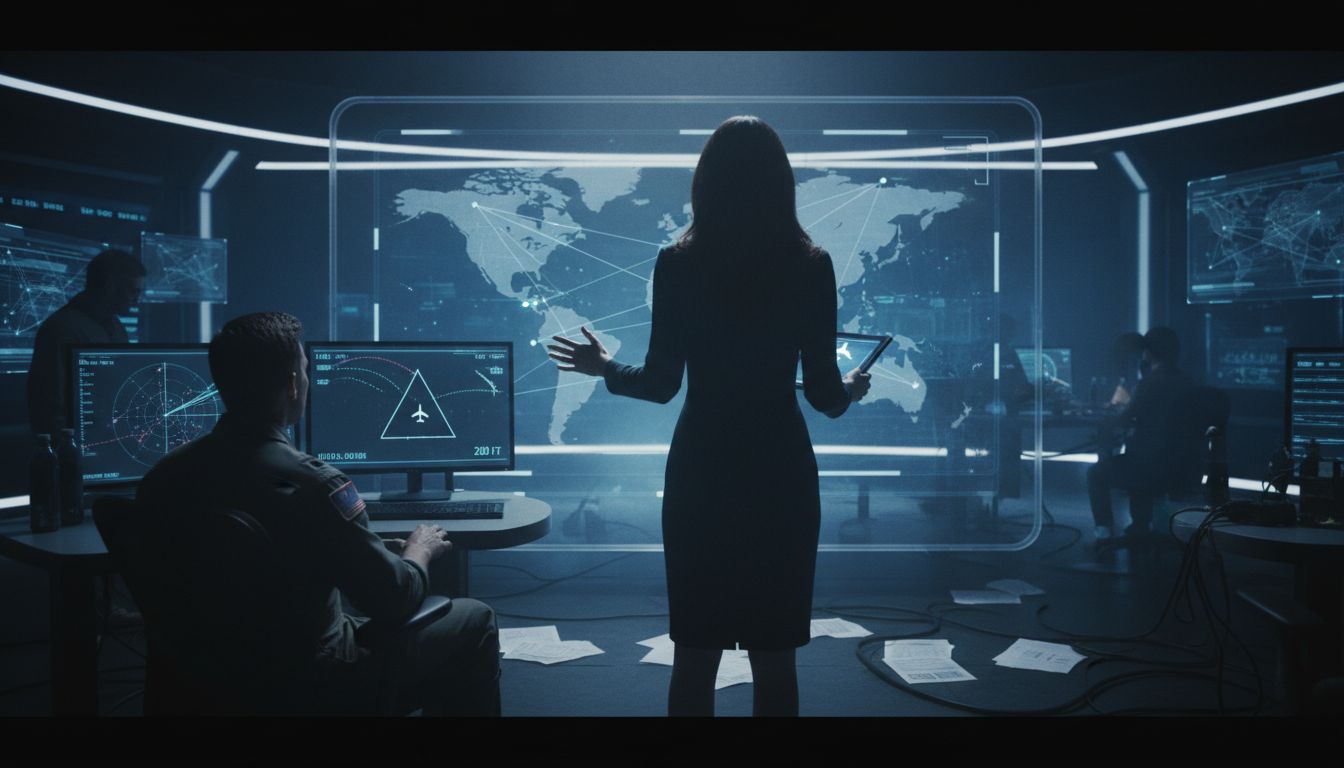
Overview
In a recent segment of UFO News, host Cristina Gomez detailed the escalating friction between the Pentagon’s All‑Domain Anomaly Resolution Office (AARO) and a coalition of independent researchers over who should collect, manage, and publish data on Unidentified Anomalous Phenomena (UAP). The discussion traced a series of events—from a discreet AARO workshop in August 2025 to a civilian‑led summit in February 2026—highlighting divergent philosophies on data ownership, transparency, and national security.
Pentagon’s Strategy
The AARO workshop, held on August 5‑6, 2025 in Washington, D.C., convened roughly 40 scientists and analysts from both government and private sectors under the auspices of the nonprofit Associated Universities, Inc. According to a DefenseScoop report and the office’s subsequent 17‑page white paper, the Pentagon’s agenda centered on standardizing reporting templates, integrating disparate datasets, and leveraging AI for pattern‑recognition across military and civilian observations. While the paper hinted that these findings could guide the deployment of new physical sensors, critics warned that such closed‑door meetings might enable the selective recording—or suppression—of evidence. Pentagon spokesperson Susan Gough later clarified that no additional workshops are planned, emphasizing that the current effort is “a pilot to assess feasibility, not a permanent program.”
Civilian Response and Technological Initiatives
Independent researchers, led by figures such as Reed Summers, argue that a government‑centric model threatens the credibility of UAP research. Speaking on NewsNation on March 17, 2026, Summers warned that “handing our data to the Department of Defense risks turning transparent science into classified speculation.” In response, the civilian community is constructing a decentralized, international detection network. Mitch Randall’s “Skywatch Project” proposes the installation of roughly 10,000 low‑cost rooftop sensor units across the United States, each priced at about $500, to capture anomalous accelerations and maneuvers. Simultaneously, Bob Maguire has developed acoustic sensors designed for coastal waters to detect UAP signatures that do not match known naval vessels. A new platform, UFOEvidence.co, slated for launch in early 2026, will host a publicly accessible case database with a structured scoring system to evaluate the reliability of witness testimony and physical evidence.
Safety and Reporting Concerns
Former Navy pilot Ryan Graves, now executive director of Americans for Safe Aerospace, highlighted a pressing safety issue raised at the February summit. Graves recounted an incident in which a commercial airliner was “buzzed” by a large black‑triangle UAP at approximately 28,000 feet, an encounter reported by a South African pilot. He asserted that such interceptions occur more often than the public realizes, yet pilots frequently remain silent due to the stigma that could jeopardize their careers. Graves called for a robust, protected reporting mechanism that shields aviators from retaliation while ensuring that critical safety data reaches both civilian analysts and defense officials.
Outlook and Ongoing Debate
Both the Pentagon and the civilian coalition acknowledge that fragmented, low‑quality data hampers progress in understanding UAP phenomena. However, they remain at odds over who controls the narrative. The AARO approach seeks a centralized, government‑run framework that could streamline analysis but raises concerns about transparency and data censorship. Conversely, the civilian network strives for an open, nonprofit structure that emphasizes independent verification and public accessibility. As the debate unfolds, key policymakers—including Rep. Eric Burlison—and prominent researchers such as Garry Nolan are watching closely, recognizing that the resolution of this data‑ownership dispute could set a precedent for how emerging scientific frontiers are managed in the United States and abroad.


