Overview
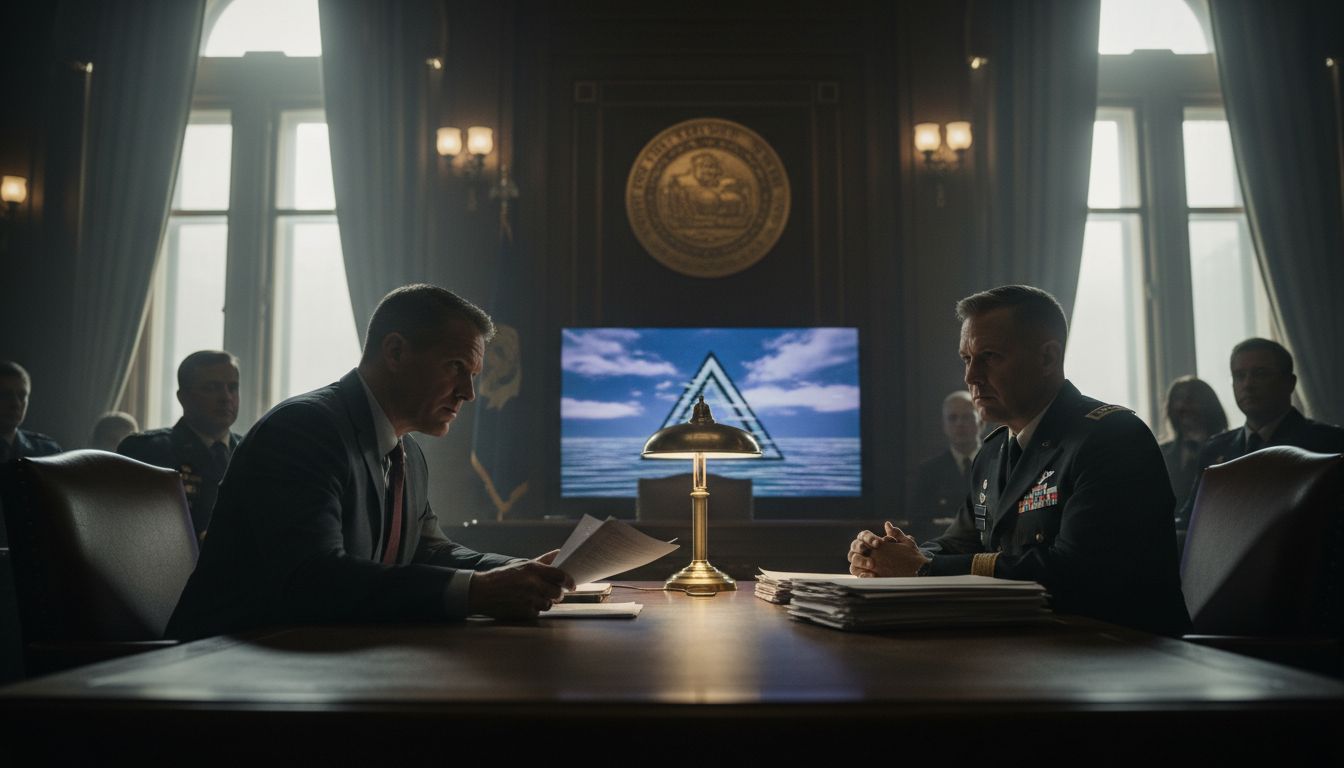
During a routine budget‑planning session of the Wyoming Senate Appropriations Committee, Senate Appropriations Chair Tim Salazar raised a question that shifted the hearing’s focus from numbers to the skies. Salazar asked Adjutant General Greg Porter whether the Wyoming National Guard had encountered any unidentified anomalous phenomena (UAP)—the term now used by the federal government for what the public still calls UFOs. Porter’s response was cautious: “For our air space, no. I’m aware of some other ones … that I don’t think in open testimony here I could probably say much about that.” When the Cowboy State Daily sought clarification, the Guard’s public‑affairs office offered no further comment.
Legislative Context
Salazar’s inquiry came as Porter was presenting the status of a new state law that empowers Governor Mark Gordon to activate the National Guard when drones threaten critical infrastructure. The measure was prompted by a wave of mysterious drone sightings reported earlier this year in both New Jersey and Wyoming. In January, eight Wyoming sheriffs confirmed receiving reports of “drone‑like” objects that defied easy identification. Governor Gordon initially vetoed the bill in March, citing concerns about potential conflicts with federal aviation regulations. However, the Wyoming Legislature subsequently overrode the veto, enacting the law despite the governor’s objections.
UAP Reports and Federal Constraints
The timing of Salazar’s question reflects growing national attention to UAP activity near military installations. Recent media coverage has highlighted unexplained aerial phenomena over U.S. bases, prompting lawmakers at state and federal levels to seek more transparency. Porter indicated that federal restrictions limit what state officials can disclose in an open session, a point echoed in the governor’s veto letter, which warned that discussing certain aerial incidents could impinge on classified or inter‑agency investigations. The Guard’s silence, therefore, aligns with broader federal guidance that restricts public commentary on sensitive air‑space events.
Guard Capabilities and Challenges
Porter also addressed the practical side of defending Wyoming’s airspace. He confirmed that no Wyoming National Guard formation currently possesses a counter‑UAS (unmanned‑air‑system) capability. “If the department bought that equipment, it would likely be obsolete in 12‑14 months,” he warned, underscoring the rapid pace of drone technology development. The lack of an operational drone‑interdiction system means the Guard must rely on existing law‑enforcement channels and federal partners to respond to potential threats, a limitation that state officials acknowledge as “pretty significant.”
Outlook
The hearing highlighted a confluence of emerging security concerns: the rise of mysterious aerial sightings and the state’s effort to legislate a rapid response to drone incursions. While the newly enacted law gives the governor authority to call in the Guard, the absence of dedicated counter‑UAS assets may hinder swift action. Lawmakers, including Salazar, are likely to continue pressing for clearer guidance from federal agencies and for resources to modernize the Guard’s aerial defense capabilities. As the debate progresses, Wyoming’s experience may serve as a case study for other states grappling with the dual challenges of UAP transparency and drone security.


