Overview
In Munich’s old city center, Jungfernturmstraße continues to attract attention not only for what once stood there, but for the stories that survived the demolition. Local legend holds that the former Jungfernturm, or Maiden Tower, was linked to secret executions and the feared Iron Maiden torture device, and that the spirits of its victims still linger around the street where the tower once stood. While the claims belong firmly to folklore rather than documented history, they remain part of a broader tradition of haunted-site stories in southern Germany.
The Tower’s Historical Role
The Jungfernturm was originally built as part of Munich’s fortifications, with construction beginning in 1493. It served as a battery tower for defense, positioned between the second city wall and the inner wall, and according to historical descriptions it had no windows, only firing hatches. Because access was limited to the inside of the city, the structure was difficult to observe from the outside, which may have helped fuel speculation about what happened within its walls. Once Munich’s fortifications were dismantled in 1791, the tower lost its military purpose and was later used as storage for a nearby opera before demolition began in 1804 as part of the city’s modernization.
The Iron Maiden Legend
The darker reputation of the site comes from legend rather than confirmed records. According to the story, the tower earned its name because death sentences were allegedly carried out in secret within its walls, sometimes involving the infamous Iron Maiden—a medieval torture device described in popular imagination as a human-shaped cabinet lined with spikes. The sources associated with the legend say victims were often taken to the tower by carriage, sometimes by men in black robes with pointed hoods. These figures are frequently connected with the Guglmänner, a mysterious Bavarian group that appears in regional folklore. Historically, however, the Guglmänner were associated with funeral processions and mourning customs, not clandestine punishments.
Ghost Stories on Jungfernturmstraße
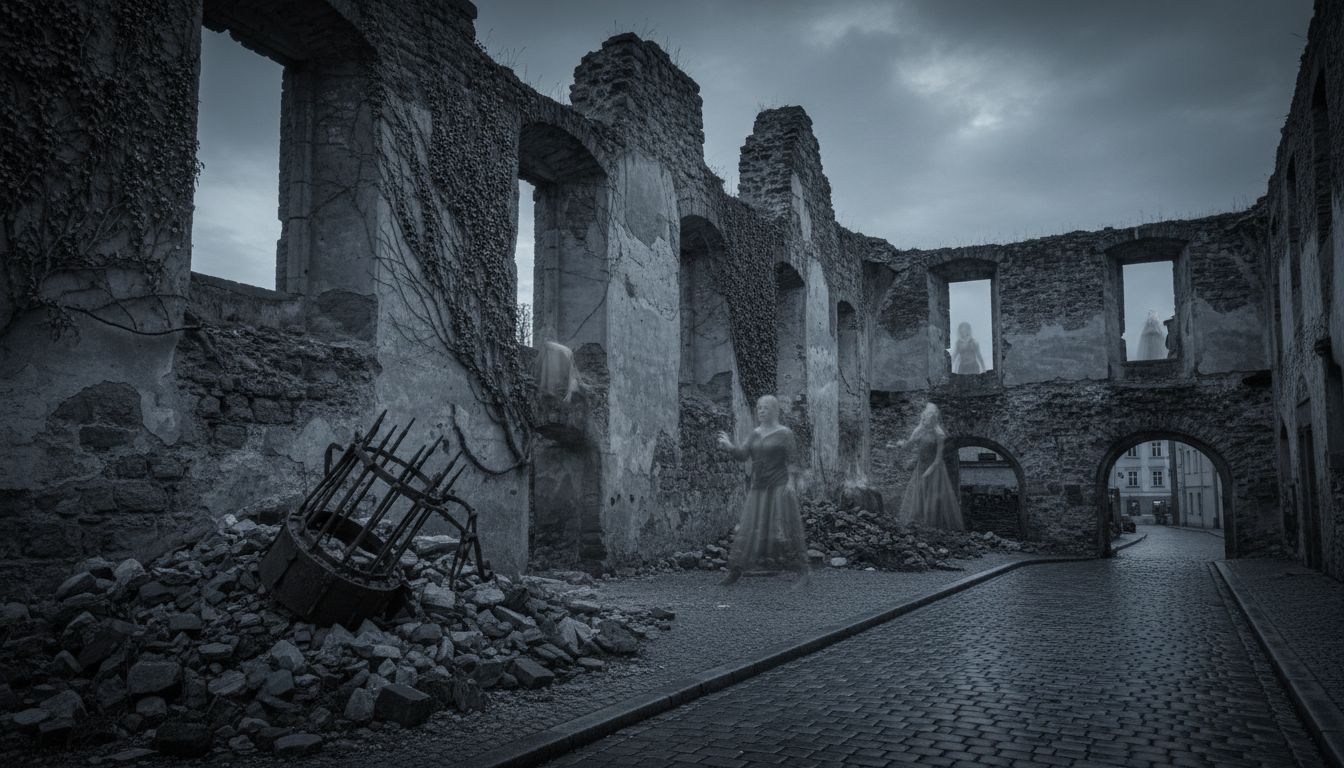
Today, the tower is gone, but the legend has not disappeared. Reports and retellings claim that people still feel an eerie presence while walking along Jungfernturmstraße, with some saying the victims of the Iron Maiden remain in spirit near the site. These stories have become part of the street’s identity, blending Munich’s medieval past with the city’s fascination for the paranormal. As with many ghost legends, the power of the narrative lies less in evidence than in atmosphere: a vanished tower, a hidden interior, and a history dense enough to invite speculation.
Why the Story Endures
The Jungfernturm legend also reflects how cities preserve memory through myth. Even when physical structures are demolished, their reputation can outlast the stone. In Munich, the tale of the Maiden Tower continues to circulate alongside other accounts of haunted places, reinforcing a cultural interest in death, secrecy, and unresolved history. Whether viewed as folklore, urban legend, or a reminder of how stories evolve around real places, the haunting of Jungfernturmstraße shows how Munich’s past remains active in the public imagination—long after the tower itself was torn down.