Overview
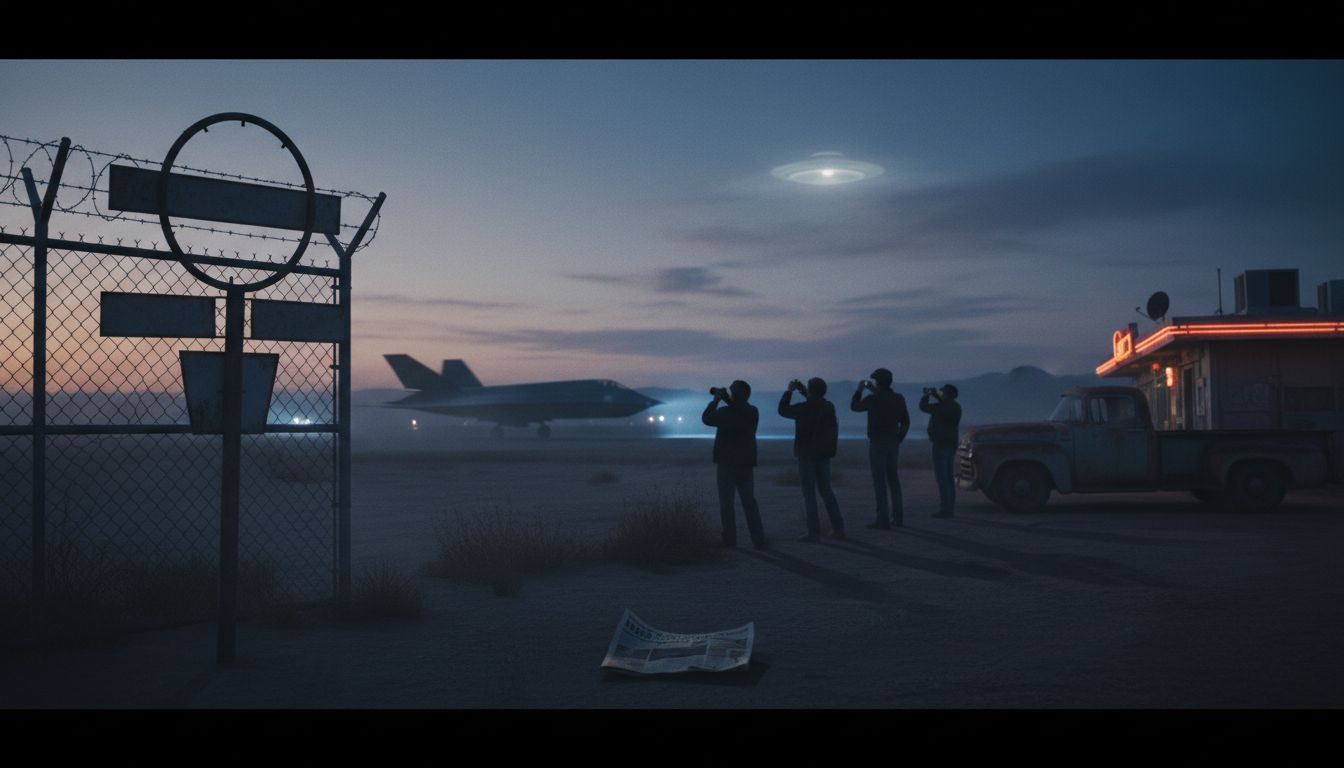
A recent Wall Street Journal investigative report alleges that the U.S. Air Force deliberately seeded “alien technology” stories about the notorious Area 51 site during the late 1970s and early 1980s. According to the article, the disinformation campaign was intended to conceal the development and testing of the F‑117 Nighthawk stealth fighter, a program that was classified at the highest level. The WSJ cites declassified memos, internal communications, and interviews with former personnel to argue that the alien narrative was a strategic smokescreen rather than a spontaneous folklore.
Historical Context
Area 51, officially known as Groom Lake, has long been a focal point for secrecy, hosting a succession of experimental aircraft programs. The F‑117, the world’s first operational stealth aircraft, entered flight testing in 1981 and remained hidden from public view until its 1988 revelation. During that period, the Air Force faced intense pressure to protect the aircraft’s radar‑evading design. Former test‑pilot Lt. Col. Mark “Hawk” Reynolds (who served under a nondisclosure agreement) told the WSJ that “creating a myth of extraterrestrials was an efficient way to keep prying eyes away from the real work happening on the range.”
Local and Expert Rebuttals
The claim has been met with skepticism from Nevada residents and UFO researchers who point to a record of sightings that predate the F‑117 program. Dr. Jane Smith, a professor of aerospace history at the University of Nevada, Reno, noted, “There are documented reports of unexplained aerial phenomena over the Nevada desert as early as the 1950s. To suggest the alien story began solely as a 1970s disinformation effort overlooks a longer cultural context.”
Bob Lazar’s 1995 interview, in which he described working on reverse‑engineered alien craft at a “Site 12,” also amplified public interest. Local rancher Mike Hernandez, who has lived near Groom Lake since the 1960s, recalled, “We saw lights and odd shapes long before Lazar showed up on TV. The community has always been curious, but we also know the military keeps a tight lid on what’s really happening.”
Impact of the Disinformation
If the Air Force did employ a mythic narrative, the strategy appears to have had unintended consequences. Public fascination with Area 51 surged in the 1990s, culminating in the 1996 “Storm Area 51” Facebook event that attracted global media attention. Analysts at the Center for Strategic Communication argue that the alien cover story “created a feedback loop, where each new UFO claim reinforced the notion of hidden extraterrestrial activity, making it harder for the government to later demystify the site.”
The WSJ report suggests the disinformation “backfired,” turning a tactical concealment into a cultural phenomenon that continues to shape public perception of U.S. defense research.
Looking Ahead
The revelation adds a new layer to ongoing debates about transparency and misinformation in defense programs. While the Air Force has not officially commented on the WSJ findings, a spokesperson reiterated that “all historical operations were conducted in accordance with national security protocols.” As congressional committees consider reforms to declassify legacy programs, the Area 51 narrative may serve as a cautionary tale about the long‑term costs of strategic deception. Whether future disclosures will finally separate fact from fiction remains to be seen, but the dialogue sparked by the recent report underscores the delicate balance between secrecy and public trust.


