Overview
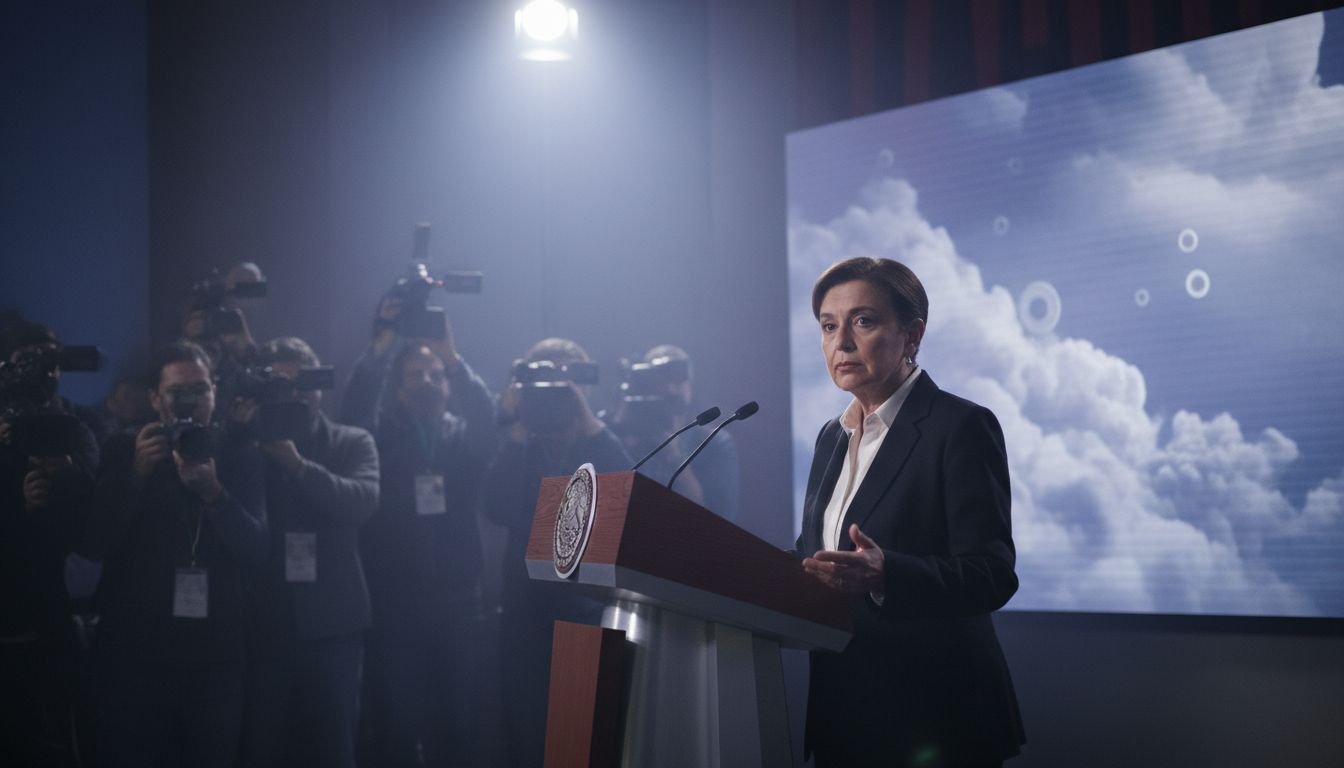
During a routine press briefing on Thursday morning, Mexican President Claudia Sheinbaum was asked whether Mexico would follow the United States in releasing classified information on unidentified aerial phenomena (UAP). The question referenced President Donald Trump’s recent executive order directing U.S. agencies to declassify UFO‑related records. Sheinbaum’s reply was unequivocal: Mexico has no plans to pursue a similar disclosure and there is no current government initiative to investigate or publicize UAP data.
U.S. Disclosure Momentum
President Trump’s order, announced on 19 February 2026, instructed the Office of the Director of National Intelligence and the Department of Defense to compile and release all material on “anomalous aerial objects” that is not deemed a threat to national security. The move follows years of congressional pressure, the 2023 Pentagon “UAP Task Force” report, and a growing public demand for transparency. Since the order’s issuance, several dozen files have been made public, sparking renewed media coverage and prompting foreign governments to field similar queries from their press corps.
Sheinbaum’s Response and Mexican Policy
When the journalist raised the U.S. development, President Sheinbaum answered that Mexico does not have an equivalent directive and that the administration “is not currently engaged in a systematic search for UFOs.” She emphasized that any future action would be based on “national security assessments and scientific merit,” not on external pressure. The president’s stance aligns with Mexico’s historical approach: while the Mexican Air Force has occasionally logged unexplained sightings, there is no standing civilian agency dedicated to UAP research, and past investigations have remained classified within the defense sector.
Expert and Diplomatic Perspectives
Analysts note that Sheinbaum’s dismissal is consistent with Mexico’s cautious diplomatic posture. Dr. Luis Martínez, a senior fellow at the Center for Aerospace Studies in Mexico City, said, “Mexico’s priority is to safeguard its airspace; unless there is a demonstrable threat or scientific breakthrough, a public disclosure program is unlikely.” In Washington, officials have welcomed the president’s clarification, noting that each nation must weigh UAP data against its own security frameworks. The exchange also underscores a broader trend: while the United States moves toward openness, neighboring countries are weighing the political and operational costs of similar transparency.
What Comes Next
The conversation in Mexico’s press room reflects a global crossroads for UAP policy. As the United States continues to release documents, other governments may feel compelled to reassess their own classification practices. Observers will watch for any legislative proposals in Mexico’s Congress that could establish a formal UAP inquiry, as well as for potential collaborative efforts with U.S. agencies on shared air‑space monitoring. For now, President Sheinbaum’s dismissal signals that Mexico’s official position remains unchanged, leaving the matter in the realm of defense‑only investigations unless future developments dictate otherwise.


